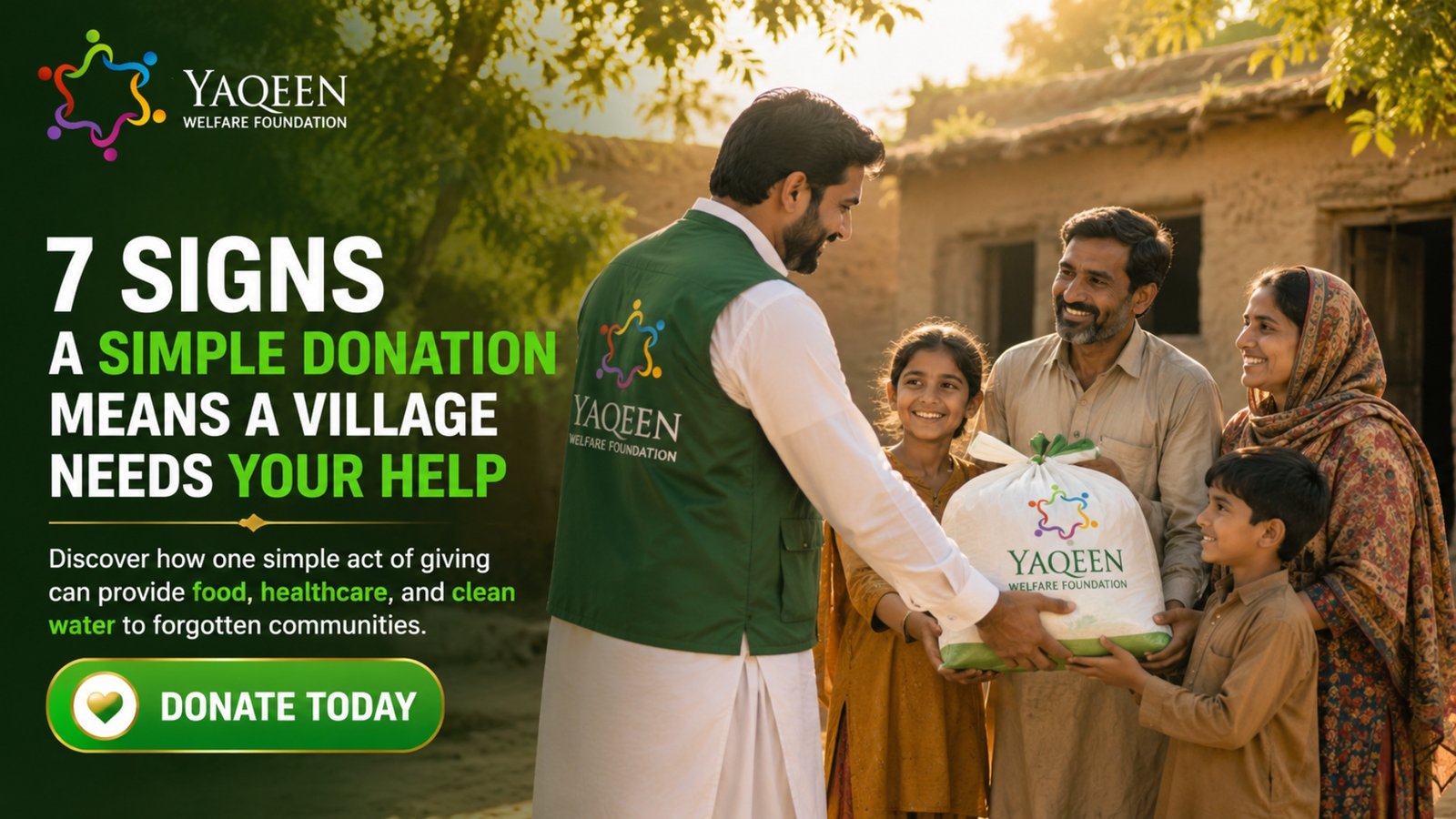
A donation can travel where almost nothing else can — past unpaved roads, past surveys that never reach certain doors, past the silence of villages that no government list remembers. If you have ever wondered whether your giving truly matters, the honest answer is this: somewhere right now, a household is waiting for exactly the kind of help a simple donation provides. This article walks through seven unmistakable signs that a village needs your help, why each sign matters, and how your donation through Yaqeen Welfare Foundation can reach the people who need it most.
Yaqeen Welfare Foundation exists to provide free medical treatment, clean water, and essential assistance to the people of Pakistan, with a particular focus on communities that larger organisations often overlook. Before we explore the seven signs, it helps to understand why some villages remain invisible in the first place — and why your donation is often the only thing standing between a family and another day of going without.
Why Some Villages Never Receive Help
Not every village in need appears on a map that aid agencies actually use. Not every family in crisis appears on a government list. Surveyors go where roads allow them to go; journalists go where cameras can follow. The result is a quiet, persistent gap — villages that are poor, hungry, and without basic services, yet completely outside the reach of conventional aid networks.
This is exactly where a donation routed through a partner with verified, on-the-ground presence becomes essential. According to Yaqeen Welfare Foundation’s own blog content at the Yaqeen Welfare Foundation website, the organisation’s programmes are built specifically around reaching households that other networks miss. If you’d like to understand how this on-the-ground model works in practice, our article on Emergency Food Parcels explains the process from request to delivery.
Sign 1: There Is No Functioning Clinic Nearby
H5: The First Sign — Healthcare Has Disappeared
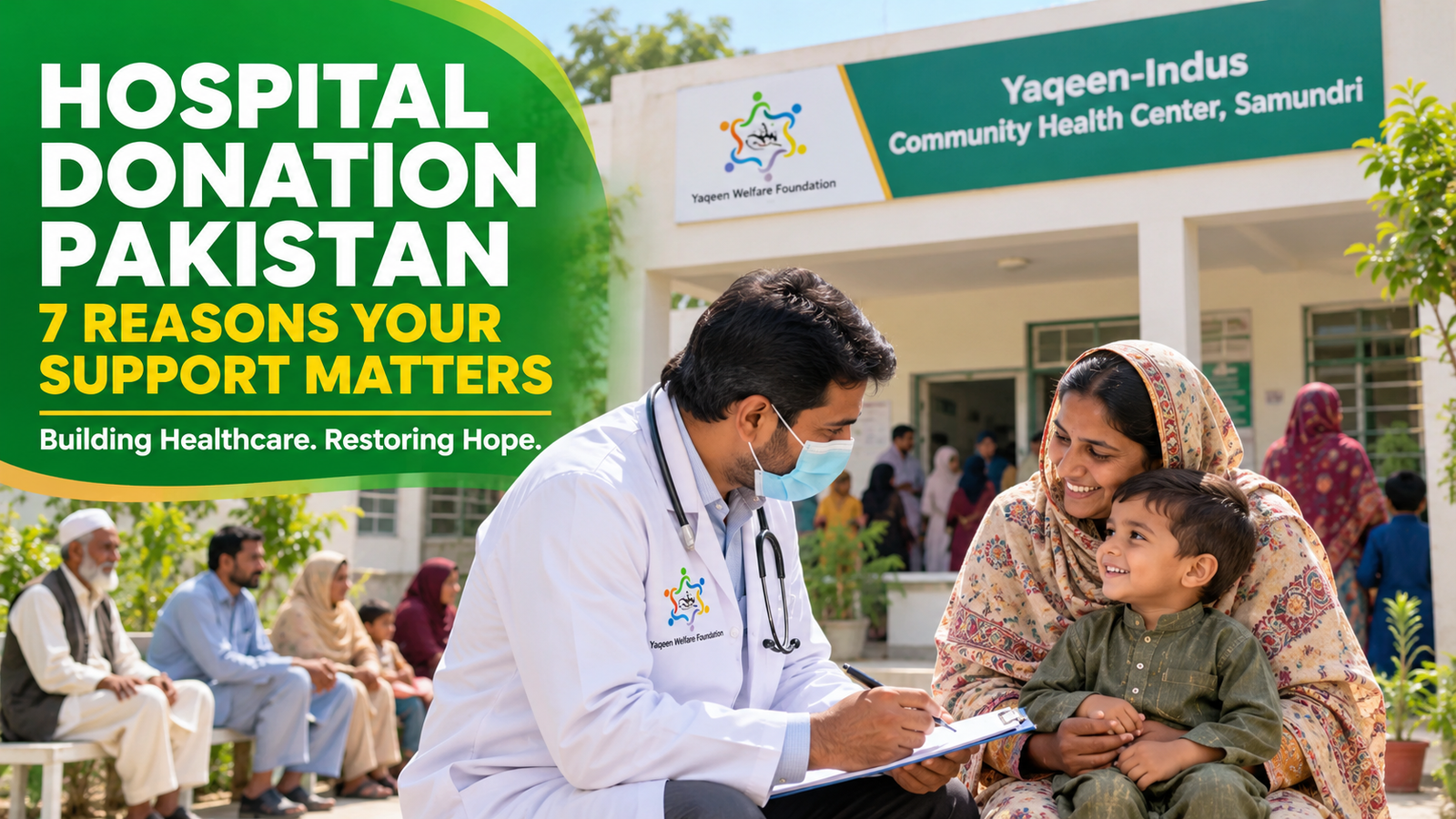
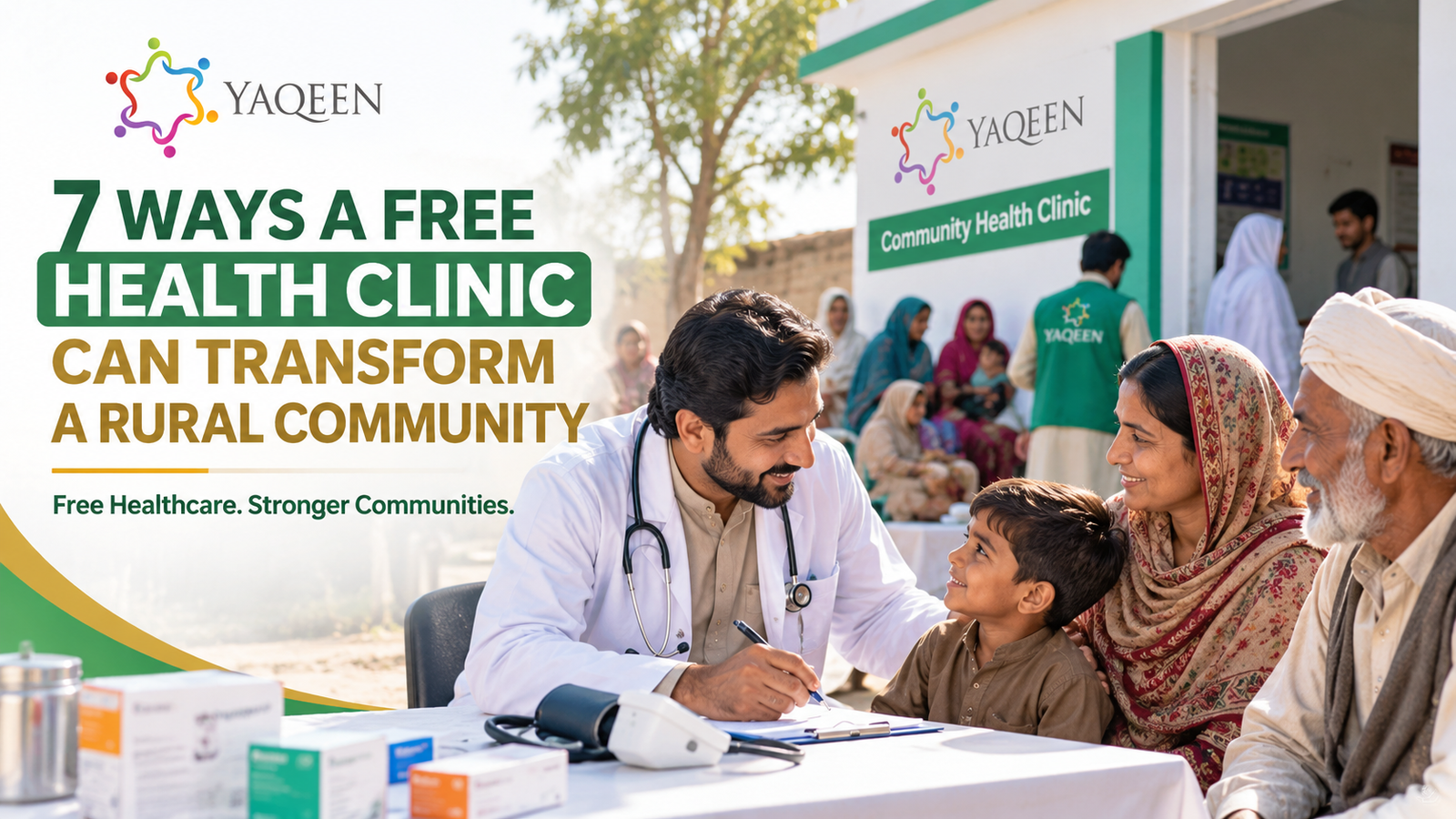
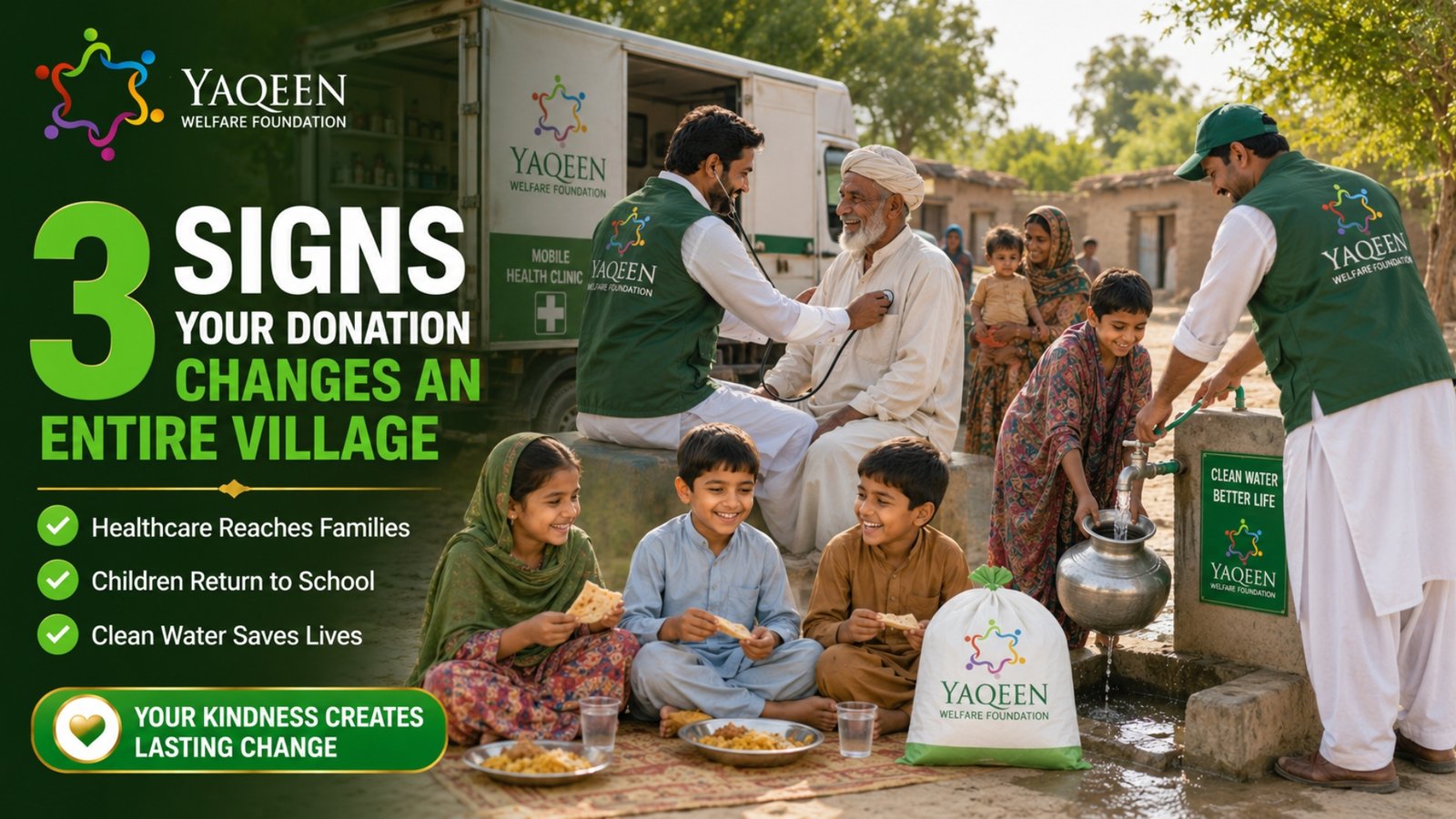
When a village has no clinic, or the nearest one is hours away by foot, even minor illnesses become dangerous. A fever that would be treated in an afternoon anywhere else can become a medical emergency. This is one of the clearest, most urgent signals that a community needs outside support, because healthcare gaps compound every other form of poverty in the household.
A donation directed toward medical outreach can fund mobile clinics, basic medicines, and emergency transport — the difference between a treatable condition and a tragedy. If you want to read more about how medical aid reaches isolated communities, see our related post on Clean Water and Community Health Initiatives.
Sign 2: Children Are Missing School Because of Hunger
H6: A Quiet but Telling Indicator
Hunger does not always look dramatic. Often it looks like a child who stops attending school because there is no energy to walk there, or because the family needs an extra pair of hands at home to manage the day’s scarcity. When school attendance drops in a village not because of distance or lack of interest, but because of food insecurity, it is a strong sign that a donation of food assistance is urgently needed.
Our piece on Ongoing Family Food Support explains how monthly support helps stabilise households so that children can return to school and stay there.
Sign 3: The Village Has No Reliable Clean Water Source
H6: Water Scarcity as a Warning Sign
When families are walking long distances for water, or relying on sources that are not safe to drink, illness spreads quickly — particularly among children. Waterborne disease is one of the most preventable causes of suffering in under-resourced villages, and it is also one of the most directly solvable through targeted aid. A single donation toward a well or water filtration system can serve an entire community for years.
Sign 4: Widows and Elderly Residents Have No Support Network
H5: The Households Most Easily Overlooked
In many forgotten villages, widows and elderly residents without close family support are the most vulnerable and the least likely to ask for help. They are often skipped over even by informal community support because there is simply not enough to go around. This is precisely the gap that Yaqeen Welfare Foundation’s Widow and Vulnerable Household Support programme is designed to close, and it is one of the most meaningful places a donation can go.
Sign 5: Food Insecurity Has Become the Norm, Not the Exception
When a household’s hunger has been ongoing for so long that it stops being treated as a crisis and starts being treated as simply “how things are,” that normalisation is itself a sign of how urgently help is needed. A one-time gift can offer temporary relief, but a sustained, monthly donation changes the pattern entirely — it removes the daily calculation of who eats and how much.
Sign 6: There Is No Local Source of Income During Certain Seasons
Many villages depend on agricultural cycles, and during lean seasons, families with no savings and no alternative income fall into acute crisis. Recognising these seasonal gaps — and timing your donation to arrive before the lean season peaks — can prevent a family from sliding into long-term hardship. Programmes like the Ramadan Food Distribution initiative are specifically timed around these predictable periods of need.
Sign 7: The Village Has Gone Unvisited by Aid Organisations for Years
Perhaps the clearest sign of all: when a community has simply never received outside assistance, despite visible poverty. These are the places Yaqeen Welfare Foundation actively seeks out, because they are the places least likely to be reached by anyone else. A donation to an organisation with dedicated outreach into unregistered, unmapped communities is often the only realistic path for help to arrive.
Quick Reference: Signs a Village Needs Help and How a Donation Responds
| Sign Observed | What It Indicates | How a Donation Helps |
|---|---|---|
| No functioning clinic | Healthcare access gap | Funds mobile medical outreach |
| Children missing school due to hunger | Acute food insecurity | Provides emergency food parcels |
| No clean water source | Risk of waterborne illness | Funds wells and filtration |
| Widows/elderly without support | Social and economic isolation | Targeted household support |
| Chronic, normalised hunger | Long-term poverty | Monthly food assistance |
| Seasonal income gaps | Predictable crisis periods | Timed seasonal distributions |
| No prior aid presence | Community is unreached | On-the-ground partner outreach |
What Happens After You Give
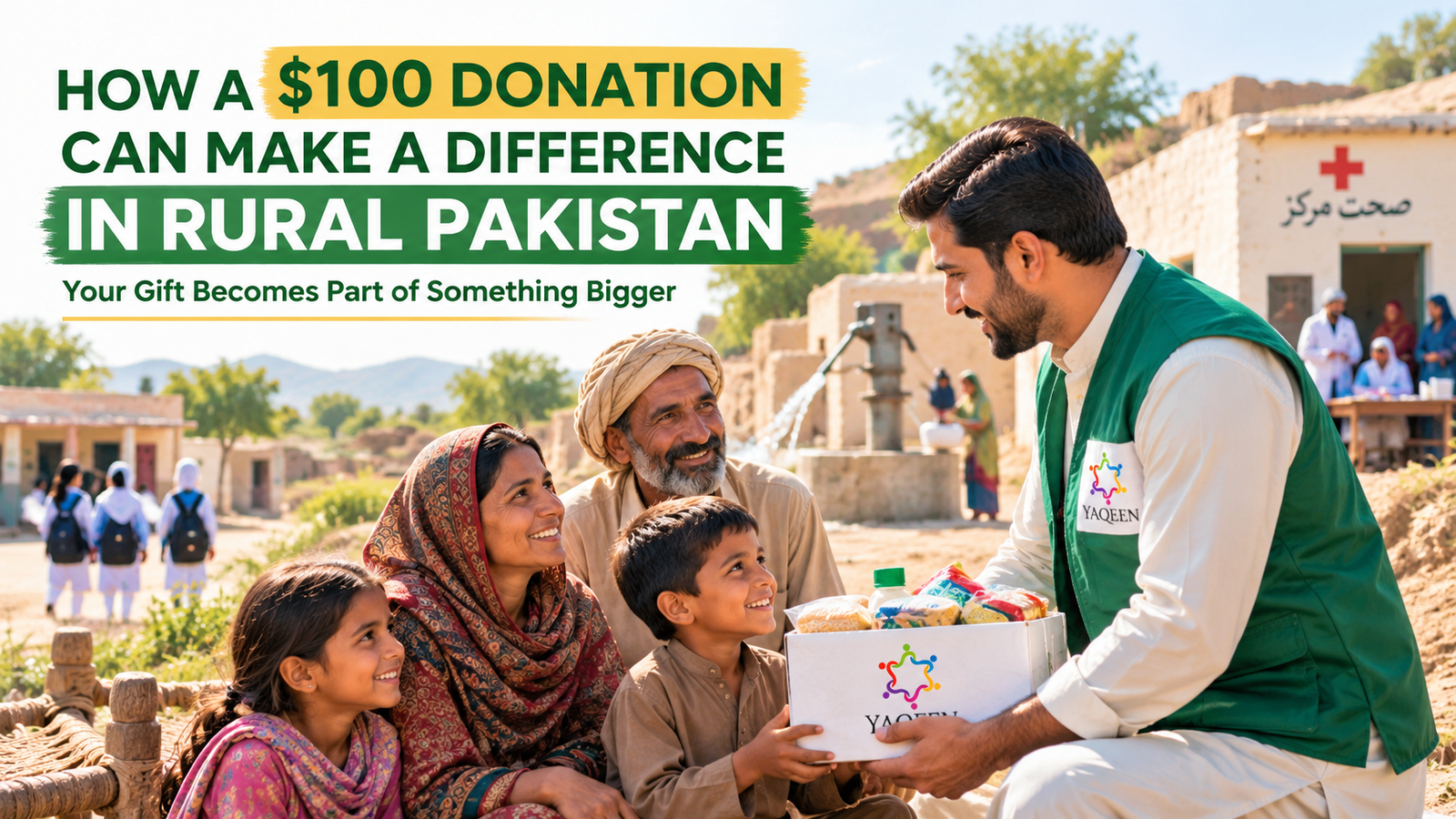
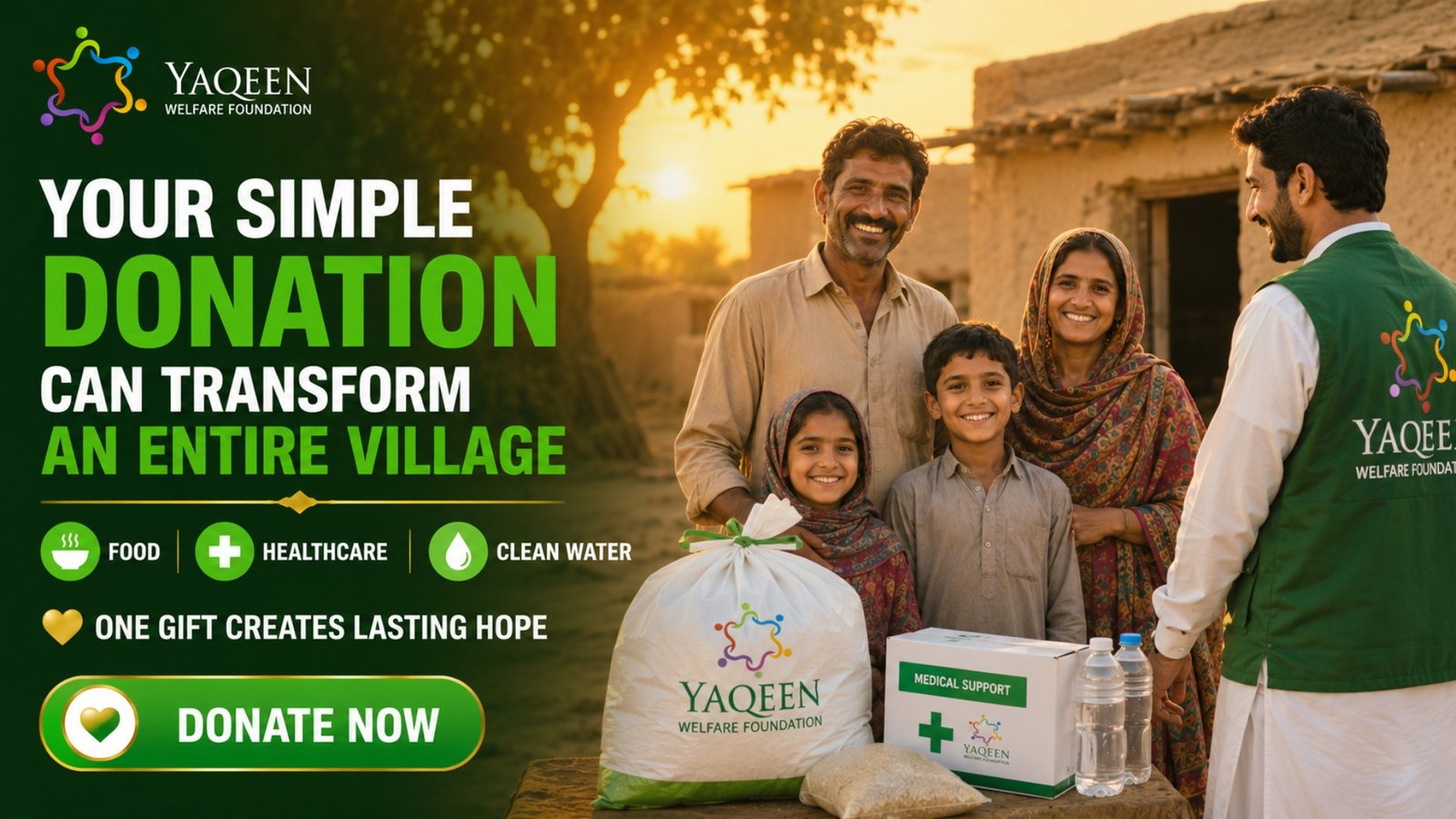
It can help to know, concretely, what a donation sets in motion. Once a gift is received, Yaqeen Welfare Foundation’s verified field partners identify households through direct, community-level assessment rather than relying on formal registration systems that many families are excluded from. Food parcels, medical support, or water access projects are then directed toward the specific households identified as most in need.
This process is part of why the organisation emphasises transparency in its published material. Anyone wanting a fuller picture of programme structures can review the full set of articles at the Yaqeen Welfare Foundation website’s blog section, which documents ongoing projects and updates.
The Wider Impact of a Single Donation
It’s worth pausing on a simple truth: a donation does more than deliver goods. It interrupts a pattern of scarcity that a family may have been living inside for months or years. For two weeks, or a month, a mother does not have to ration what little food remains. Children eat without being told to save something for tomorrow.
Beyond the material impact, a donation also builds something less tangible but equally important — the sense, for a family that has felt forgotten, that the world has not entirely passed them by. That knowledge changes how children in that household grow up to relate to the world around them.
How to Choose Where Your Donation Goes
If you’re deciding how to direct your support, consider matching your donation to the specific sign you most want to address:
- For acute hunger: emergency food parcels
- For chronic poverty: ongoing monthly family support
- For isolated elderly or widowed households: targeted vulnerable household programmes
- For seasonal crises: Ramadan or harvest-season distributions
Each of these options is detailed further in the related articles linked throughout this post, including Emergency Food Parcels and Ongoing Family Food Support.
External Resources on Global Poverty and Aid Effectiveness
For readers who want broader context on how targeted aid reaches under-served communities, the World Bank’s overview of poverty and shared prosperity offers useful background data: World Bank — Poverty Overview. Additionally, UNICEF’s reporting on child hunger provides further detail on why early intervention matters: UNICEF — Child Food Poverty.
Frequently Asked Questions
Q: How do I know my donation actually reaches a remote village? Yaqeen Welfare Foundation works with verified, on-the-ground partners whose specific role is reaching households that standard distribution networks cannot access. These partners identify families through direct community contact rather than formal registration.
Q: Is a small, regular donation more useful than one large gift? For families facing chronic rather than acute need, a smaller recurring donation often provides more stability than a single larger gift, because it changes a household’s relationship to uncertainty over time.
Q: Can a donation be given in memory of someone who has passed? Yes. Many donors choose to give in memory of a loved one, and this is a well-established and meaningful form of giving.
Q: Does a donation to food assistance count as Zakāt? Many of the food assistance programmes are Zakāt-eligible. Donors should indicate their intention at the point of giving so funds can be allocated accordingly.
Q: How can I verify the need is genuine before I donate? Programme updates and household-level details are documented on the Yaqeen Welfare Foundation blog, where ongoing projects are reported as they progress.
Q: What if I want to ask more specific questions before donating? You’re welcome to reach out directly through the Contact Us page to ask about a specific programme or village before making your donation.
A Final Word
Recognising the signs a village needs help is the first step. Acting on them — through a donation, however large or small — is what actually changes a household’s circumstances. If even one of the seven signs above sounds familiar, there is very likely a real family, in a real village, waiting for exactly the kind of help your donation can provide.
Ready to help? Donate Now or Contact Us Online to learn more about current projects.