Free Medicine in Pakistan: 9 Reasons It Saves Families
Free medicine in Pakistan can decide whether a sick father returns to work, whether a child recovers from a chest infection, and whether a family keeps its small savings. For millions of households living on irregular daily wages, seeing a doctor is only half the battle. The harder half begins at the pharmacy counter, where a single prescription can cost more than several days of income. A free consultation is a real kindness, but without the prescribed tablets, syrups, inhalers or injections, treatment stops before it starts.
This is why free medicine in Pakistan is so important to the work of Yaqeen Welfare Foundation. The foundation’s aim is to provide free medical treatment, clean water and other forms of assistance to people across Pakistan, especially in rural and underserved communities. In this guide, we explain how medicine costs affect families with limited incomes, why medicines should be provided alongside free consultations, and how donors can support accessible care. Whether you are a donor, a volunteer or simply someone who wants to help poor patients, this article will show you where your support makes the greatest difference.
How Medicine Costs Affect Families With Limited Incomes
In many parts of Pakistan, healthcare is paid for largely out of pocket. A family earning a modest daily wage does not have a safety net of insurance, employer benefits or savings to fall back on. When someone falls ill, the family faces several costs at once: transport to the clinic, lost wages for the patient and the person who accompanies them, diagnostic tests and, finally, the medicines themselves.
Medicine is often the most repeated and least avoidable of these costs. A consultation happens once, but a prescription may need to be refilled every month for years. Families make painful trade-offs: buy half the course, skip a dose to stretch the supply, choose between medicine and school fees, or borrow money at high interest. Healthcare charities in Pakistan see these choices every day, and they show why free medicine in Pakistan is not a luxury but a basic requirement for dignity and recovery.
The World Health Organization explains in its noncommunicable diseases fact sheet that long-term conditions are a major cause of illness and death worldwide, and that people in lower-income settings often face the greatest barriers to treatment. Pakistan reflects this global pattern, which is why medicine access deserves attention alongside doctors and clinics.
9 Reasons Free Medicine in Pakistan Matters for Low-Income Families
1. Medicine Costs Push Families Into Debt
The first and most obvious reason is financial. When a family must buy medicine at full price, one illness can drain savings, force the sale of assets or lead to loans. Debt taken for healthcare rarely stays small. A father who borrows to treat his own infection may find his children leaving school to work and repay it.
Free medicine in Pakistan breaks this cycle at its source. When the medicine is provided at no cost, the household keeps its limited income for food, rent, school and clean water. A single prescription handed over at a clinic can protect a family’s finances for months. This is one of the strongest arguments for medicine donation in Pakistan: the benefit reaches far beyond the patient.
2. A Free Consultation Without Medicine Is Incomplete Care
Many charitable clinics offer free consultations, and that is a valuable service. Yet a diagnosis without treatment can leave a patient worse off, because now they know what is wrong but cannot afford to fix it. A mother may leave with a prescription for her feverish child and no way to fill it. The paper ends up folded in a pocket, and the illness continues.
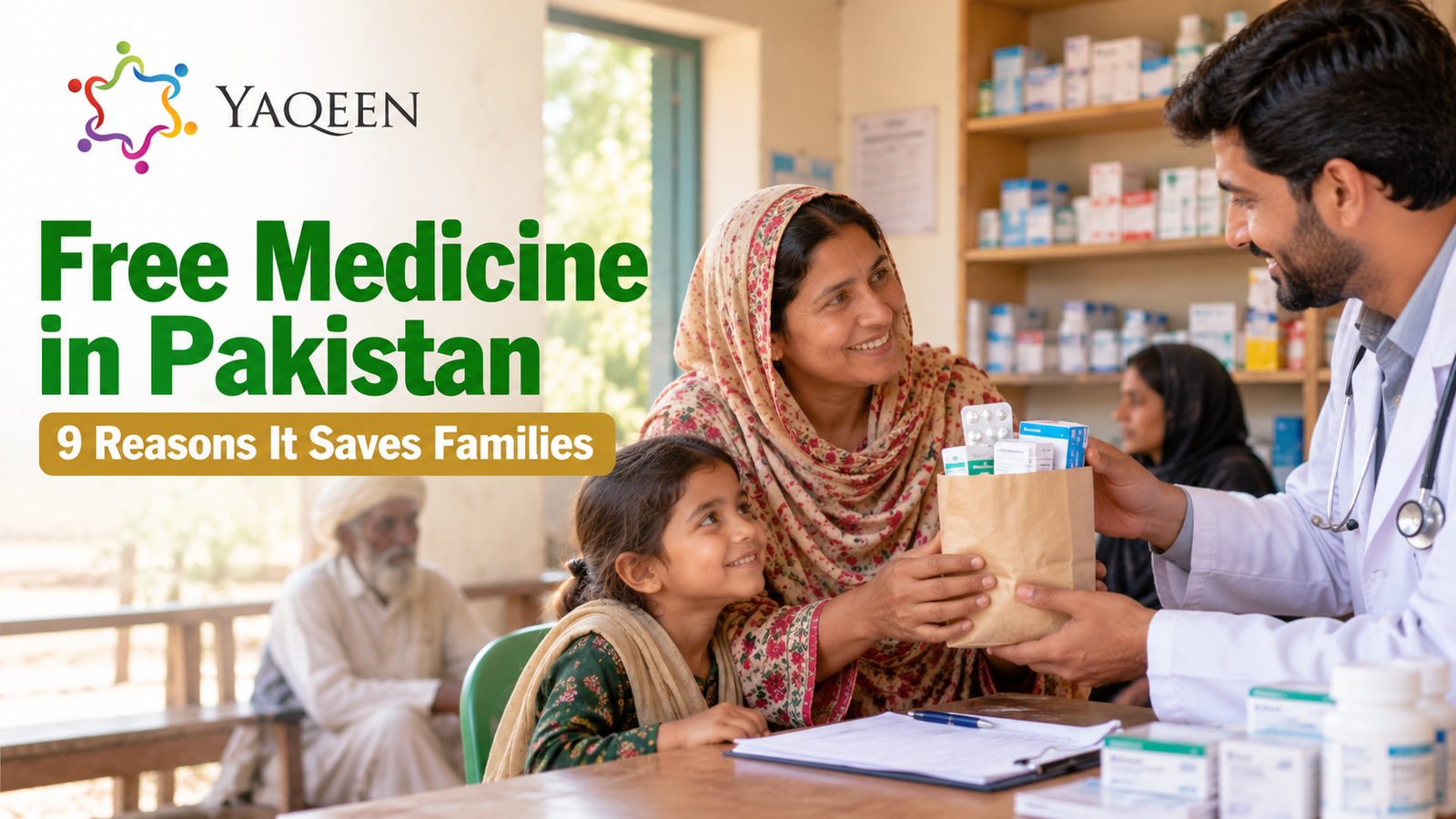
Providing medicines alongside consultations completes the circle of care. The patient is examined, diagnosed and treated in a single visit. This is the model Yaqeen follows through its Health Clinic, where the goal is not only to see patients but to send them home with what they need to get better. Free medicine in Pakistan turns advice into action.
3. Chronic Conditions Need an Uninterrupted Supply
Diabetes, high blood pressure, asthma, heart disease and epilepsy are not cured in one visit. They are managed day after day, and the medicines must be taken without gaps. According to the WHO diabetes fact sheet, access to affordable treatment, including essential medicines, is central to preventing serious complications. International estimates suggest that a large share of adults in Pakistan live with diabetes, and many do not know it or cannot afford to manage it.
For a low-income patient, a missed refill is not a small inconvenience. Running out of blood pressure tablets can raise the risk of stroke. Running out of insulin or diabetes medicine can lead to dangerous blood sugar swings, kidney damage or vision loss. Free medicine in Pakistan for chronic conditions means a patient can plan ahead, collect a month’s supply and keep working and caring for their family.
4. Common Infections Become Dangerous Without Treatment
Respiratory infections, urinary tract infections, stomach infections, skin infections and typhoid are common, especially where clean water and sanitation are limited. Most are treatable with the right medicine, often at modest cost. But when a family cannot afford that medicine, a simple infection can spread, worsen or become life-threatening, particularly in children and older adults.
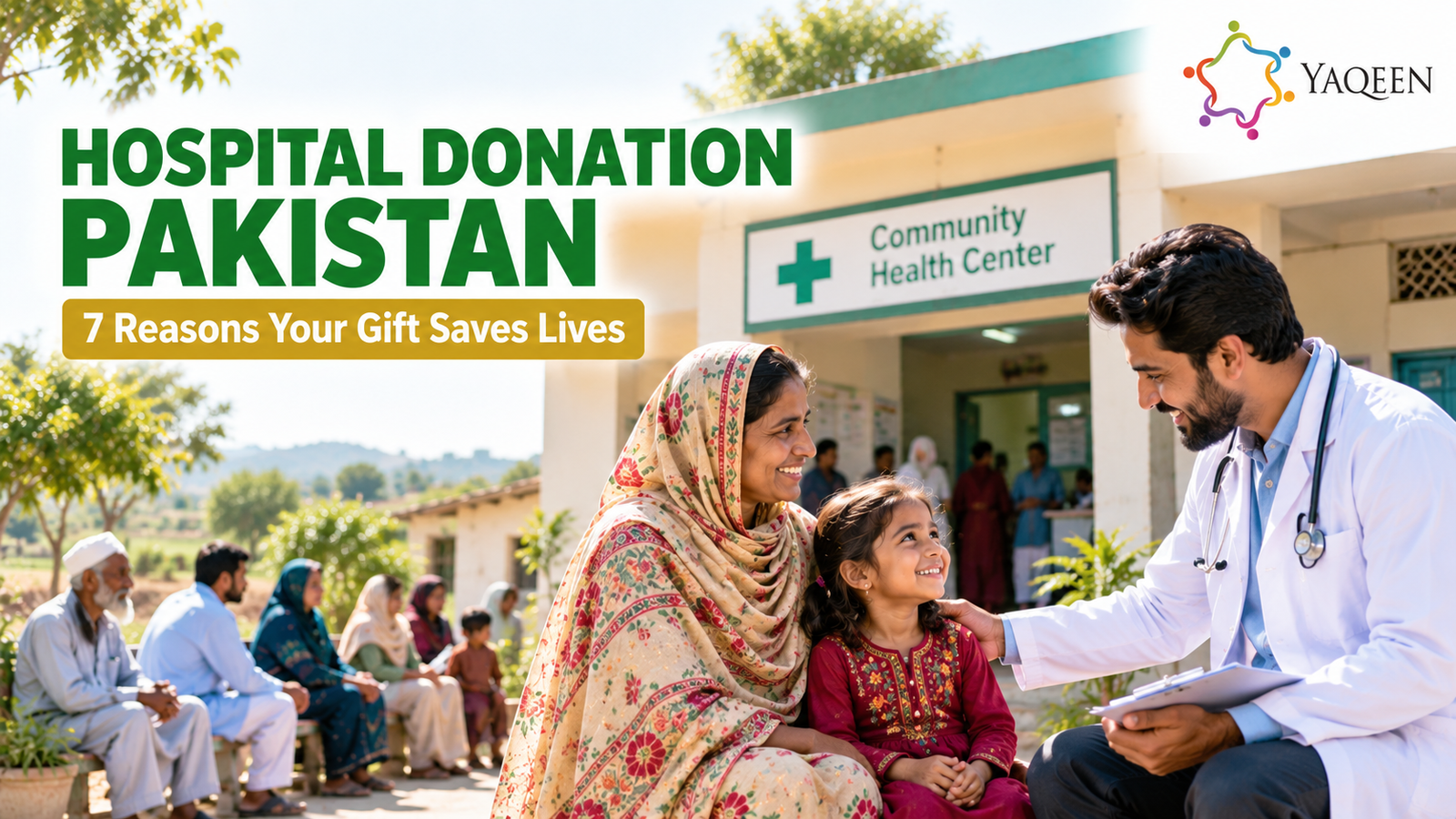
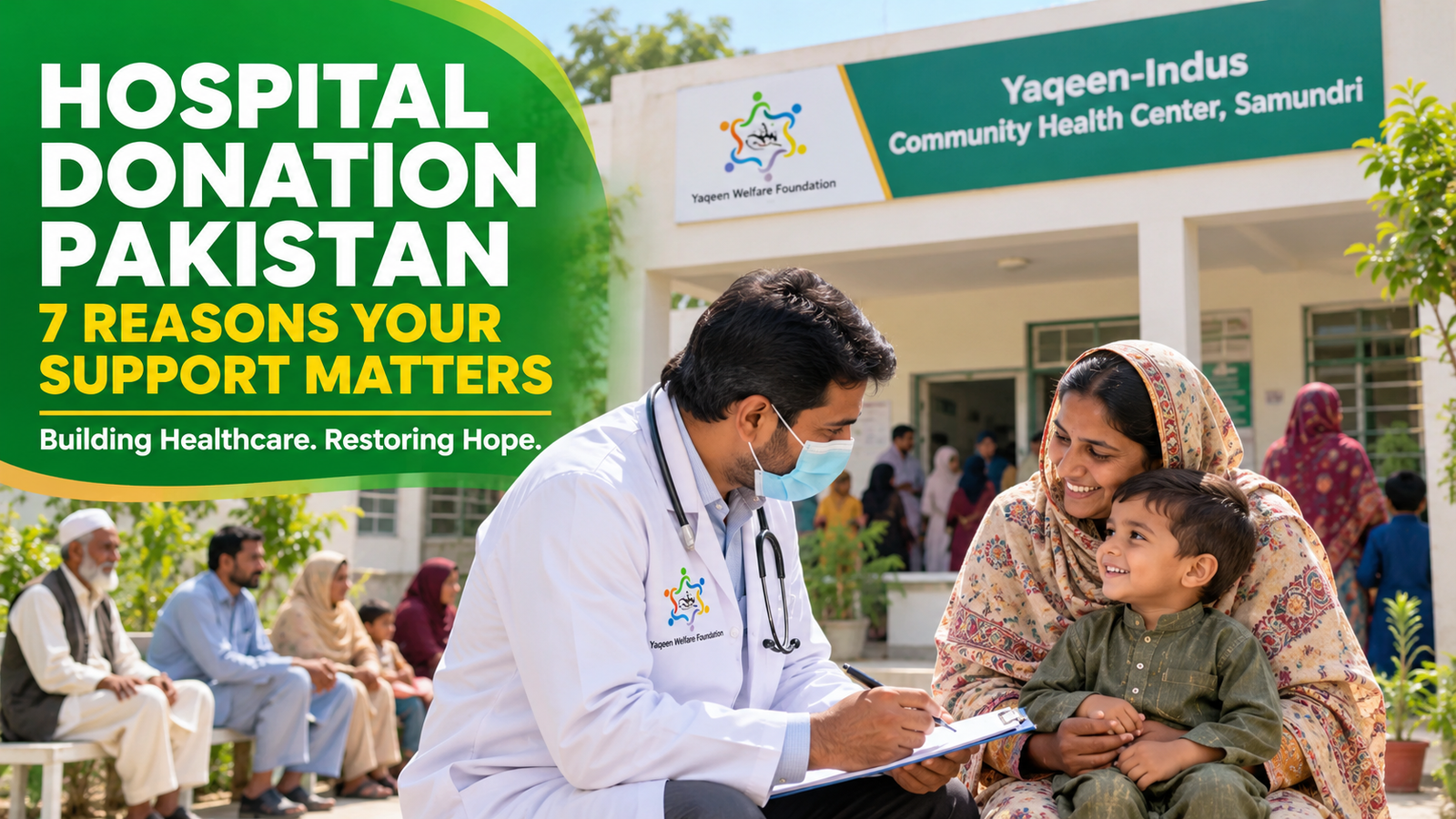
Early treatment also protects the wider community. An untreated infection can pass from one family member to another, and from one household to the next. By offering free medicine in Pakistan at the first sign of infection, charities stop small problems from becoming emergencies and reduce the burden on overstretched hospitals. If you want to understand how emergency and in-patient care fits into this picture, read our post on Hospital Donation Pakistan: 7 Reasons Your Support Matters.
5. Follow-Up Treatment Depends on Affordable Refills
Good medicine is rarely a one-time event. A patient recovering from a serious infection may need a second round of antibiotics. A person with high blood pressure needs regular checks and adjustments. A new mother may need iron and calcium supplements for months. Follow-up care only works if the patient can return for a check-up and collect the next supply without worrying about cost.
When follow-up is free, patients come back. When it is not, many simply disappear from care once their first supply runs out. Clinics that provide free medicine in Pakistan can monitor progress, change doses where needed and catch complications early. The result is better health for the patient and better use of every rupee donated.
6. Medication Adherence Improves When Medicine Is Free
Medication adherence means taking medicine exactly as prescribed: the right dose, at the right time, for the full length of treatment. Cost is one of the biggest reasons people do not do this. Patients split tablets to make them last longer, stop early because they feel better, or take medicine only when symptoms flare up.
Incomplete treatment has serious consequences. The WHO explains in its antimicrobial resistance fact sheet that misuse and incomplete use of antimicrobial medicines contribute to drug resistance, which makes infections harder to treat for everyone. Free medicine in Pakistan, supplied with clear instructions from a trained clinician, helps patients finish their courses and use medicine safely. Counselling at the point of dispensing is just as important as the medicine itself.
7. Children, Mothers and Elders Are Affected Most
In a low-income household, the people who suffer most when medicine is unaffordable are often the most vulnerable: young children, pregnant women and older relatives. Children need accurate doses of fever, pain and infection medicines. Pregnant women need supplements and treatment for anaemia or infections. Elders often need several medicines daily.
When money is short, families may prioritise the breadwinner’s treatment and delay care for everyone else. Free medicine in Pakistan ensures that the child with a fever, the grandmother with arthritis and the mother with anaemia are all treated. It is also a natural partner to the care of vulnerable children, which we explore in Donate to Orphans: 7 Ways USA Donors Bring Free Medical Care.
8. Rural Communities Have Fewer Pharmacies and Longer Journeys
In remote villages, the nearest qualified doctor or reliable pharmacy may be hours away. A trip for medicine can cost a day’s wages and the price of a bus or rickshaw ride, and it may need to be repeated every month. Poor road conditions and unreliable supply make matters worse, and some villages rely on untrained sellers who may offer the wrong medicine or an expired product.
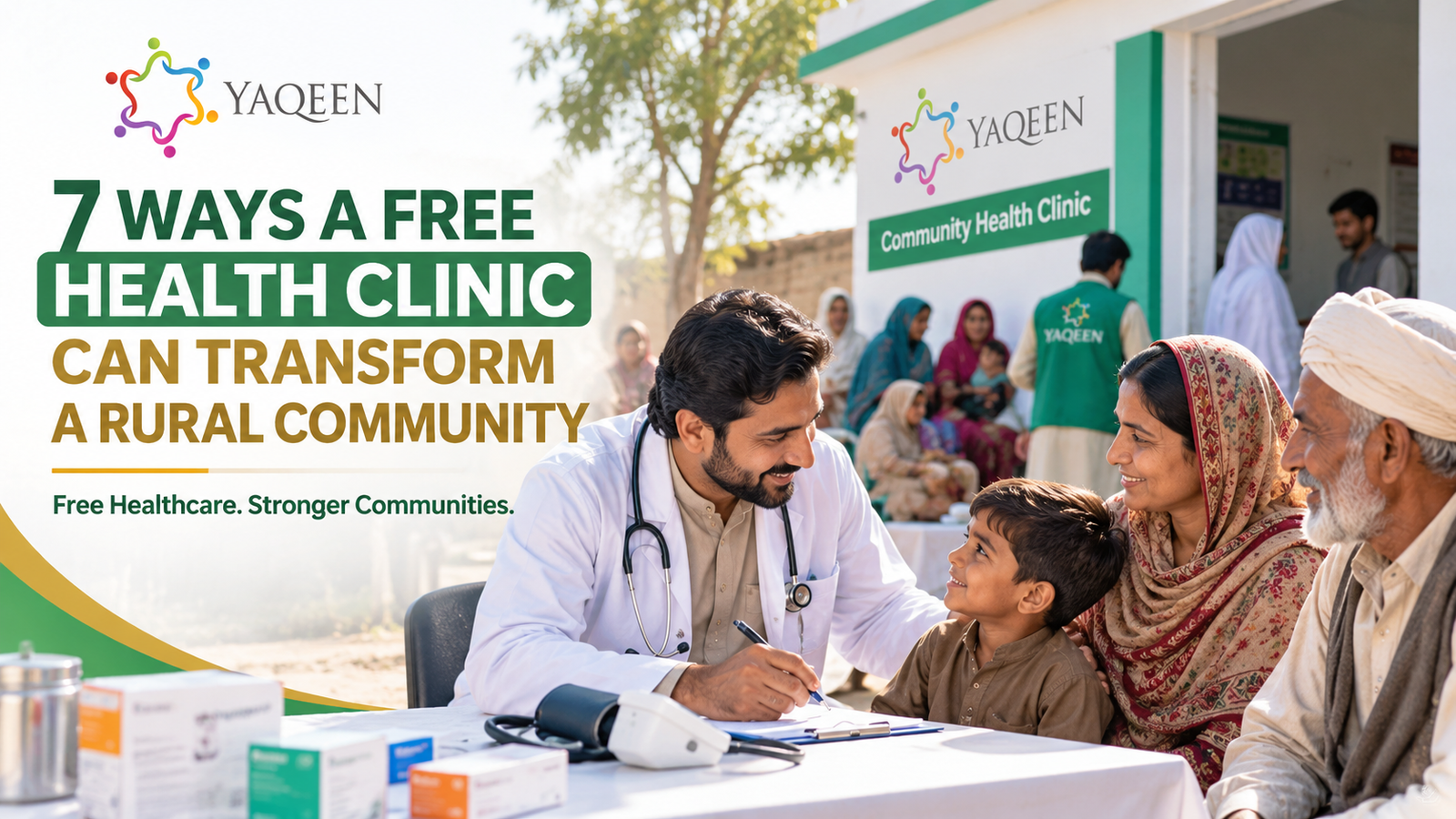
A clinic that dispenses safe, genuine medicine on site removes all of these obstacles. Patients are treated close to home with quality-checked products. Our article on 7 Ways a Free Health Clinic Can Transform a Rural Community describes how this local access changes daily life. Free medicine in Pakistan is most transformative where there is no other option.
9. Donors Turn Small Gifts Into Lasting Health
The ninth reason is the power of the donor. Medicine is one of the most efficient forms of charity because a modest gift can treat a whole illness. A donation of a few dollars can fund antibiotics for a child or a month of blood pressure tablets for an elderly patient. Medicine donation in Pakistan also leaves a lasting ripple, because a healthy parent can keep earning and a healthy child can keep learning.
Many donors are surprised by how far a small amount can go. Our post $100 Donate to Pakistan Can Make a Difference! explains how one gift supports real families in rural Pakistan. For Muslim donors, giving to relieve the suffering of the sick is a deeply rewarding act of charity, and you can use the foundation’s Zakat Calculator to work out your obligation before you give. Free medicine in Pakistan is a sadaqah that keeps giving as long as the patient stays well.
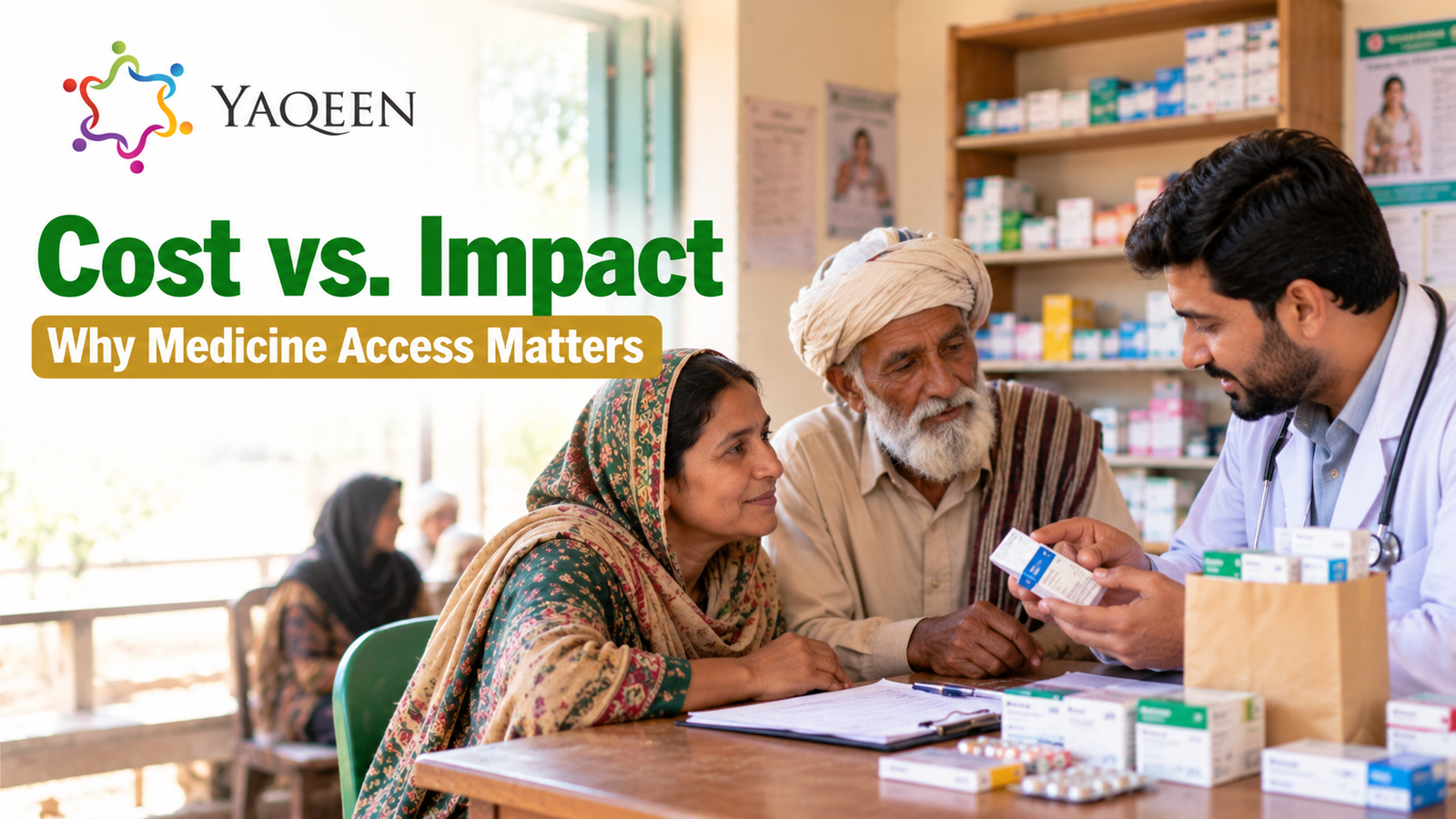
Cost vs. Impact: Why Medicine Access Matters
The table below shows how common health needs affect low-income families and what free medicine in Pakistan changes.
| Health Need | Without Free Medicine | With Free Medicine in Pakistan |
|---|---|---|
| Diabetes and blood pressure | Missed refills, higher risk of stroke, kidney and eye damage | Steady monthly supply and fewer emergencies |
| Respiratory and stomach infections | Delayed treatment, spread within the household | Early treatment and faster recovery |
| Child illness (fever, diarrhoea) | Half doses, unsafe remedies, hospital admission | Correct doses and safe recovery at home |
| Pregnancy and maternal health | Untreated anaemia and infections | Supplements and timely treatment |
| Follow-up visits | Patients drop out of care after the first visit | Patients return, progress is monitored |
| Household finances | Loans, asset sales, children leaving school | Savings protected for food, rent and education |
How Medicine and Consultations Work Best Together
The strongest healthcare charity programmes pair three things: a qualified clinician, a reliable supply of medicine and follow-up support. Remove any one of them and results suffer. A doctor without medicine can only advise. Medicine without a doctor risks misuse. And treatment without follow-up leaves chronic conditions unmanaged.
That is why Yaqeen Welfare Foundation focuses on complete care. Patients who attend the clinic are examined, given a diagnosis, offered medicine where needed and invited to return. Education also plays a role, because patients who understand their condition are more likely to complete treatment. To learn how this fits the broader mission, visit the foundation’s Mission & Vision page.
For people who want to help poor patients, this model offers confidence. Your support does not stop at a prescription. It supports the full journey from symptom to recovery. Medical assistance in Pakistan works best when it treats the person and not just the illness, and free medicine in Pakistan is the piece that makes everything else possible.
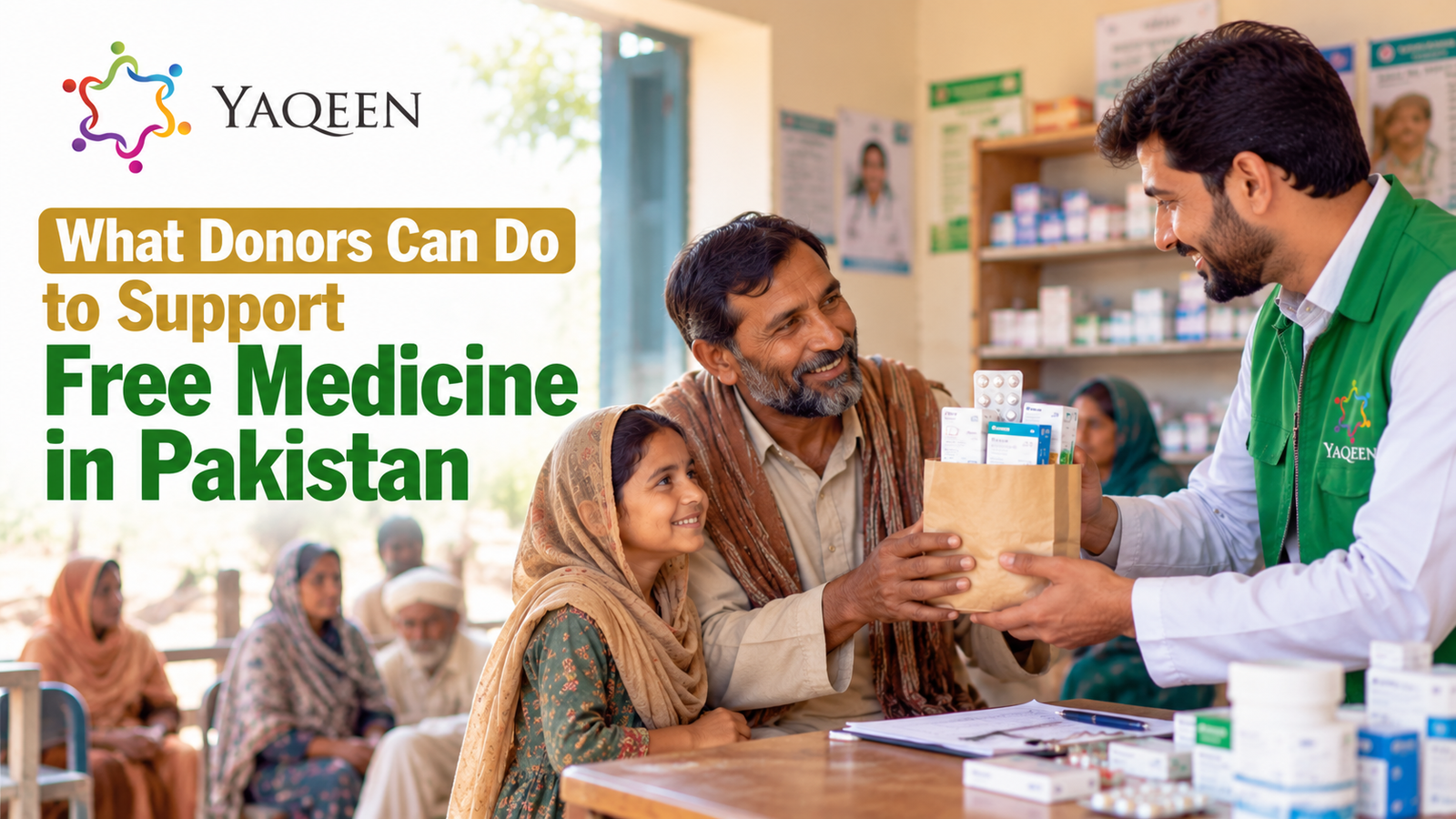
What Donors Can Do to Support Free Medicine in Pakistan
If you want to help, there are several practical steps:
- Give a one-time or monthly gift. Regular giving helps clinics plan their medicine stock and avoid shortages.
- Direct your Zakat or Sadaqah. Eligible Zakat and voluntary charity can support treatment for those who cannot afford it.
- Fund a specific need. Donations can be directed toward chronic care, children’s health or infection treatment.
- Spread the word. Share this article with friends, family and community groups so more people understand the need for free medicine in Pakistan.
- Learn about the wider benefits of giving. Our article on the Benefits of Donating to Charity for USA Donors explains how generosity helps both the receiver and the giver.
You may also be interested in how education and health reinforce each other. Read 10 Reasons Supporting a Child’s Education Is a Powerful Sadaqah Jariyah to see how long-term charity builds stronger communities. Ready to act now? You can donate to Yaqeen Welfare Foundation in just a few minutes.
Frequently Asked Questions About Free Medicine in Pakistan
What is free medicine in Pakistan?
Free medicine in Pakistan refers to prescription and essential medicines provided at no cost to patients who cannot afford them, usually through charitable clinics, hospitals and welfare organisations. It is typically offered together with free consultations so patients can be treated fully in one visit.
Who can receive free medicine at Yaqeen clinics?
Yaqeen Welfare Foundation focuses on low-income and underserved communities, especially in rural areas of Pakistan. Patients who cannot afford care are the foundation’s priority. For specific eligibility questions, please contact the team using the details below.
Why is medicine more important than consultation alone?
A consultation identifies the problem, but only medicine treats it. Without the prescribed drugs, many families cannot complete treatment, and the condition can worsen. Providing both together gives patients the best chance of recovery.
How does free medicine help people with chronic conditions?
Chronic diseases like diabetes and high blood pressure need uninterrupted treatment. A reliable supply of free medicine in Pakistan helps patients avoid missed doses, reduces emergency visits and lowers the risk of serious complications.
Is medicine donation in Pakistan safe and regulated?
Reputable organisations source genuine, quality-checked medicines and have clinicians dispense them with clear instructions. Always donate through a trusted, transparent charity rather than giving unmarked medicines to individuals.
Can I give Zakat or Sadaqah for medicine?
Many donors give Zakat and Sadaqah to help the poor and needy with medical costs. You can use the foundation’s Zakat Calculator to estimate your Zakat, and consult a trusted scholar if you have questions about your specific situation.
How can I donate to help poor patients?
You can give securely online through the Yaqeen donation page. Even a small gift can fund medicines for a patient in need.