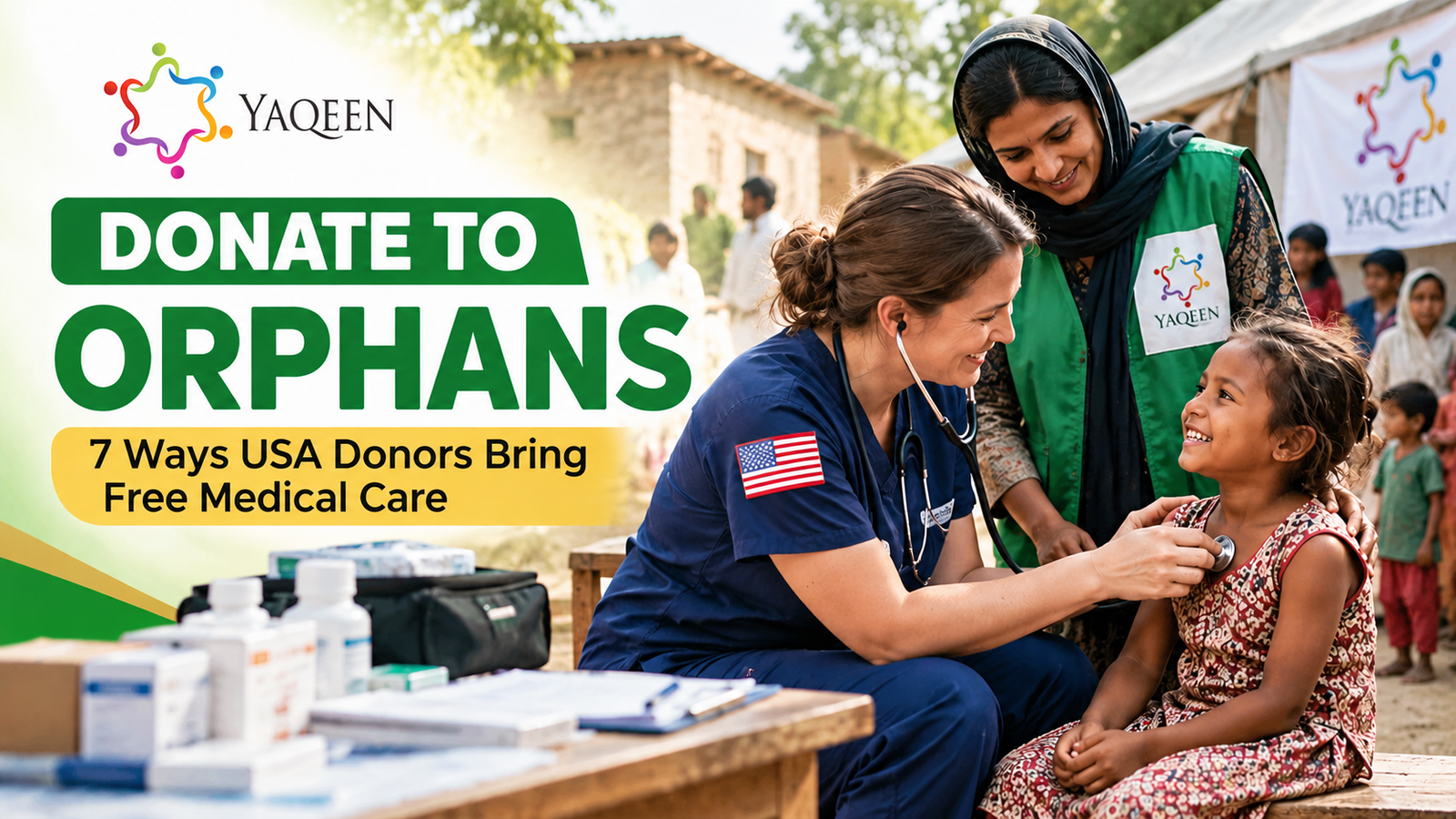
Donate to Orphans: 7 Ways USA Donors Bring Free Medical Care
When you donate to orphans, you do more than send money overseas. You put a doctor, a prescription and a safe place to recover within reach of a child who has no parent to carry them to a clinic. In Pakistan, millions of families live far from basic health services. For a child who has lost a mother or father, that distance can decide whether a simple infection stays simple.
Yaqeen Welfare Foundation exists to change this. Our aim is to provide free medical treatment, clean water and practical help to people across Pakistan. Donors in the USA are a large part of that work. This guide explains what free medical care means for an orphan, how your gift is used, how Zakat and Sadaqah apply, and how you can start today.
Why You Should Donate to Orphans Through Free Healthcare
Food, school and shelter are the needs people think of first. Health sits underneath all of them. A child who is sick cannot study or play, and often cannot eat well. An orphan who is sick may also have no adult to notice, ask for help or pay for treatment.
In many rural areas of Pakistan, the nearest clinic is a long and costly journey away. Even when a family reaches one, the shelves may be bare and the fee may be more than a week’s wages. Guardians such as grandparents, aunts, uncles or older siblings are often stretched thin. Many put off a doctor’s visit until the illness is serious.
That is why healthcare is one of the most direct ways to donate to orphans. A small, timely treatment such as antibiotics, rehydration salts or a vaccine can prevent a long hospital stay later. It can also prevent a crisis a guardian could never afford.
The hidden risks orphans face
Children without parents face risks that other children do not. They often lack a steady adult advocate who will insist on a check-up, follow a treatment plan or return for a second visit. They may live in crowded homes, move between relatives, or miss meals. Each of these raises the chance of illness, and none of them is the child’s fault.
Free care removes the first and biggest barrier, which is cost. When treatment costs nothing, a guardian no longer has to choose between medicine and dinner.
Barriers to Healthcare in Underserved Communities
Understanding what stands in the way helps explain why giving works. Families in underserved communities usually face several barriers at once.
Distance. Permanent clinics can be many kilometers from a village. Travel takes hours and sometimes requires a paid ride.
Cost. Fees, transport and medicines add up. For families living on daily wages, a single visit can cost more than a day’s income.
Supplies. Small clinics often run short of essentials such as antibiotics, bandages and basic tests.
Information. Parents and guardians may not recognise early warning signs, or may misread dosage instructions on a prescription.
Waiting. When a family waits to see if a fever passes on its own, a manageable illness can become a dangerous one.
Free, local and reliable healthcare addresses all of these together. Clear instructions, trained staff and medicines on hand give a sick child a far better chance.
How Your Gift Helps When You Donate to Orphans
Yaqeen operates a 100% donation policy. Every dollar you give goes to programme work in Pakistan, and core administrative costs are covered separately by board members and dedicated supporters. Donations are tax-deductible in the United States, and Zakat funds are kept in a separate fund for eligible recipients only.
Here are seven ways your support turns into care.
1. Free doctor visits
A consultation is often the first thing a family cannot afford. Your gift pays for a qualified doctor to examine a child, make a diagnosis and explain the treatment in words the guardian understands.
2. Medicines and supplies
Common childhood illnesses, such as chest infections, stomach bugs, fevers and skin conditions, respond well to inexpensive treatment. The hard part is getting it on time. Your gift stocks the medicines that make recovery possible.
3. Health camps for remote villages
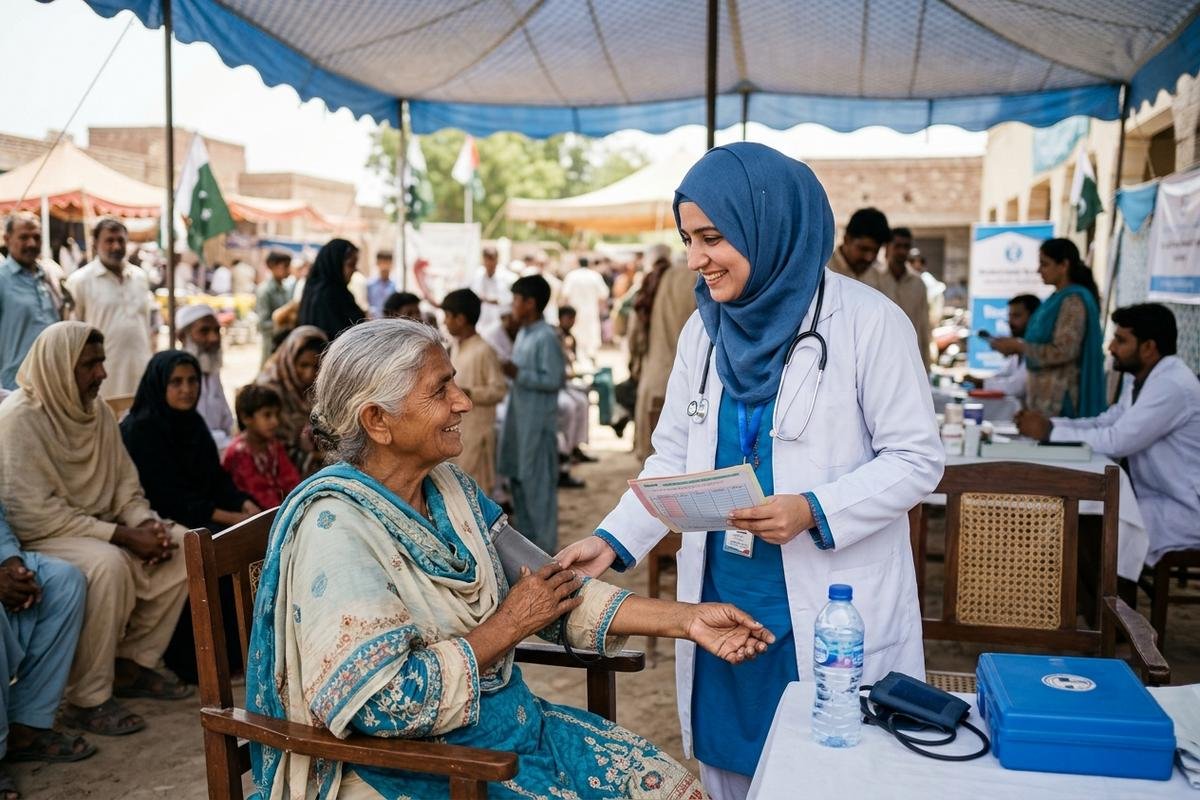
Not every village has a clinic, so care must sometimes travel to the child. Mobile health camps bring doctors and nurses to central locations where families can be seen without a long journey.
4. Routine check-ups and screening
Regular check-ups catch problems early, such as poor growth, weak eyesight or vitamin shortfalls. Early detection is cheaper, simpler and safer than late treatment.
5. Vaccinations
Vaccines protect children from illnesses that once killed or disabled thousands. Keeping them safe requires proper storage and handling, which your gift helps fund.
6. Clean water
Much childhood illness begins with unsafe water. Yaqeen’s Help Home work restores clean water access for widows, orphans and flood-affected households, which means fewer infections before treatment is even needed.
7. Ongoing care for long-term conditions
Some children need treatment for months or years, such as asthma inhalers, skin treatments or follow-up visits. Regular giving makes it possible to plan that care without interruption.
If you want to see how this looks on the ground, read our post Donate to Poor Families in Pakistan | Yaqeen Foundation USA, which shows how support reaches whole households.
The Yaqeen Indus Health Clinic
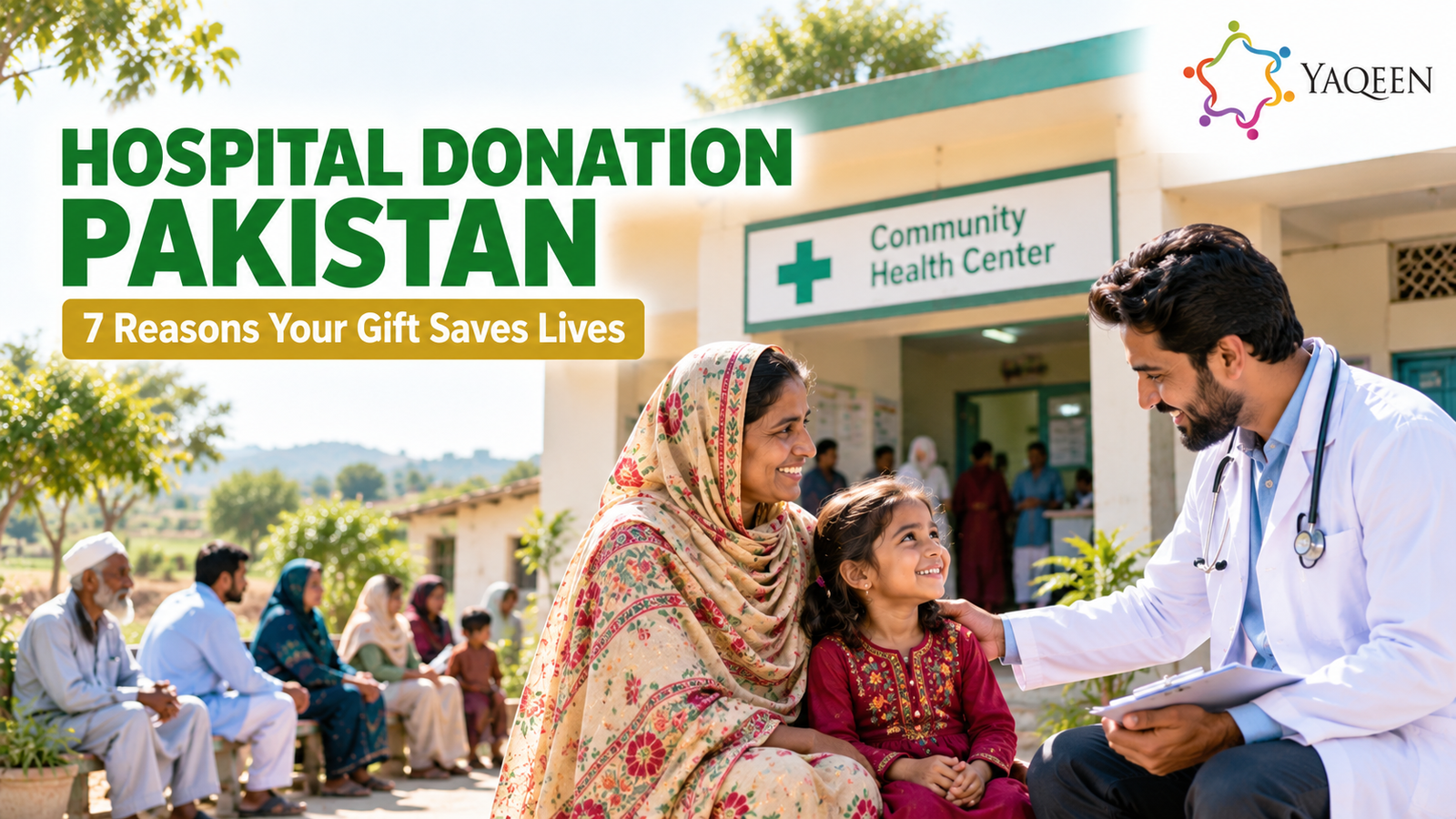
Quality care needs capable partners. Yaqeen Welfare Foundation works with Indus Hospital to run the Yaqeen Indus Health Clinic. Indus Hospital’s CEO, Zafar Zaidi, has spoken about this collaboration, which brings trained medical professionals and dependable standards to the communities we serve.
The principle behind the clinic is simple: a doctor’s visit should never depend on a family’s income. When you donate to orphans through Yaqeen, you help fund that principle for the children who need it most.
Table: What Your Support Can Provide
The table below summarises the main areas of support and what each means for a child. It describes the types of care funded rather than fixed prices, since costs vary by location and season.
| Area of Support | What It Provides | Why It Matters for Orphans |
|---|---|---|
| Free consultations | A doctor’s examination and diagnosis | Removes the cost barrier to seeking help |
| Medicines | Antibiotics, fever treatment, rehydration salts | Treats common illnesses before they become serious |
| Health camps | Mobile clinics in remote villages | Brings care to children who cannot travel |
| Vaccinations | Protection from preventable diseases | Prevents illness that can disable or kill |
| Clean water | Safe drinking water for households | Reduces stomach infections at the source |
| Follow-up care | Repeat visits and long-term treatment | Keeps chronic conditions under control |
| Education support | Tuition, books and scholarships via Help Educate | Helps healthy children stay in school |
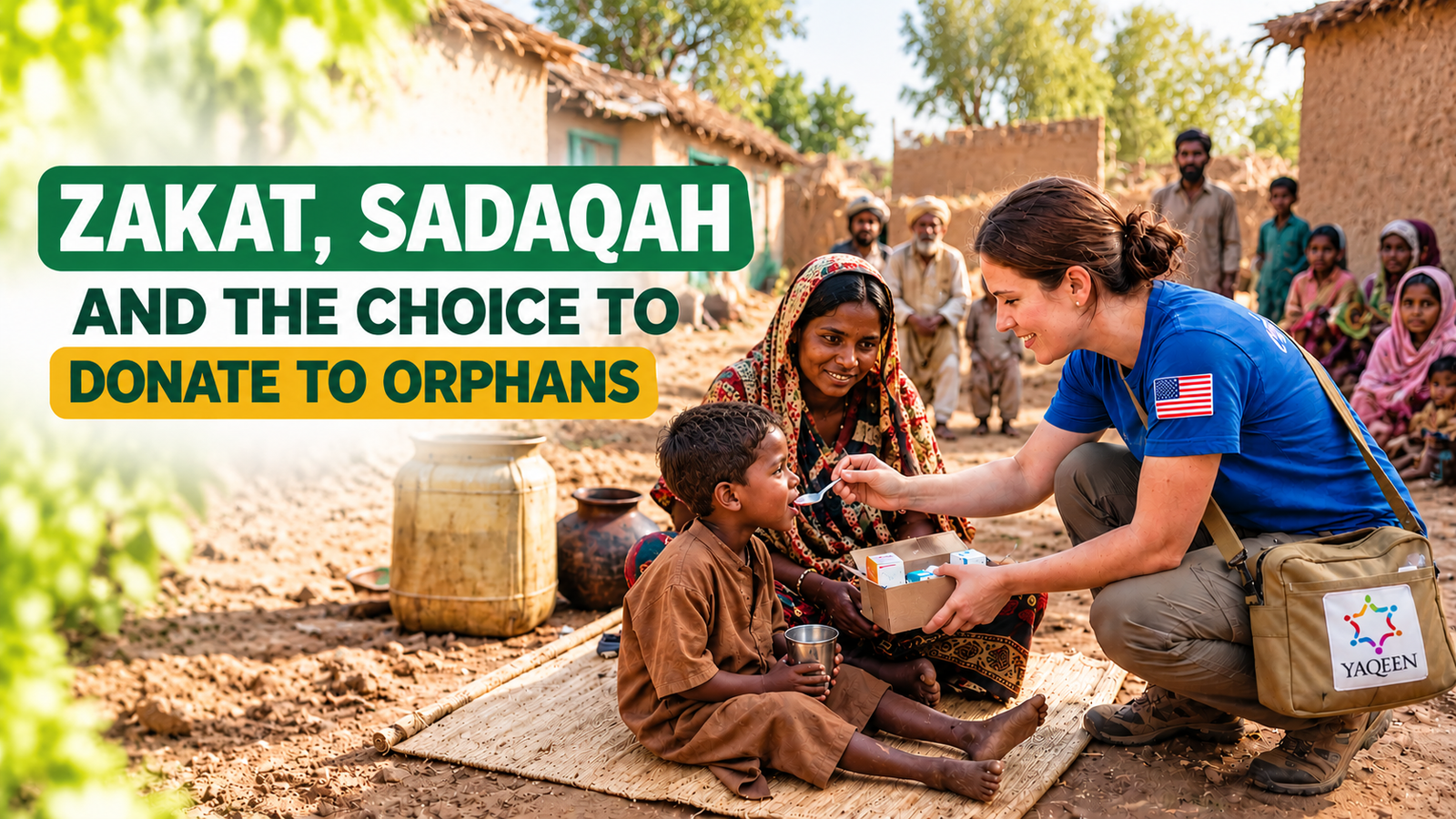
Zakat, Sadaqah and the Choice to Donate to Orphans
For many Muslims in the USA, giving is tied to faith as much as compassion. Two forms of giving matter most here.
Can you give Zakat to support orphan healthcare?
Zakat is an obligation, and scholars hold that it must go to the eight categories named in the Quran. These include the poor and the needy. Free treatment, medicines, food support and shelter for families who meet the criteria fall within this purpose. At Yaqeen, Zakat is held in a separate fund and disbursed strictly to Zakat-eligible recipients. Choose “Zakat” on the donation form and your gift will be ring-fenced accordingly.
If you are not sure how much you owe, use the Zakat Calculator on our website. Understanding your nisab and your eligible assets first makes it easier to donate to orphans with confidence. Our post A Transparent Look at Zakat in Yaqeen Healthcare Programs explains how these funds are handled.
Sadaqah for ongoing care
Sadaqah is voluntary, and it can be given at any time and in any amount. It suits recurring needs such as a child’s monthly medicine. Many donors set up a regular gift so a sick child’s treatment does not stop when a single donation runs out. To understand the spiritual roots of this practice, read The History of Sadaqah in Islam: From Prophets to Modern Day.
Fitrana and seasonal giving
Seasonal obligations matter too. Our post The Importance of Fitrana and How It Helps the Needy explains how this small, required gift reaches families in need. If you are planning your giving around Eid, Eid Zakat vs Qurbani Donation – What Should You Give? can help you decide between the two. You can also use the Fitrana Calculator on our website.
Why USA Donors Play Such an Important Role
People in the USA who donate to orphans overseas have a particular kind of reach. Healthcare costs in rural Pakistan are a fraction of those at home, so a modest gift goes a long way. A donation that covers one appointment in the USA may cover several consultations or a course of medicine in Pakistan.
American donors also bring consistency. Reliable monthly giving lets our teams stock medicines ahead of time, schedule health camps and plan for seasonal spikes in illness. When cold weather raises the risk of chest infections, or monsoon floods contaminate wells, prepared teams respond faster.
The community you belong to matters as well. When neighbours, mosque groups, workplaces and families give together, the effect multiplies. A group that decides to donate to orphans as a team can sponsor far more care than any one person could alone.
What to Look for in an Orphan Charity
Before you give, it is sensible to check that your chosen charity is trustworthy. A few questions help:
- Is the charity transparent about how funds are used? Look for clear statements on overheads and programme spending.
- Does it separate Zakat from general funds? This matters if you are fulfilling a religious obligation.
- Does it work with local partners and trained professionals? Real medical care requires real medical staff.
- Can you verify its standing? Independent evaluators such as Charity Navigator publish ratings for many US charities, which can help you research organisations generally.
You can also read guidance from global health bodies such as the World Health Organization and UNICEF to understand why child health, clean water and vaccination are so central to protecting vulnerable children.
Whichever charity you choose, ask questions. Good organisations welcome them.
Real Needs, Real Seasons
Needs in Pakistan change through the year, and donors who understand this can time their giving well.
Winter. Cold nights raise the risk of chest infections, particularly for children who lack warm clothing and sturdy housing.
Monsoon and flood season. Heavy rain can contaminate wells and spread waterborne illness. Safe water and rehydration treatment become urgent.
Ramadan and Eid. Giving increases, and so does the chance to support children with food, care and seasonal needs.
Year-round. Chronic conditions, routine vaccinations and growth check-ups never stop. This is where steady giving helps the most.
Because needs never fully pause, many supporters choose a recurring plan. A small monthly gift to donate to orphans can do more over a year than a single larger gift, since it allows planning and avoids gaps in treatment.
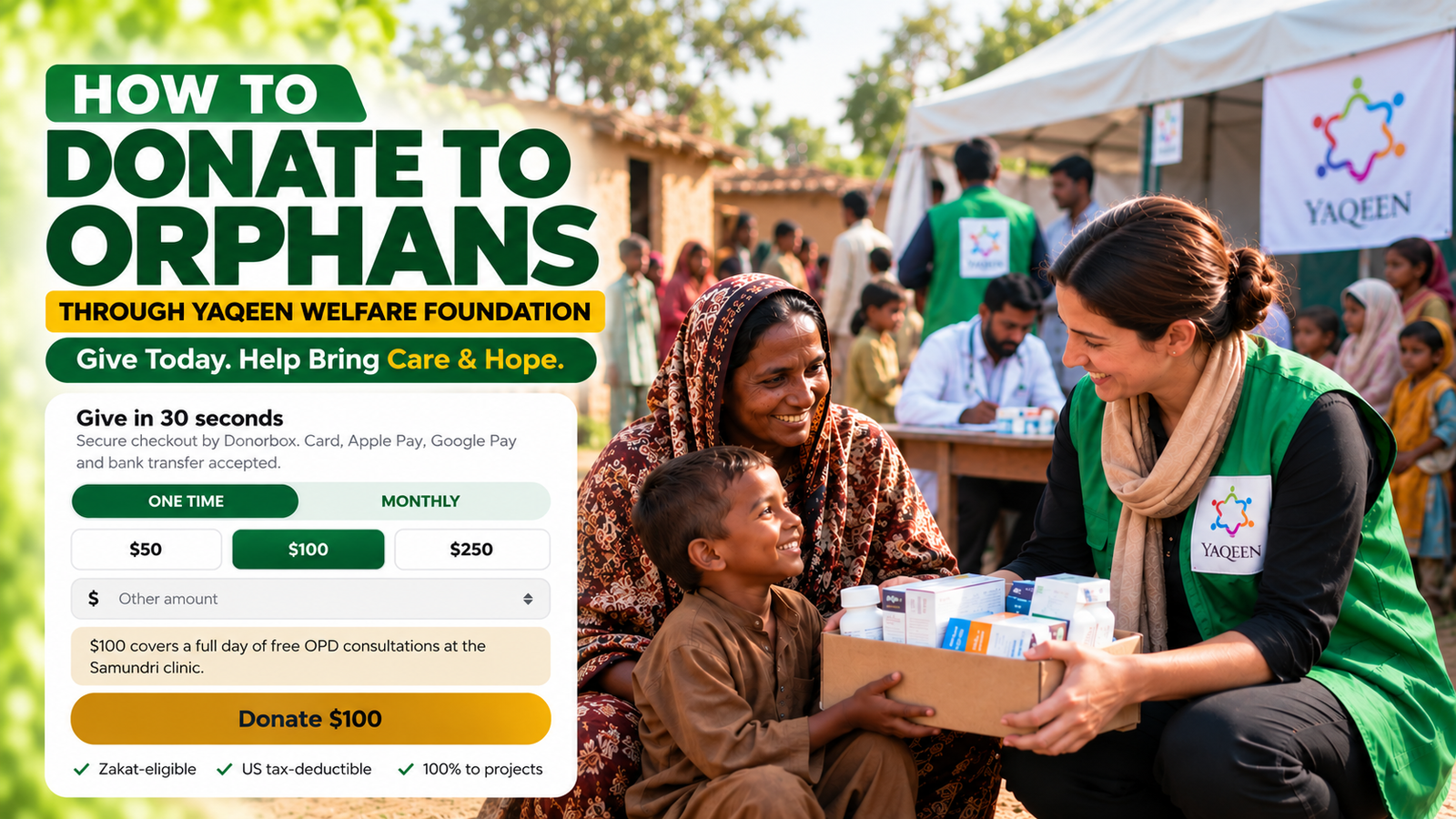
How to Donate to Orphans Through Yaqeen Welfare Foundation
Giving is simple and takes only a few minutes.
- Visit the donation page on the Yaqeen Welfare Foundation website.
- Choose what your gift does. Select the area you want to support, such as healthcare, water, education or orphan support.
- Select Zakat or Sadaqah. If you are giving Zakat, choose the Zakat option so it is ring-fenced.
- Pick one-time or monthly giving. Monthly gifts help us plan care in advance.
- Complete your donation. Keep your receipt, since donations are tax-deductible in the United States.
If you would like to go deeper first, browse more guides on the Yaqeen Welfare Foundation blog.
Beyond Medicine: Building a Healthier Future
Healthcare is the starting point, not the finish line. Children who are well can attend school, and children who attend school can grow into adults who support their families. Yaqeen’s Help Educate programme supports students with tuition, fees, books and performance-based scholarships. Help Home rebuilds shelter and restores clean water for widows, orphans and flood-affected households.
Seen together, these programmes show why people donate to orphans through an organisation that addresses the whole child. Health, learning and a safe home reinforce one another. Each one you fund makes the others work better.
There is also a lasting spiritual reward. In Islam, caring for orphans is among the most honoured acts. Giving that keeps helping a child, such as treatment that prevents lifelong illness or an education that changes a family’s future, is the kind of ongoing charity many donors hope to leave behind.
Frequently Asked Questions
1. How does my donation help provide medical care?
Your donation funds doctor consultations, medicines, medical supplies, health camps and vaccinations. Yaqeen operates a 100% donation policy, so your gift goes to programme work in Pakistan rather than overheads.
2. Can I give Zakat to donate to orphans and support their healthcare?
Yes, in many cases. Free treatment and medicines for eligible families fall within Zakat’s purpose. Yaqeen keeps Zakat in a separate fund and disburses it strictly to Zakat-eligible recipients. Select the “Zakat” option when you donate, and use our Zakat Calculator to work out what you owe.
3. Is my donation tax-deductible in the USA?
Donations to Yaqeen Welfare Foundation are tax-deductible in the United States. Keep your receipt for your records, and speak to a qualified tax professional about your own situation, since we cannot give individual tax advice.
4. What medical services do orphans receive?
Children can receive consultations, routine check-ups, treatment for common illnesses, vaccinations and follow-up care, depending on the programme and location. Clean water and shelter support through Help Home also protect children’s health.
5. Can I give monthly?
Yes. Monthly giving is one of the most effective ways to donate to orphans, because it lets our teams plan care and keep medicines in stock.
6. How can I be sure my gift reaches children in need?
Yaqeen works with established partners, including Indus Hospital through the Yaqeen Indus Health Clinic, and keeps Zakat funds separate. You can also research charities independently through evaluators such as Charity Navigator, and you are welcome to contact us with any questions.
Contact Us
Do you have a question about giving, Zakat or how a programme works? Our team is glad to help. Contact Yaqeen Welfare Foundation online and we will get back to you.
Make a Difference Today
A sick child should never wait for care because of who their family is or what they can pay. When you donate to orphans through Yaqeen Welfare Foundation, you help give that child a doctor, a medicine and a real chance at a healthy life. Give today, and help us bring free medical care, clean water and hope to the people of Pakistan.