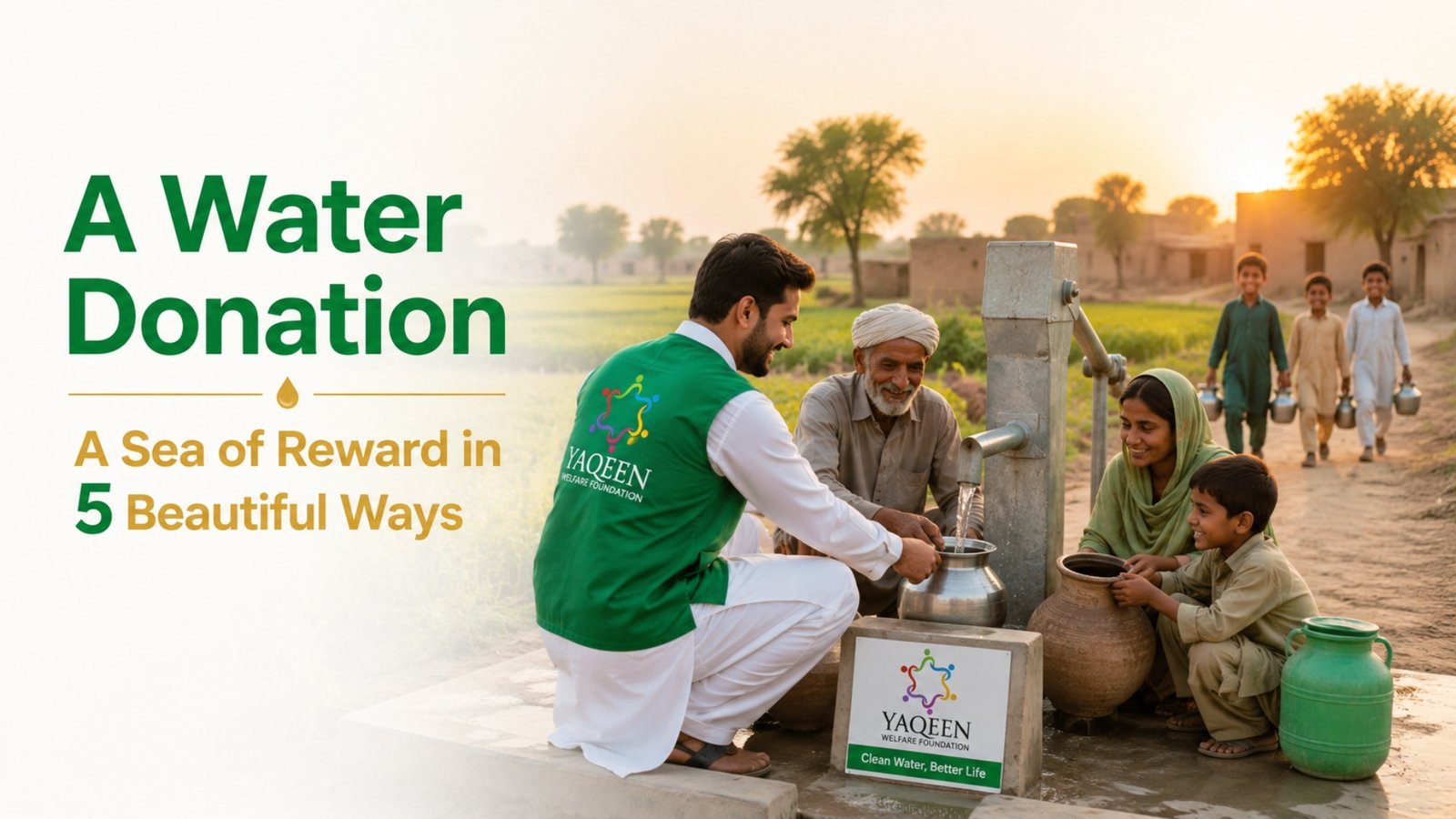
A Water Donation is one of the smallest acts of charity a person can make, and yet it carries one of the biggest rewards promised in Islam. A single Water Donation can quench the thirst of a child in rural Sindh, keep a mother from walking five miles under the sun, and stop a preventable disease before it ever starts. In a country like Pakistan, where over 21 million people still lack access to safe drinking water according to UNICEF, a Water Donation is not a small gesture — it is a lifeline.
At Yaqeen Welfare Foundation, we have watched a single Water Donation transform entire villages: fewer hospital visits, more children in school instead of fetching water, and communities finally free from waterborne illness. This article walks through why a Water Donation is considered one of the most rewarding forms of Sadaqah Jariyah (ongoing charity), and five beautiful ways you can turn your own Water Donation into a source of reward that keeps growing long after you give it.
If you have ever wondered where your Water Donation actually goes, how much it costs, or why scholars call it “charity that never dies,” keep reading — we answer all of it below, including a full FAQ section and a direct link to donate.
Why a Water Donation Is Considered Sadaqah Jariyah
Islam places immense weight on giving water to those in need. The Prophet Muhammad ﷺ was asked which charity was best, and he replied that giving water was among the most virtuous deeds a person could offer (as recorded in the collections of Sunan Abu Dawood and referenced widely on Sunnah.com). This is why a Water Donation is classified as Sadaqah Jariyah — a continuous charity whose reward keeps reaching the donor even after they have passed away, as long as people continue to benefit from the water.
Unlike a one-time meal or a piece of clothing, a well built through your Water Donation can serve a village for 20, 30, even 50 years. Every time someone drinks, cooks, performs wudu (ablution), or waters their crops using that water, the reward is written for the person who funded it. This is precisely why Yaqeen Welfare Foundation has made clean water projects one of the pillars of our work in Pakistan, alongside our free medical clinics that treat the diseases caused by unsafe water in the first place.
The Scale of the Water Crisis in Pakistan
Pakistan is ranked among the most water-stressed countries in the world. According to the World Health Organization, unsafe water and poor sanitation contribute to diarrheal diseases that kill hundreds of thousands of children under five globally every year, and rural Pakistan carries a heavy share of that burden. Villages in Sindh, Balochistan, and southern Punjab often rely on contaminated ponds or must walk for hours to the nearest source. A Water Donation directed to these regions doesn’t just provide convenience — it directly prevents cholera, typhoid, hepatitis A, and dysentery.
This is where your Water Donation becomes more than charity; it becomes preventative healthcare. Fewer contaminated water sources mean fewer patients walking into our clinics with waterborne infections, which allows our medical teams to focus resources on other urgent needs.
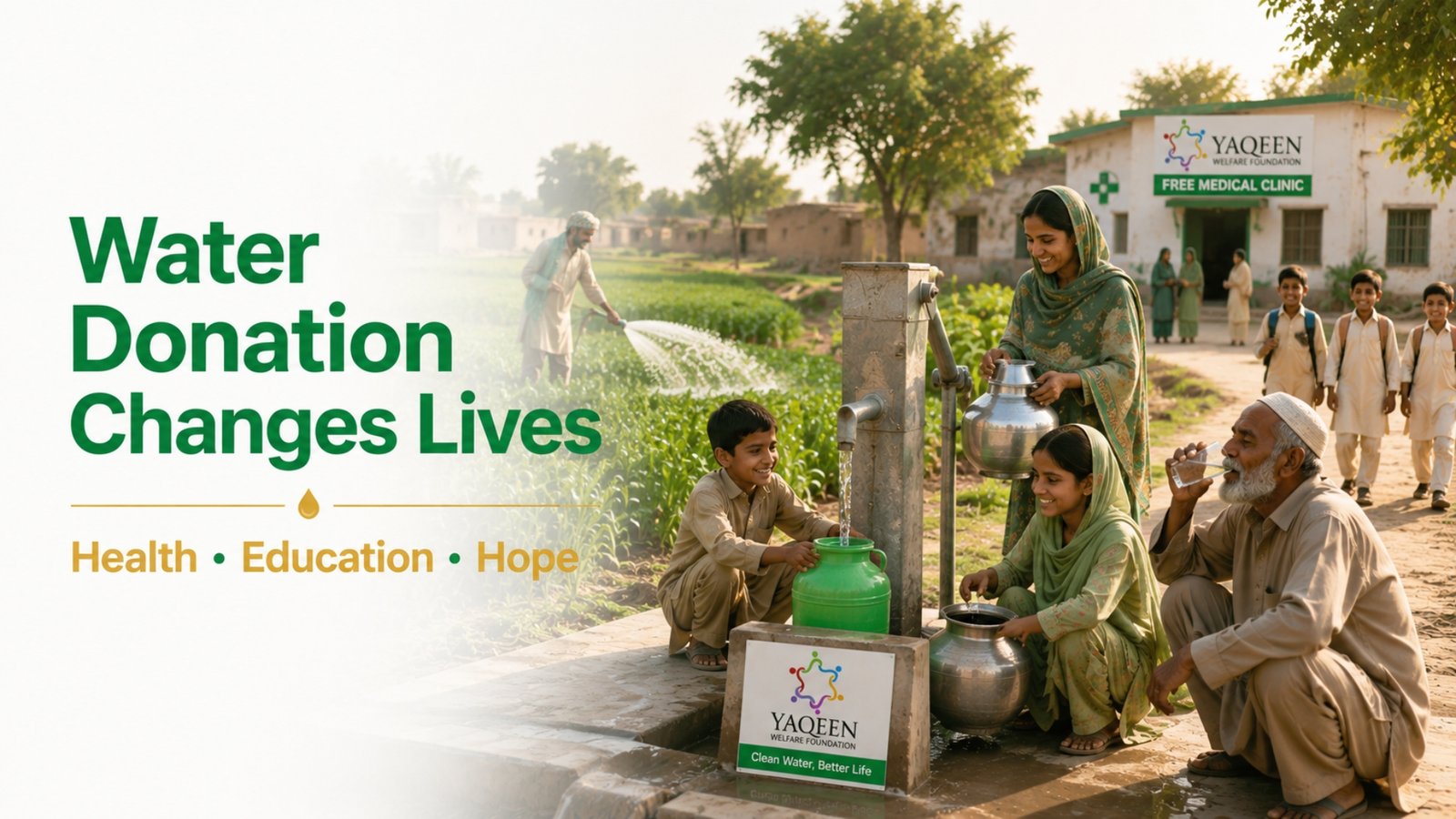
5 Beautiful Ways Your Water Donation Becomes a Sea of Reward
Below are five ways a single Water Donation multiplies in impact and in reward, each one reflecting a different way clean water changes a life in Pakistan.
1. A Water Donation Saves Children From Preventable Death
Diarrhea and waterborne infections remain among the top killers of children under five in under-resourced regions. A Water Donation that funds a clean hand pump or filtration point removes the single biggest risk factor for these illnesses. Parents no longer have to choose between drinking contaminated pond water or watching their children go thirsty.
2. A Water Donation Gives Girls Back Their Education
In many rural communities, it is girls and women who are sent to fetch water, often walking for hours each day. A Water Donation that installs a well inside the village removes this burden entirely, freeing up hours every single day — hours that can now be spent in a classroom instead of on a dirt road carrying a heavy jug.
3. A Water Donation Strengthens Family Health and Income
When a family is not falling sick every few weeks from contaminated water, they save on medical costs and lost work days. A Water Donation therefore has a compounding financial effect: healthier families can farm, work, and earn more consistently, breaking a small piece of the poverty cycle.
4. A Water Donation Keeps Rewarding You After You Are Gone
Because a well or water filtration plant can operate for decades, a Water Donation is one of the few charitable acts that Islamic scholars agree continues to generate reward long after the donor’s death — a concept known as Sadaqah Jariyah. Every sip taken from that well adds to your scale of good deeds.
5. A Water Donation Can Be Made in a Loved One’s Name
Many donors choose to dedicate their Water Donation to a deceased parent or family member as ongoing charity on their behalf. This transforms a Water Donation into a gift that benefits both the living community receiving the water and the soul of the person it is dedicated to.
Table: Types of Water Donation Projects and Their Impact
Compare which Water Donation option fits your budget and desired impact
| Water Donation Type | Typical Lifespan | People Benefited | Best For |
|---|---|---|---|
| Hand Pump Installation | 10–15 years | 1 family to small cluster of homes | Smaller, targeted Water Donation for one household or neighborhood |
| Community Water Well | 20–30+ years | 200–500 villagers | Donors wanting maximum Sadaqah Jariyah reach |
| Water Filtration Plant | 15–25 years | 500–1,000+ villagers | Areas with existing wells but contaminated groundwater |
| Water Tank / Storage Unit | 10–20 years | Whole village during dry season | Regions facing seasonal drought |
Note: Exact figures vary by region, terrain, and maintenance conditions on the ground in Pakistan.
How Yaqeen Welfare Foundation Uses Your Water Donation
Every Water Donation received by Yaqeen Welfare Foundation is directed toward clean water infrastructure in the underserved regions of Pakistan where our teams already operate. Because we work alongside our existing Yaqeen Health Clinic network, we can identify exactly which villages are suffering most from waterborne illness and prioritize a Water Donation project there first. This on-the-ground presence means your Water Donation isn’t guesswork — it goes where the medical need is greatest.
We also encourage donors to pair a Water Donation with other forms of giving. For example, many of our supporters give Zakat alongside their Water Donation; if you are unsure how the two differ, our article on Sadaqah vs. Zakat: 6 Key Differences Every Muslim Should Know breaks it down clearly. Others prefer to calculate their obligatory giving first using our Zakat Calculator before adding a voluntary Water Donation on top.
If you’ve already given toward a well and want to understand why scholars rank it so highly, we go deeper in 5 Reasons a Water Well Is the Best Sadaqah Jariyah. And if you’re curious how small acts of charity — including a Water Donation — have changed real lives on the ground, don’t miss Your Charity Saved Lives: 8 Heartwarming Stories.
Common Mistakes to Avoid When Making a Water Donation
Just as donors can make errors calculating Zakat — covered in our post 7 Mistakes People Make When Calculating Zakat — there are a few avoidable mistakes when it comes to a Water Donation:
- Not confirming maintenance plans: A well without a maintenance fund can fall into disrepair within a few years. Ask if your Water Donation includes upkeep.
- Donating without local needs assessment: The most effective Water Donation is one directed to an area with a confirmed water shortage, not just a general fund.
- Forgetting to make an intention (niyyah): Since reward is tied to intention, dedicating your Water Donation — whether for yourself, a parent, or a deceased loved one — should be done consciously.
- One-time thinking: A single Water Donation is valuable, but recurring or larger community wells create broader Sadaqah Jariyah.
The Bigger Picture: Water Donation as Part of a Complete Mission
Yaqeen Welfare Foundation’s mission goes beyond a single Water Donation. Clean water, free medical treatment, and community support are designed to work together. A Water Donation reduces disease before it starts; our clinics treat what water alone cannot prevent; and programs like the ones described in One Meal, One Prayer: 5 Incredible Reasons One Life Changed Forever show how food, prayer, and water access intersect in the daily lives of the families we serve.
Every Water Donation, no matter the size, plugs directly into this larger system of care for the people of Pakistan.
Frequently Asked Questions About Water Donation
1. How much does a Water Donation cost? Costs vary by project type and region. A hand pump is typically the most affordable option, while a full community well or filtration plant requires a larger Water Donation due to drilling depth, materials, and installation labor.
2. Is a Water Donation considered Sadaqah Jariyah? Yes. Because the water continues to benefit people for years after installation, a Water Donation is widely regarded by scholars as one of the clearest examples of Sadaqah Jariyah, or ongoing charity.
3. Can I dedicate my Water Donation to a deceased family member? Yes. Many donors specifically request that their Water Donation be dedicated as ongoing charity on behalf of a parent or loved one who has passed away.
4. Does my Water Donation count toward Zakat? It depends on your intention and how the donation is structured. If you want your contribution to count specifically as Zakat rather than general Sadaqah, let the foundation know when donating, or use our Zakat Calculator first to determine your obligatory amount.
5. How do I know my Water Donation reached the right community? Yaqeen Welfare Foundation operates directly on the ground in Pakistan through our clinic and field teams, allowing us to identify and confirm which villages receive each Water Donation project.
6. Can I make a Water Donation online? Yes, you can make a secure Water Donation directly through our online donation page.
Make Your Water Donation Today
A Water Donation costs far less than most people expect, yet the reward — for you, your family, and the community you help — is immeasurable. Whether you choose to fund a hand pump for a single household or contribute toward a full community well, your Water Donation becomes a source of Sadaqah Jariyah that keeps giving long after the transaction is complete.
Ready to give? Make your Water Donation now or reach out to our team directly for questions about ongoing water projects.
Contact us:
- Email: info@yaqeen.org
- Support: support@yaqeen.org
- Donate online: yaqeen.org/donate