7 Ways a Free Health Clinic Can Transform a Rural Community
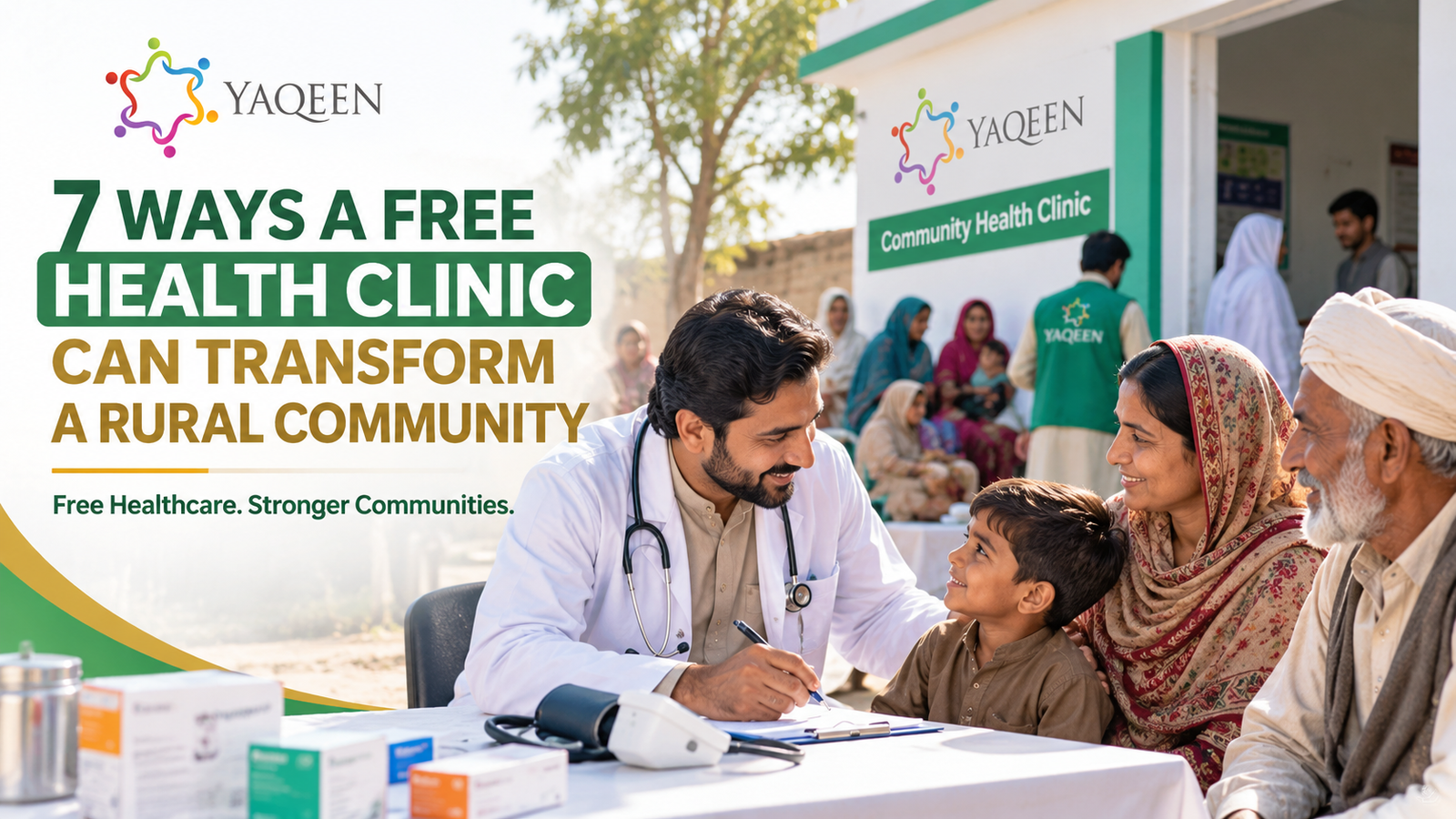
A free health clinic does far more than treat the person sitting in front of the doctor. In a rural village, it changes how families spend their money, how children grow, how mothers survive childbirth and how neighbours look after one another. Across rural Pakistan, millions of people live with a quiet rule: do not get sick, because we cannot afford it. When a free health clinic opens nearby, that rule begins to break.
At Yaqeen Welfare Foundation, we see this change in practice. Our work in free healthcare Pakistan is built on one belief: access to treatment should never depend on a family’s income. This article looks beyond individual patients. It explains seven ways accessible care lifts an entire community, and how your support can make it happen.
Why Rural Healthcare Pakistan Needs More Than Hospitals
Most major hospitals in Pakistan are in big cities. A farmer, a labourer or a widow in a remote village may have to travel hours, pay for transport, lose a day’s wages and then pay consultation and medicine fees on arrival. For many families, that cost is impossible, so they wait.
Waiting is where the damage begins. A cough becomes pneumonia, a fever becomes typhoid, high blood pressure becomes a stroke, and a treatable infection becomes a lifelong condition. This is the central gap in rural healthcare Pakistan: the problem is not only a shortage of doctors, but the distance, cost and fear that keep patients away from the doctors who exist.
A free health clinic closes that gap by removing the barriers one at a time. It sits close to people’s homes and charges nothing for consultation, so patients come early. Early care is the starting point of every transformation described below. If you want to see how giving connects to this need, read our blog post Sadaqah That Heals: Support Healthcare In Rural Pakistan Today.
1. A Free Health Clinic Brings Earlier Care and Earlier Diagnosis
The first and most important change is timing. When a visit costs nothing, people stop treating the clinic as a last resort and start treating it as a first step.
Consider what this means in practice:
- A persistent cough is checked before it spreads to the rest of the household.
- Fever and stomach illness are diagnosed before dehydration becomes dangerous.
- Blood pressure and blood sugar are measured before they cause lasting harm.
- Infectious diseases such as hepatitis C, malaria and typhoid are found before they spread through a village.
Every disease caught early is cheaper, safer and easier to treat. The effect also spreads outward. One diagnosed patient who finishes treatment is one fewer source of infection for neighbours, classmates and relatives.
This is why a charity medical clinic in a rural area has such a large effect compared with its size. The clinic is not only treating illness, but also interrupting it before it grows.
2. A Free Health Clinic Lowers Family Expenses and Protects Savings
Medical bills are one of the fastest routes into poverty. A family might sell a goat, borrow from a moneylender or pull a child out of school to pay for one serious illness. Even a small bill can mean skipping meals or delaying rent.
A free health clinic cuts this pressure at the root. When consultations, tests and medicines cost nothing, families can use their limited income for food, school fees, farming supplies and home repairs. They stop making the impossible choice between “treat the illness” and “feed the family.”
The savings also last. Because patients arrive earlier, they avoid the hospital admissions and emergency trips that cost far more. Over months and years, a household that once lived one illness away from crisis builds some stability.
For donors, this is a strong reason to give. A single healthcare donation can protect an entire household’s finances, not just one patient’s health. On our website, a $25 gift covers a full day of free consultations for a rural family.
3. A Free Health Clinic Creates Healthier Children
Children are the first to suffer when care is out of reach. Their illnesses move quickly, and delays are dangerous. Diarrhoea, respiratory infections, fevers and malnutrition can all be life-threatening when treatment comes late.
A free health clinic changes a child’s early years in several ways:
- Routine check-ups catch problems with growth, nutrition and development.
- Immunisation protects children against diseases that once filled village funerals.
- Prompt treatment of infections keeps a child in school instead of at home.
- Nutrition guidance helps parents feed their children better with what they have.
A healthy child attends school more regularly, learns more and grows into a more productive adult. That is why health and education work together. At Yaqeen, our education programmes support students with tuition, books and scholarships, and a healthy child is far better able to use that opportunity. When a free health clinic keeps a child well, it protects their future as well as their present.
4. A Free Health Clinic Supports Mothers Before and After Birth
In many rural areas, pregnancy is still faced with fear. Antenatal care may be unavailable, a skilled birth attendant may be far away, and a complication in labour can turn deadly within hours.
A free health clinic gives mothers a safe place to turn. Access to care can include:
- Pregnancy check-ups to monitor mother and baby.
- Early detection of warning signs such as high blood pressure or anaemia.
- Guidance on nutrition, hygiene and safe delivery.
- Postnatal care for the mother and the newborn.
- Advice on spacing pregnancies and protecting maternal health.
When mothers are healthier, entire households are healthier. A mother who is well can care for her children, work, and pass on good health habits. A mother who is lost, or left permanently weakened, changes a family for generations.
Supporting women’s health is therefore one of the strongest forms of social investment. It is also one of the clearest examples of how free healthcare Pakistan reaches beyond treatment into dignity and security.
5. A Free Health Clinic Opens Real Access to Medicines
A diagnosis without medicine is only half a treatment. In many villages, patients leave a consultation with a prescription they cannot afford to fill. Some take half the course, some share medicines with family and some buy nothing at all. This often leads to relapse, drug resistance and repeat illness.
A free health clinic with an on-site pharmacy solves this. The patient is seen, diagnosed and given essential medicines in the same visit, with no second journey and no second bill. Follow-up visits then check that the treatment is working.
This matters for chronic conditions such as hypertension and diabetes, where steady medicine is essential. It matters for infections where finishing the full course prevents the illness from returning. It also builds trust, because patients know the clinic will give them what they actually need.
At the Yaqeen-Indus clinic in Samundri, our website reports that over 40,000 free medicines have been dispensed. Each of those is a prescription that might otherwise have gone unfilled.
6. A Free Health Clinic Spreads Health Education
Treatment helps one person at a time. Education helps a whole village. A free health clinic is a natural place to teach practical health knowledge, and people are most open to advice when they are already looking for help.
Useful topics include:
- Washing hands and safe food handling.
- Boiling or filtering drinking water.
- Recognising the signs of dehydration, malaria and typhoid.
- Why vaccines matter.
- Looking after blood pressure, blood sugar and mental wellbeing.
- When to seek care urgently instead of waiting.
Mental health deserves special mention. Our site notes more than 6,500 mental health screenings, a service almost no rural clinic in Pakistan offers. Stress, grief, anxiety and depression are common in communities facing poverty, floods and loss, but they are rarely discussed. A clinic that treats the mind as seriously as the body helps families feel seen.
Health education also travels. A mother who learns about clean water tells her sister. A father who understands the importance of a full antibiotic course tells his friends. Knowledge multiplies faster than any single doctor could.
7. A Free Health Clinic Builds a Stronger, More Hopeful Community
The last change is harder to measure, but it may be the most important. When people can see a doctor without fear of cost, something shifts in how they feel about their future. They are more willing to plan, to work and to send their children to school.
A free health clinic also becomes a community landmark. Local people are hired, volunteers step forward and donors from across the world become connected to a village they may never visit. Trust grows between the clinic and the families it serves, and it spreads into other kinds of cooperation.
Healthy people work more, farm more, study more and care for one another more. A stronger local economy follows, and that economy supports more families, who in turn can contribute to their own community.
This is the real meaning of a charity medical clinic: not charity as a one-time act, but charity as the foundation of a self-sustaining, hopeful community. That idea is at the heart of what we describe in What Is Sadaqah Jariyah and Why Should You Donate Online in Pakistan?, where a gift keeps benefiting people long after it is made.
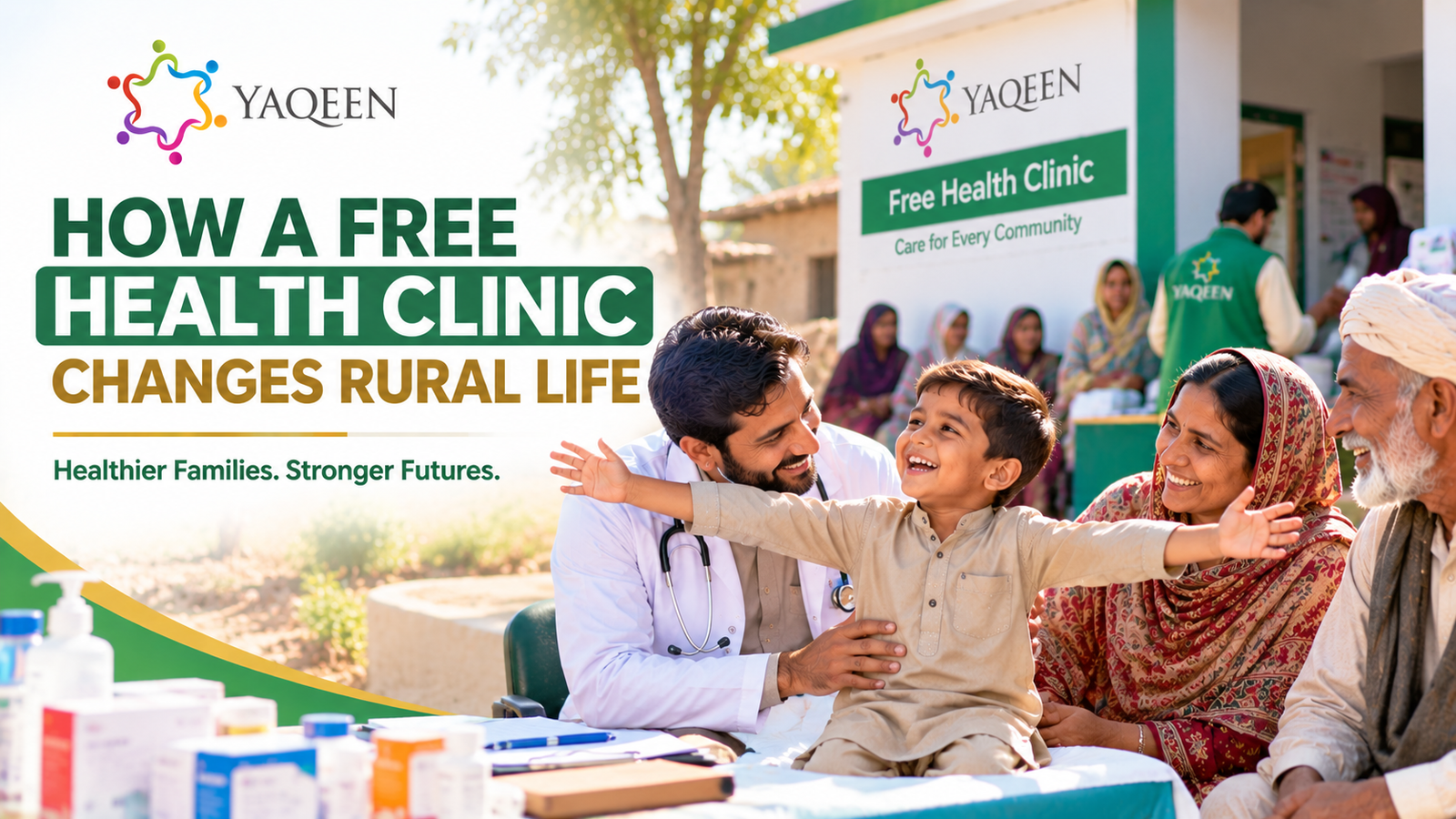
How a Free Health Clinic Changes Rural Life
| # | Transformation | What changes | Who benefits most |
|---|---|---|---|
| 1 | Earlier care | Illness is caught before it becomes severe | Whole village, especially infection-prone households |
| 2 | Lower family expenses | Medical bills no longer drain savings | Daily-wage and farming families |
| 3 | Healthier children | Immunisation, growth checks, fewer missed school days | Infants and school-age children |
| 4 | Maternal support | Safer pregnancies and postnatal care | Mothers and newborns |
| 5 | Medicine access | Prescriptions are filled on site, free of charge | Chronic and infectious disease patients |
| 6 | Health education | Prevention knowledge spreads between households | Every age group |
| 7 | Stronger communities | Trust, productivity and hope grow | The entire community |
What Yaqeen Has Built: The Yaqeen-Indus Free Health Clinic
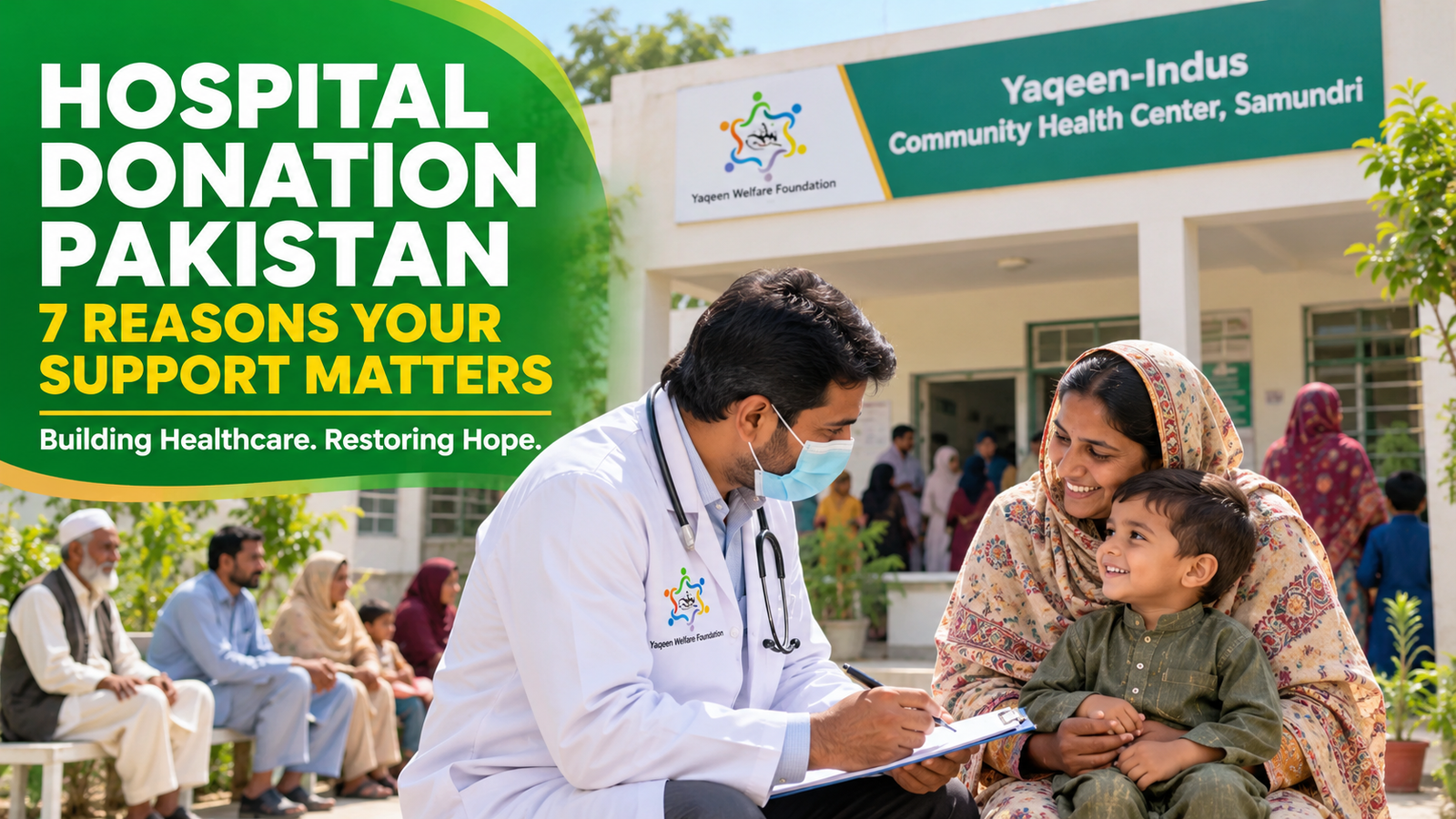
These ideas are real and already working. The Yaqeen Indus Health Clinic is one of the core projects of Yaqeen Welfare Foundation, run in partnership with the Indus Hospital & Health Network, one of Pakistan’s best-known providers of free care. The clinic is located in Samundri, Faisalabad, and serves marginalised communities living around it.
According to the figures on our website:
- More than 52,000 patients have been treated, with free consultation, diagnosis and follow-up.
- More than 6,500 mental health screenings have been completed.
- More than 40,000 free medicines have been dispensed.
Services include free consultations, essential medicines, laboratory tests, immunisation and public health programmes covering hepatitis C, malaria, typhoid and mental health. Nobody is asked about their ability to pay. You can read more on our Yaqeen Health Clinic page.
Our work does not stop at the clinic door. Yaqeen also supports clean water and sanitation, education and housing for widows, orphans and flood-affected households, because health depends on all of these. The same logic is described in our post What Is Qurbani Donation and Why Every Muslim Must Give One?, which explains how a single act of giving can serve a village every day.
For a broader view of why this approach works, the World Health Organization explains the value of primary health care as the foundation of fair and affordable health systems. The Indus Hospital group also describes its own public health initiatives for community-based care.
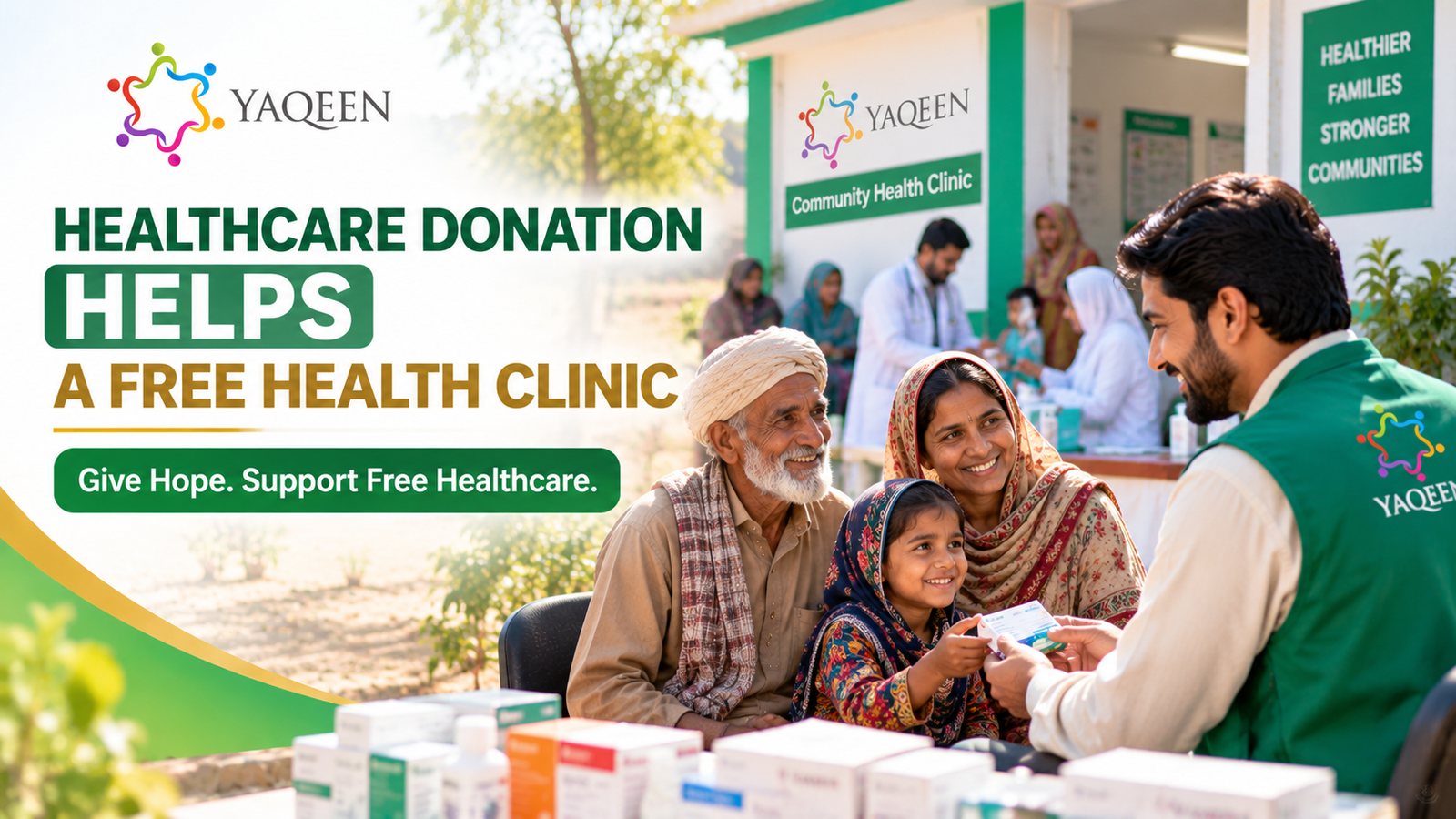
How Your Healthcare Donation Helps a Free Health Clinic Keep Its Doors Open
A free health clinic is only free for the patient. Doctors, nurses, medicines, laboratory supplies, electricity and clean water all have real costs. That is why every healthcare donation matters.
Your Zakat and Sadaqah can fund:
- Free consultations for families who could not otherwise afford them.
- Essential medicines dispensed on site.
- Laboratory tests and diagnostics.
- Immunisation and public health programmes.
- Mental health support and community awareness sessions.
Giving works especially well because the benefit repeats. A clinic that treats a patient this month is still there next month for the next family. If you are looking for a form of giving that keeps working, our guide Why Hajj Is Important – The One Journey That Erases All Your Sins also reflects on how deeply giving can reshape the human heart.
You do not need to be wealthy to make a difference. A small, regular gift supports a free health clinic more reliably than a single large one, because the clinic can plan its work around steady support.
Frequently Asked Questions About a Free Health Clinic
What is a free health clinic?
A free health clinic is a medical facility that provides consultations, diagnosis, treatment and often medicines to patients without charging them. At the Yaqeen-Indus clinic in Samundri, Faisalabad, services are free for every patient who walks in.
Who can use the Yaqeen free health clinic?
The clinic is open to everyone, regardless of background or ability to pay. It focuses on marginalised families in the surrounding rural communities.
How is a free health clinic funded?
It is funded by donations such as Zakat and Sadaqah, along with partnerships with organisations like Indus Hospital & Health Network. Donor support pays for staff, medicines, equipment and outreach.
Can I give Zakat to a charity medical clinic?
Many donors give Zakat to support free treatment for eligible people in need. Rules can vary by school of thought, so you should confirm with a qualified scholar or contact us for guidance on how your gift will be used.
How does a clinic improve rural healthcare in Pakistan?
It brings care closer to home, removes cost barriers, delivers medicines and vaccines, supports mothers and children and teaches prevention. Over time, this reduces serious illness and strengthens the whole community.
What does a donation of $25 cover?
According to our website, $25 covers a full day of free consultations for a rural family.
How can I contact Yaqeen Welfare Foundation?
You can reach us through our online contact page: Contact Yaqeen Welfare Foundation. Whether you want to donate, volunteer, ask how your gift is used or learn more about our programmes, our team will be glad to hear from you.