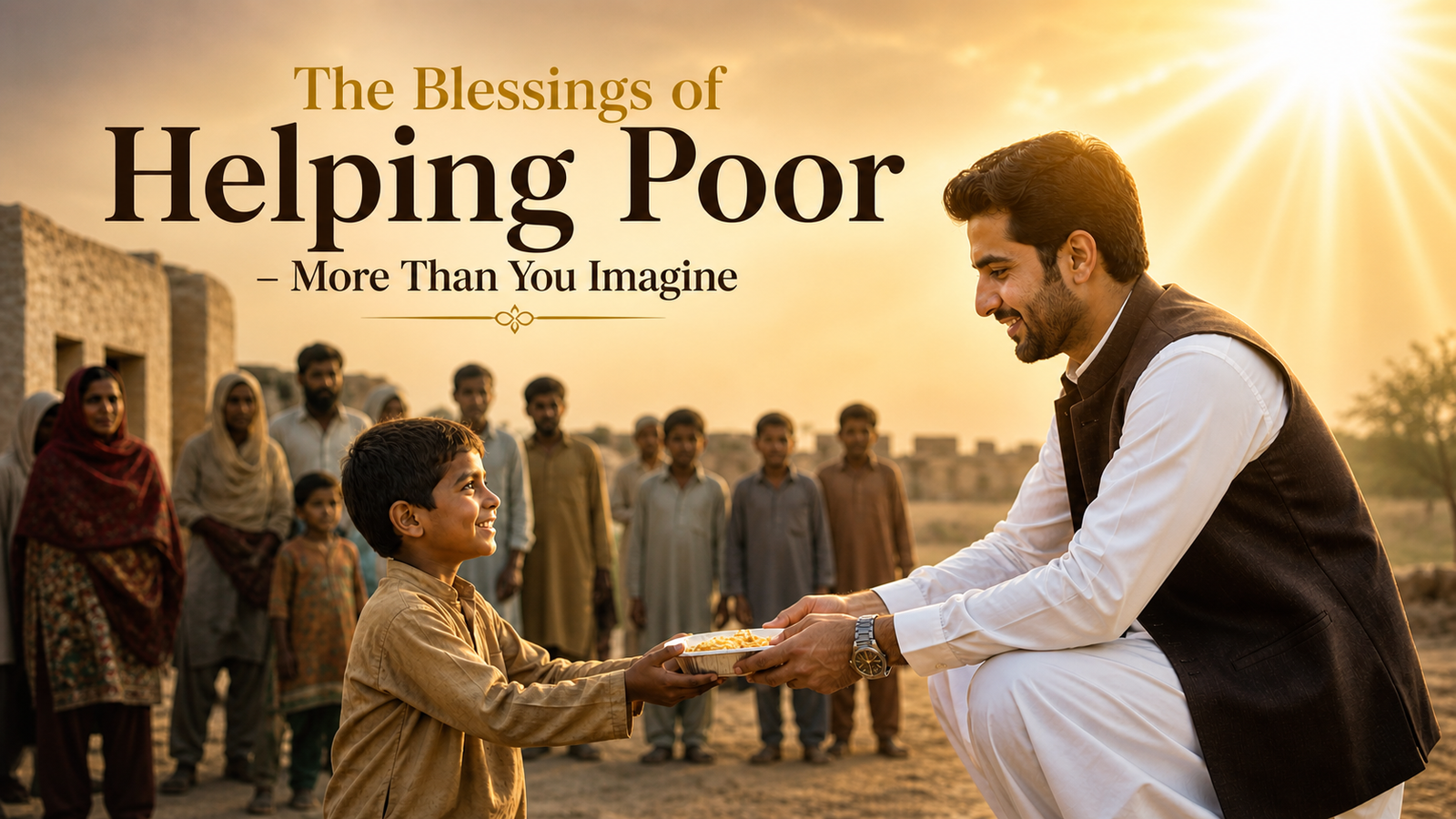
The Islamic blessings of helping the poor are far greater than most of us realize. We tend to think of charity as a one-way transaction: we give, someone else receives, and the story ends there. But in the Islamic worldview, that is only the visible half of the picture. Every rupee spent on a hungry family, every meal handed to a stranger, every school fee quietly paid for an orphan sets in motion a chain of reward, protection, and Barakah that often returns to the giver in ways they never expected — and may never even trace back to its source.
At Yaqeen Welfare Foundation, we see both sides of this exchange every day: the immediate relief on the face of a mother who can finally feed her children, and the quiet, almost invisible transformation that takes place in the life of the person who made it possible. This article explores what the Quran and Sunnah teach us about the Islamic blessings of helping the poor, why these blessings matter more than ever in a country like Pakistan, and how you can begin tapping into them today.
What Are the Islamic Blessings of Helping the Poor?
When we talk about the Islamic blessings of helping the poor, we are not speaking in vague, sentimental terms. Islamic scripture is remarkably specific about the rewards attached to charity:
- Multiplication of reward — Allah describes charity as a seed that grows into seven hundred-fold reward (Surah Al-Baqarah, 2:261).
- Protection from calamity — The Prophet ﷺ taught that charity extinguishes sin “as water extinguishes fire” and shields the giver from harm.
- Barakah in wealth — Far from depleting resources, sincere giving is said to increase the giver’s provision in ways that cannot be measured on a balance sheet.
- Shade on the Day of Judgment — Charity given sincerely is described as a canopy that shelters the believer on a day when shelter will be scarce.
- Answered prayers from the recipient — The dua of someone you helped, especially when they had nowhere else to turn, carries a weight that ordinary supplications may not.
These are not abstract promises reserved for scholars to debate. They are practical, lived realities that countless Muslims — including donors and field staff at Yaqeen Welfare Foundation — describe experiencing firsthand.
The Quranic Foundation: A Loan to Allah
One of the most striking metaphors in the Quran compares charity to a loan given directly to Allah:
“Who is it that will loan Allah a goodly loan so He may multiply it for him many times over?” (Surah Al-Baqarah, 2:245)
This verse reframes the entire act of giving. You are not simply parting with money; you are entering into a transaction with the Creator of wealth itself, who has guaranteed a return that exceeds anything available in this world. This single ayah is the theological backbone behind the Islamic blessings of helping the poor, and it explains why generations of Muslims have built their financial decisions around the principle of giving first and trusting Allah to provide.
If you’d like to go deeper into the Quranic verses on charity and their context, our piece on understanding Sadaqah and Zakat in the Quran breaks this down verse by verse.
Sadaqah Jariyah: Charity That Keeps Giving Long After You’re Gone
Among the deepest Islamic blessings of helping the poor is the concept of Sadaqah Jariyah — ongoing charity whose reward continues to accumulate even after the giver has passed away. A water well dug for a thirsty village, a school built for children who will go on to educate their own children, knowledge shared that spreads across generations — each of these represents an investment whose dividends are paid not in currency, but in reward that compounds indefinitely.
The Prophet ﷺ said:
“When a person dies, his deeds end except for three: ongoing charity, beneficial knowledge, or a righteous child who prays for him.” (Muslim)
This is why Yaqeen Welfare Foundation prioritizes projects like clean water systems and school infrastructure — they are designed specifically to keep generating reward for donors long after the initial donation is made. You can read more about how this works in our article on why Sadaqah Jariyah is the smartest long-term investment a Muslim can make.
Historical Proof: How Early Muslims Understood These Blessings
The earliest Muslims didn’t treat charity as an afterthought — they built entire civilizations around it.
Mukhayriq and the First Waqf
One of the earliest recorded acts of institutionalized giving in Islam was the endowment made by Mukhayriq, who donated seven orchards in Medina to the Prophet ﷺ with explicit instructions that their produce benefit the poor. This single act seeded what would become the Waqf system — a network of charitable endowments that would go on to fund hospitals, libraries, mosques, and travelers’ lodges across the entire Islamic world.
Uthman ibn Affan and the Well of Rumah
When the early Muslim community of Medina suffered from a severe shortage of clean drinking water, Uthman ibn Affan (RA) purchased a privately-owned well and dedicated it as a public trust, free for all to use. Centuries later, a modern agricultural endowment established in his name still operates in Saudi Arabia today — proof that one generous decision, made sincerely for Allah’s sake, can generate benefit for well over a thousand years.
The Bimaristans of the Islamic Golden Age
The Bimaristans — Islamic hospitals of the Abbasid and Umayyad periods — were funded almost entirely through Waqf endowments from merchants, scholars, and rulers who understood that their wealth was a trust, not a possession. These hospitals treated patients regardless of religion, social class, or ability to pay, and even discharged them with clothing and money to support their recovery. The entire system ran on the belief that helping the sick was an act of worship, and those who financed it were accumulating reward with every patient healed.
The Prophet ﷺ told us plainly:
“Charity does not decrease wealth.” (Muslim)
This is not a metaphor — it is a promise from the One who created wealth itself. To learn more about how the Waqf system shaped Islamic civilization, see our article on the history of Waqf and its role in building Muslim societies.
Protection From What You Never Saw Coming
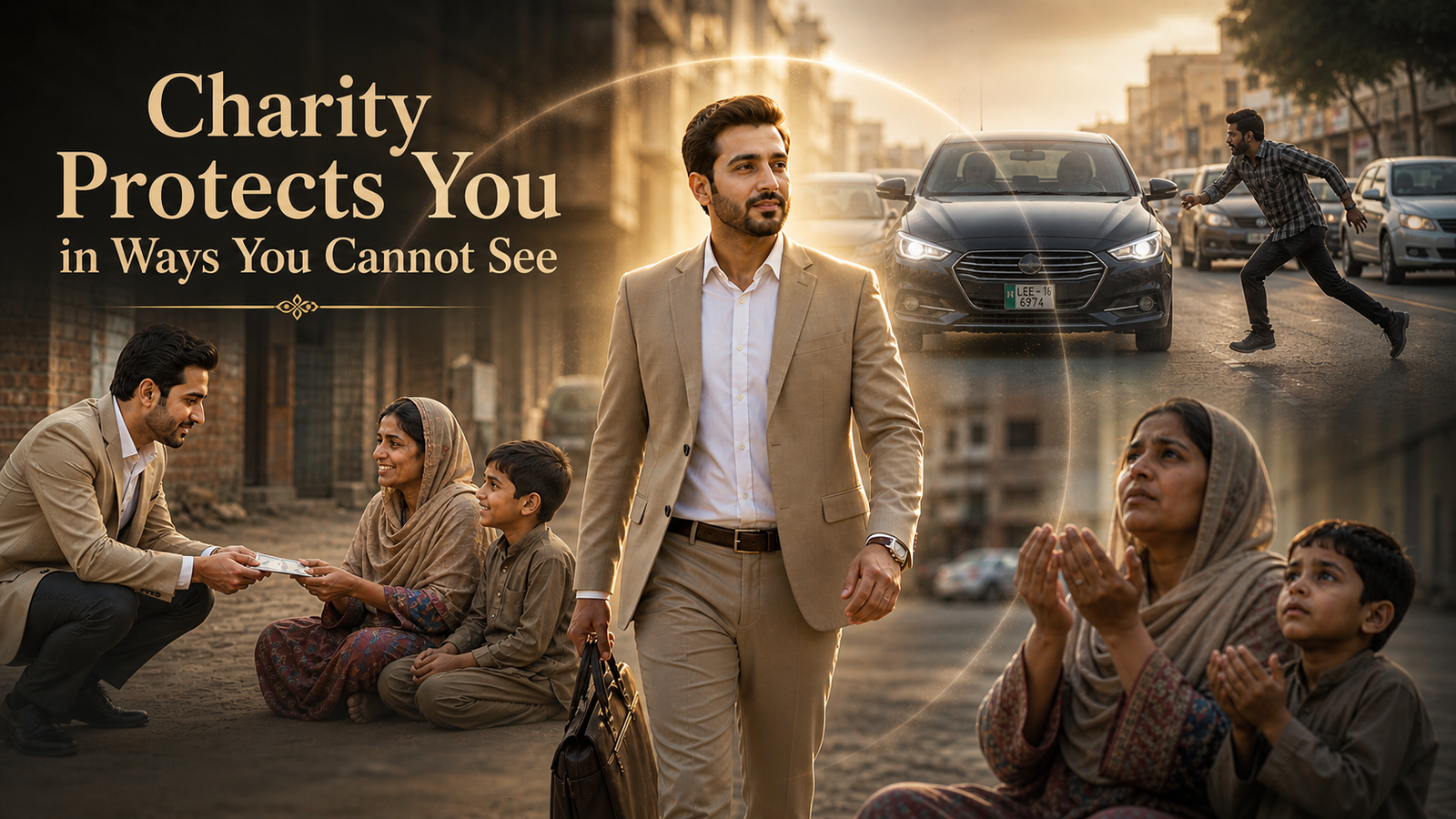
There is a category of blessing that is invisible by its very nature: the harm that never happened. You will never read the headline about the accident you avoided. You won’t receive a notification for the illness that passed you by. No record exists of the financial disaster that quietly dissolved before it reached your door.
Islamic scholarship has long recognized that Sadaqah acts as a shield between the believer and unseen misfortune. Ibn al-Qayyim wrote extensively about how charity wards off hardship, softens the hearts of those who might otherwise cause harm, and draws divine protection in ways human logic cannot trace. This is one of the most overlooked dimensions of the Islamic blessings of helping the poor — the protection that arrives before disaster, not after.
Consider what this means practically. Every time you feed a hungry family, support a child’s education, or contribute to clean water for a remote village, you are not just changing their circumstances — you may simultaneously be protecting your own family from a hardship you will never have to face.
Education: The Foundation of Real Health and Dignity in Pakistan
In Pakistan today, no investment carries a wider return than education. It is the single thread that, when pulled, lifts entire communities — improving health outcomes, strengthening local economies, reducing vulnerability to exploitation, and equipping the next generation to break cycles of inherited poverty.
Why Education and Health Are Inseparable
Communities with higher literacy rates make better dietary choices, seek early medical care rather than waiting for emergencies, follow vaccination schedules, and understand the difference between clean and contaminated water. A mother who has attended school is statistically far more likely to ensure her children complete their immunizations than one who has not.
The Burden of Preventable Illness
Pakistan’s healthcare system carries an enormous burden of conditions that are, in large part, preventable — Type 2 diabetes, hypertension, tuberculosis, and waterborne infections among them. These are not simply medical failures; they are failures of awareness, access, and education.
Maternal Health and the Education Multiplier
Every additional year of formal education a girl receives translates, on average, into measurable reductions in infant and maternal mortality. Educated mothers are more likely to seek prenatal care, recognize danger signs during pregnancy, and choose skilled birth attendants. This link is entirely consistent with the Islamic principle that seeking knowledge is Fard — obligatory — for every Muslim, male and female. We explore this connection further in our piece on why girls’ education is an Islamic priority, not just a development goal.
Where Your Contribution Goes at Yaqeen Welfare Foundation
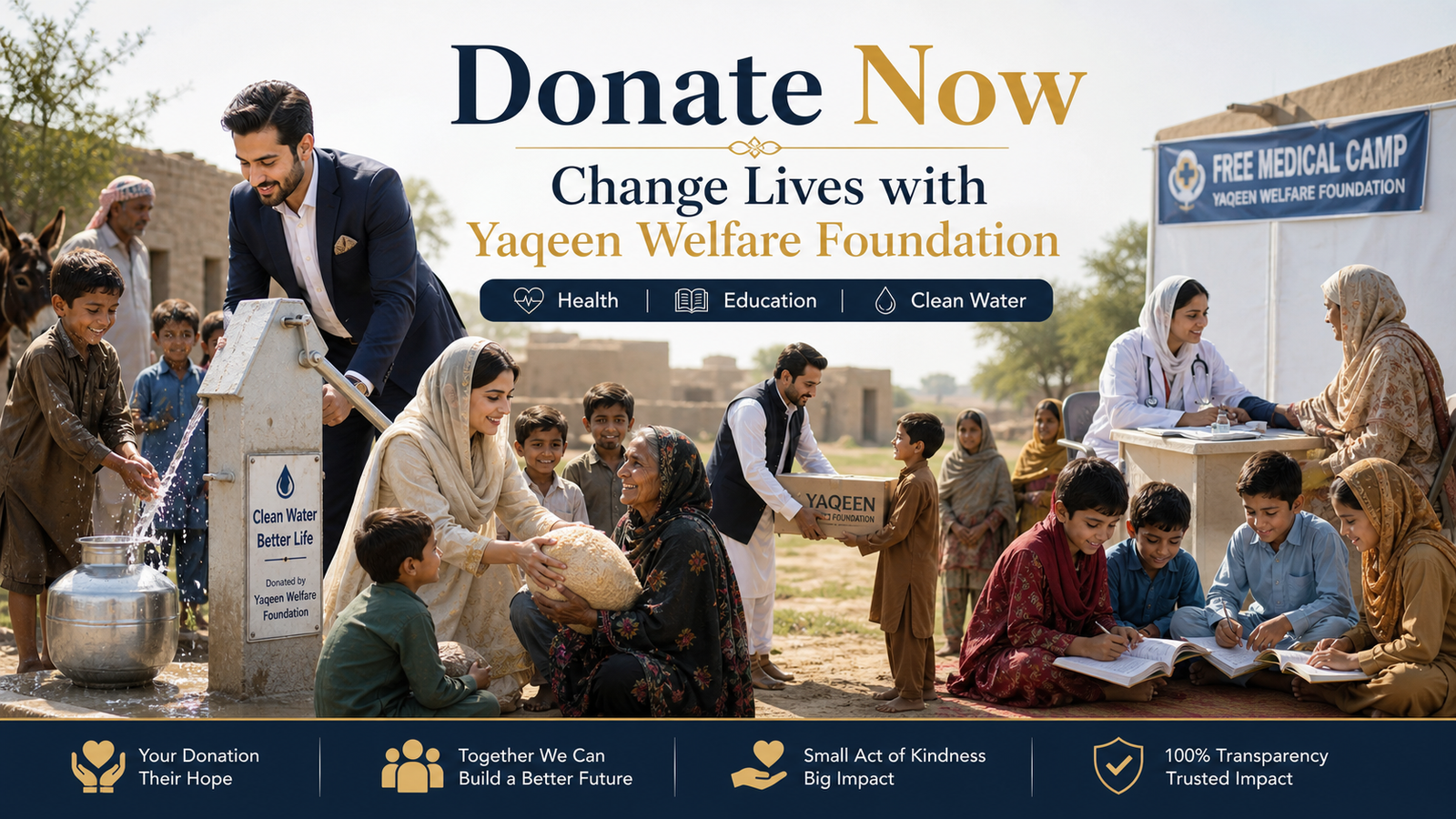
Every rupee given through Yaqeen Welfare Foundation is directed toward tangible, accountable impact across underserved communities in Pakistan:
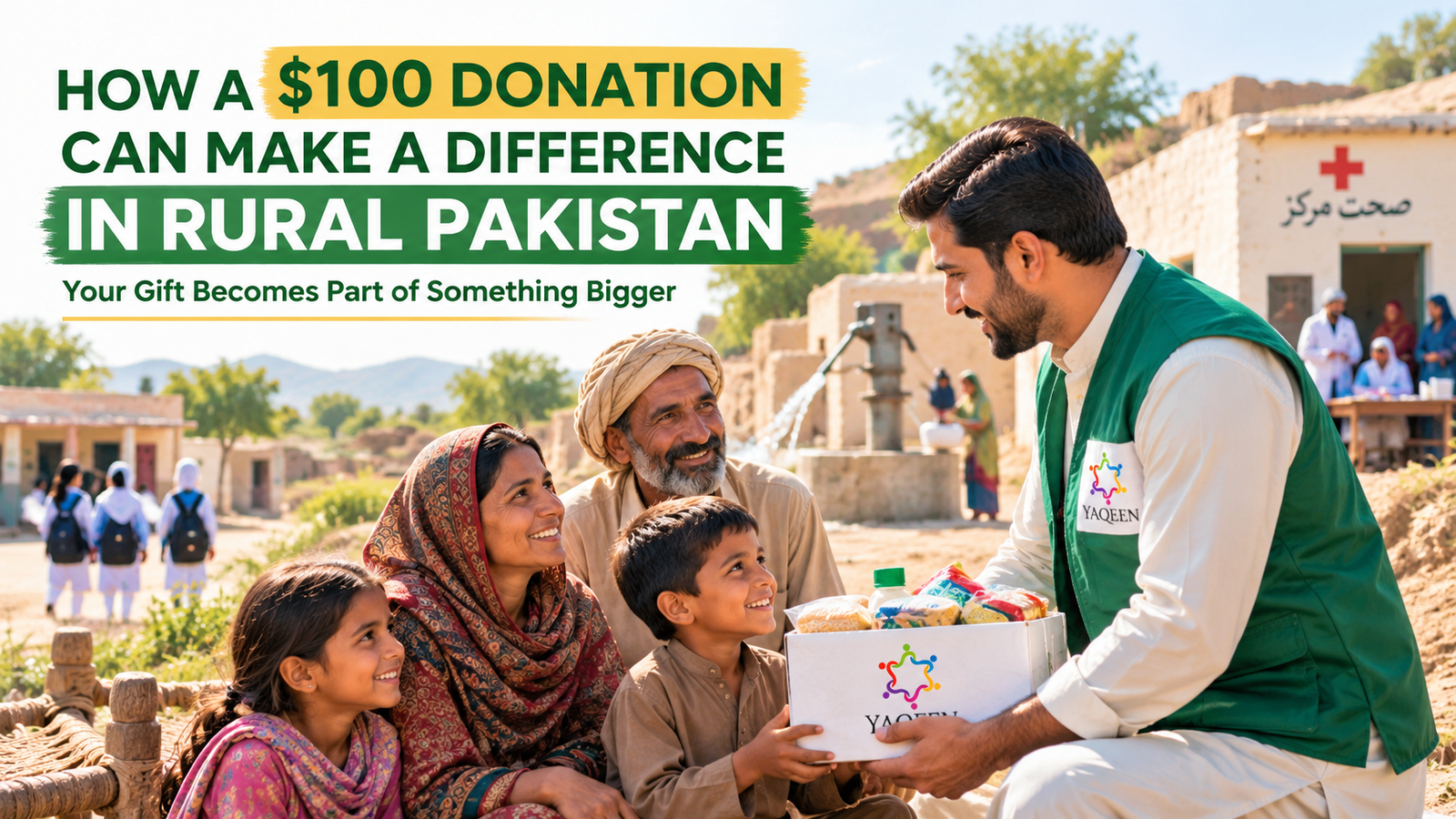
- 🍲 Food Security and Nutrition — Providing dignified, nutritious meals to families across Karachi and Interior Sindh who have exhausted every other option.
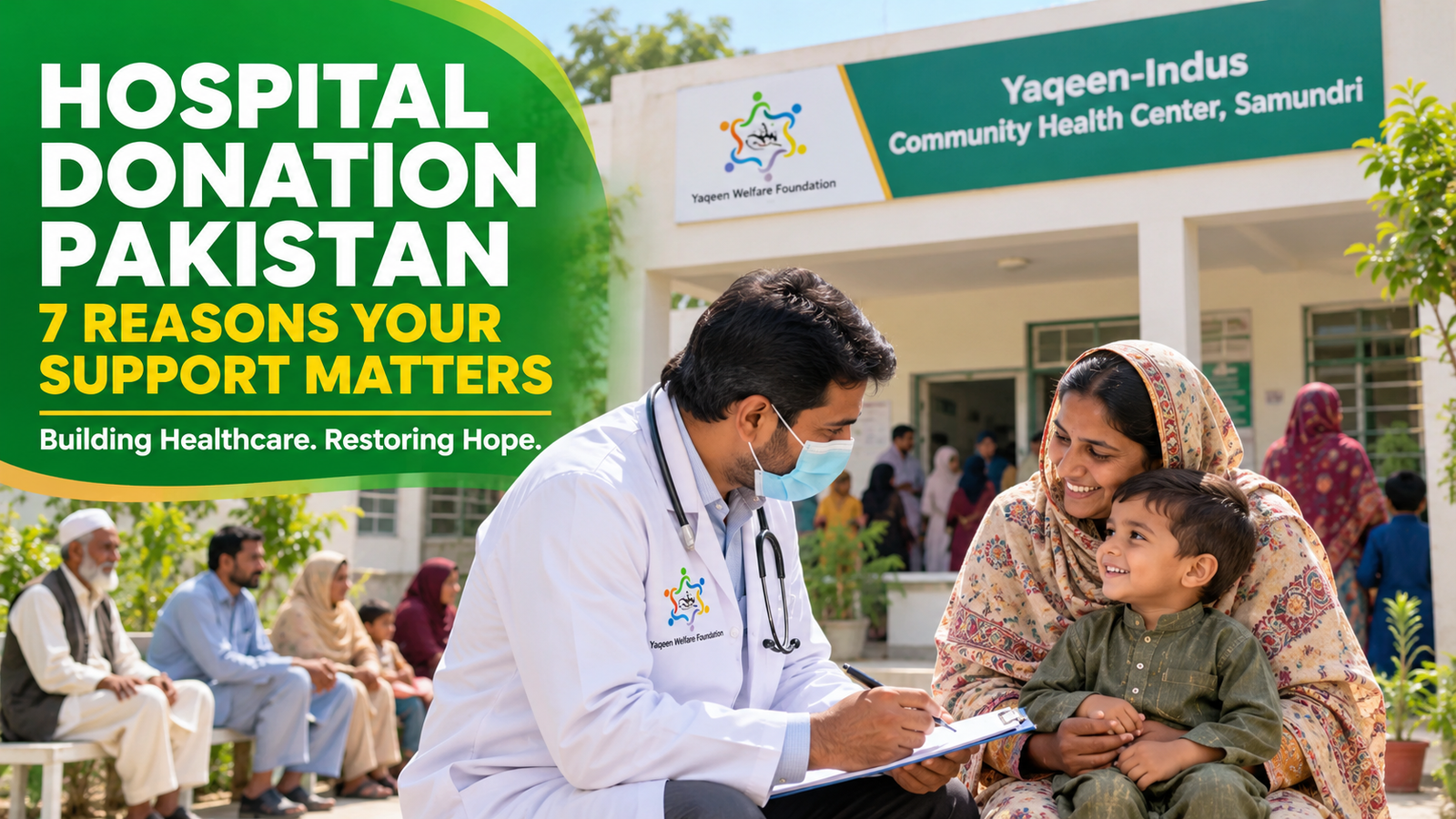
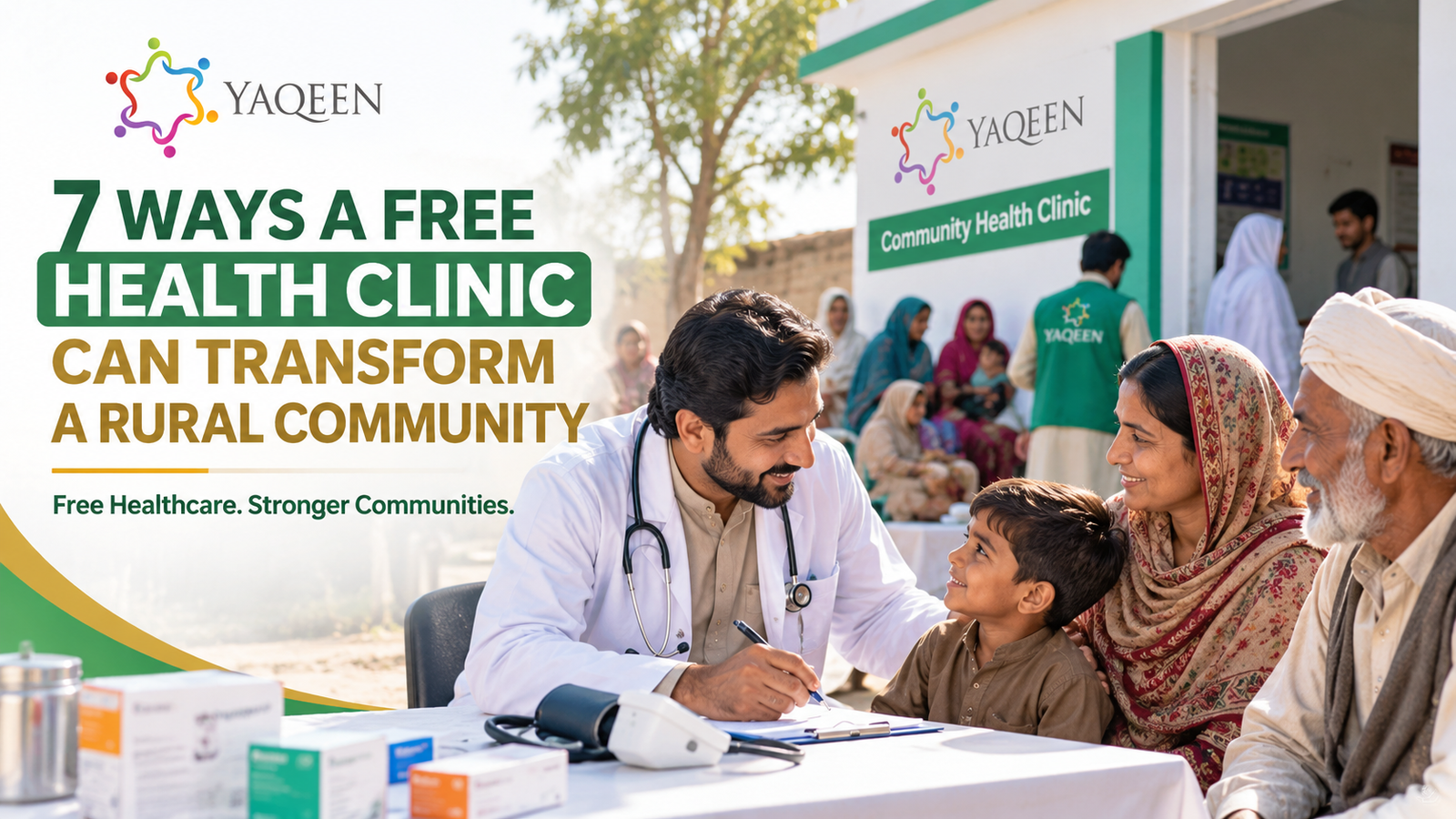
- 🏥 Public Healthcare — Connecting vulnerable families with medical support and covering treatment costs for those facing critical illness.
- 📚 Education and Teacher Development — Running formal learning programs and training the teachers who serve communities where quality schooling is rare.
- 💧 Clean Water and Disaster Response — Bringing clean drinking water to villages where none previously existed, and deploying relief teams early when floods or other disasters strike.
To see the full breakdown of our current programs, visit our where your donation goes page.
The Prayers You Will Never Hear
There is a kind of dua that carries immense weight — the prayer of someone who was helped when they had nowhere else to turn. When a mother watches her child sleep safely after days of hunger, and she raises her hands in gratitude for those who made it possible, that prayer travels. When an elderly man receives medical treatment he could never have afforded and prays for the unknown donors who made it possible, that prayer is heard.
You will never receive a notification for these prayers. There is no receipt, no confirmation, no record that reaches you in this world — but Allah hears every one. This is part of why the Prophet ﷺ said that the prayer of the oppressed, the traveler, and the fasting person are among those most quickly answered. The prayer of the one you helped — the one who had nothing and received something through your generosity — carries with it an urgency that few other prayers match.
A Final Reflection on the Islamic Blessings of Helping the Poor
Look at your life honestly. There are things that went well that you cannot fully explain — moments of ease in what should have been a difficult period, relationships that survived when they should have broken, health that held when you expected it to fail, resources that appeared exactly when you needed them most.
These are not accidents. The Islamic blessings of helping the poor are not confined to the moment of giving — they ripple outward in ways that resist ordinary bookkeeping. The arrangement in Islam is generous: you give from what you have, and Allah returns from what only He has. The scales are never balanced in your favor when you give; they are tilted overwhelmingly toward you, in ways that extend far beyond this life.
Give consistently. Give sincerely. Give even when it is difficult — especially then. And trust that nothing given for Allah’s sake is ever lost.
👉 Donate Now to Yaqeen Welfare Foundation
May Allah accept every act of generosity, transform it into a shield against unseen hardship, and return it multiplied in ways we can recognize and in ways we cannot. Ameen.
“Allah is in the help of His servant as long as the servant is in the help of his brother.” (Muslim)
Frequently Asked Questions
Q1. What are the core spiritual blessings of helping the poor in Islam?
The Islamic blessings of helping the poor operate on multiple levels. Charity — particularly Sadaqah and Zakat — purifies remaining wealth, draws the giver closer to Allah, shields against calamity, and increases Barakah in every area of life. On the Day of Judgment, consistent charity is described as a shade that protects the giver from the heat of that day.
Q2. Is there evidence that charity protects against financial hardship?
Islamic teaching consistently affirms this. The Quran describes giving as a loan to Allah that He repays multiplied. The Prophet ﷺ stated that charity does not decrease wealth. Scholars explain that while the numerical amount decreases immediately, the Barakah — the divine quality of effectiveness — increases, meaning less wealth with Barakah sustains a family better than more wealth without it.
Q3. Why does education matter so much for health outcomes in Pakistan?
Because health in Pakistan is largely a behavioral and systemic challenge, not just a medical one. Preventable diseases dominate the disease burden, and these are addressed through changed habits, early action, and informed decisions — all of which depend on education. When literacy rates rise in a community, infant mortality drops and vaccination rates increase.
Q4. What difference does a small donation actually make?
The Prophet ﷺ encouraged giving even half a date — the smallest possible act of generosity — because Allah measures the sincerity behind an act, not merely its size. Small donations accumulate into real, life-changing resources. A hundred small donors can collectively fund a water pump that serves an entire village for years.
Q5. How does Yaqeen Welfare Foundation ensure accountability in its programs?
Accountability is central to our trust with donors and with Allah. We document program activities, track beneficiaries, and measure outcomes against stated goals. We believe every rupee given is an Amanah — a trust — and we treat it accordingly.
Q6. Where can I learn more about Zakat versus Sadaqah?
Both are forms of charity in Islam, but they differ in obligation and calculation. For a full breakdown, read our guide on the difference between Zakat and Sadaqah and how each contributes to the broader Islamic blessings of helping the poor.
Get in Touch
Have questions about our programs, partnership opportunities, or how your donation is used? Contact Yaqeen Welfare Foundation online — our team is happy to help.