Charity Allah rewards are unlike anything else you will ever invest in. A coin dropped in a stranger’s hand five years ago, a well you funded and never thought about again, a meal you paid for during a difficult month — you may have forgotten all of it. Allah has not. Every act of charity Allah accepts is recorded, preserved, and multiplied, often long after the giver has moved on with life and stopped counting.
This is the quiet promise behind sadaqah: what you give does not disappear into the past. It waits for you. In this article, we will walk through seven specific rewards of charity Allah keeps on the record for every believer, why forgotten giving is often the most sincere giving, and how you can turn small, occasional acts into a lasting account of good deeds.
Why Charity Allah Never Forgets Matters More Than You Think
Most people give charity once, feel good about it, and move forward without expecting anything else from that act. That is normal. But the Quran describes giving in a very different light — not as a single transaction, but as a seed that keeps producing. Allah says in the Quran that the example of those who spend their wealth in His way is like a grain that grows seven ears, each ear containing a hundred grains (Surah Al-Baqarah 2:261, Quran.com). That is the foundation of charity Allah rewards: one act, multiplied many times over, without your involvement after the fact.
This matters because most of us give impulsively. We see someone in need, or we come across a fundraiser, and we give without expecting to think about it again. According to Yaqeen Welfare Foundation’s own experience distributing aid across Pakistan, it is often these unplanned, half-remembered donations that end up doing the most good — funding a well, a free clinic visit, or a meal for a family that had nothing that day. You can read some of these outcomes in Your Charity Saved Lives: 8 Heartwarming Stories, where donors describe giving small amounts and later learning what those funds actually became.
1. The Reward That Keeps Growing After You Give
The first reward of charity Allah preserves is growth. Unlike money spent on anything else, money given as sadaqah is described as being “planted” rather than spent. The Prophet Muhammad ﷺ said that charity does not decrease wealth (Sahih Muslim 2588, Sunnah.com). This is one of the rare promises in Islam that directly contradicts how we normally think about money — spending should reduce what you have, yet charity Allah rewards works in the opposite direction.
This is why a small donation toward something like a free medical clinic can outgrow its original size. A one-time gift toward treatment becomes ongoing care for a family, which becomes better health, which becomes a child who can go to school instead of caring for a sick parent. To see how this compounding effect plays out in practice, read 9 Diseases Free Clinics in Pakistan Help Treat Every Day.
2. Sadaqah Jariyah: Charity That Never Stops Paying Out
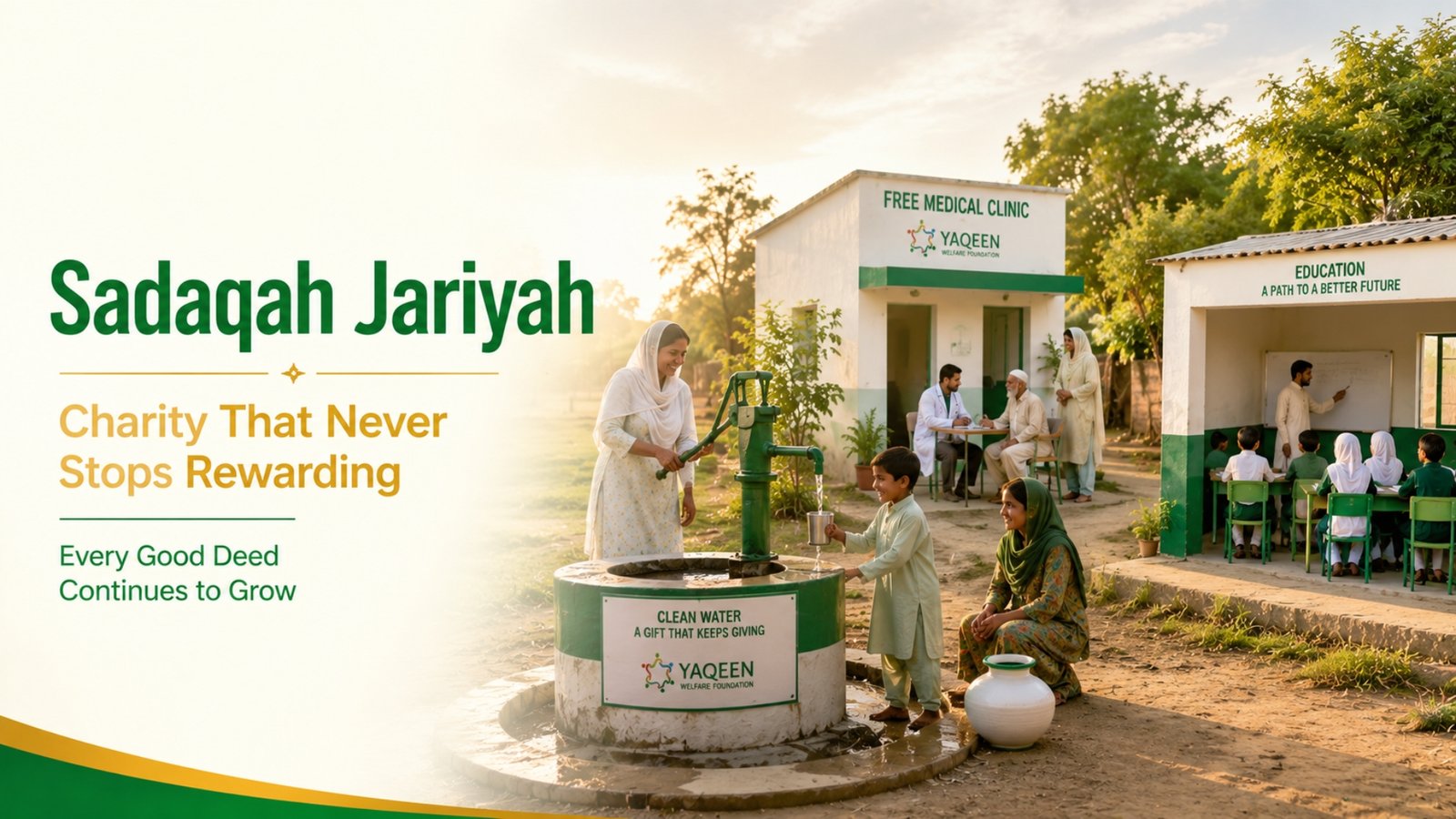
The second reward is the one most people forget about entirely — sadaqah jariyah, or ongoing charity. The Prophet ﷺ said that when a person dies, their deeds end except for three things, one of which is ongoing charity (Sahih Muslim 1631, Sunnah.com). This single hadith is the reason water wells, mosques, and clinics are considered some of the most valuable forms of giving in Islam.
If you funded a water well two years ago and never thought about it since, every person who drinks from it today still adds to your account. This is charity Allah continues to reward without requiring you to remember, track, or renew it. For a deeper look at why this specific form of giving is considered unmatched, see 5 Reasons a Water Well Is the Best Sadaqah Jariyah.
| Type of Charity | Example | Duration of Reward |
|---|---|---|
| One-time Sadaqah | Cash given to a person in need | Recorded once, multiplied |
| Sadaqah Jariyah | Water well, clinic, mosque | Continues as long as it is used |
| Zakat | Obligatory annual giving | Fulfills a religious duty and purifies wealth |
| Fidyah/Kaffarah | Compensatory charity | Fulfills a specific religious obligation |
| Waqf | Endowed land or property | Ongoing, often generational |
3. Charity Given in Secret Carries Its Own Weight
The third reward belongs to charity nobody ever finds out about. Among the seven people who will be shaded by Allah on a day when there is no other shade, the Prophet ﷺ mentioned a man who gives charity so secretly that his left hand does not know what his right hand gave (Sahih al-Bukhari 660, Sunnah.com).
This is significant for anyone who has quietly donated and never told a single person. That silence is not wasted — it is, according to this hadith, one of the most protected forms of charity Allah rewards. If you have ever wondered whether an anonymous donation “counts” as much as a public one, this hadith answers that directly: it may count for more.
4. Forgotten Charity Still Purifies Your Wealth
The fourth reward has less to do with reward in the afterlife and more to do with what charity does to the money you keep. Zakat, the obligatory form of charity Allah has mandated on eligible wealth, is described in the Quran as purifying what remains (Surah At-Tawbah 9:103, Quran.com).
Even voluntary sadaqah carries some of this same purifying effect. Many scholars explain that regular, even forgotten, giving keeps a person’s relationship with money healthy — it prevents hoarding and attachment. If you are unclear on how zakat differs from voluntary sadaqah, or which one applies to a specific situation, this comparison breaks it down clearly: Sadaqah vs. Zakat: 6 Key Differences Every Muslim Should Know.
5. Charity Allah Rewards Even When the Outcome Is Unknown
The fifth reward is one of the most comforting for donors who never see the outcome of their giving. Many people who donate to relief organizations never learn exactly whose life was changed, which village received clean water, or which child received treatment. Charity Allah rewards is not dependent on the giver witnessing the result.
This is especially relevant for anyone giving from abroad to causes in Pakistan. A donor in another country may never meet the family whose child received free treatment through a clinic visit, but the reward is not diminished by that distance. The story in One Meal, One Prayer: 5 Incredible Reasons One Life Changed Forever illustrates exactly this — a donor who gave without ever expecting to know what happened next.
6. Small, Forgotten Amounts Are Not Judged by Size
The sixth reward directly addresses a common worry: that a small or forgotten donation does not matter much. The Prophet ﷺ warned against belittling any act of good, even something as small as meeting your brother with a cheerful face, let alone actual charity (Sahih Muslim 2626, Sunnah.com). Charity Allah measures is judged by sincerity and effort relative to the giver, not by the raw amount.
This means the person who gave a small, forgettable amount during a difficult financial month may be rewarded more than someone who gave a large amount without much thought. If you’re trying to calculate what you owe or what you can afford to give, tools like a Zakat or Fitrana calculator can help remove the guesswork — and avoiding common calculation mistakes matters too, which is covered in 7 Mistakes People Make When Calculating Zakat.
7. The Reward That Follows You Into the Next Life
The seventh and final reward is the one that gives the previous six their real meaning. The Quran describes charity as something that is “sent forth” for the soul, waiting to be found later (Surah Al-Muzzammil 73:20, Quran.com). This framing — of charity as something sent ahead rather than given away — is central to understanding why forgotten acts of charity Allah still preserves are not actually lost.
Whatever you gave and forgot about is not gone. It has simply been sent somewhere you have not arrived yet.
How to Make Sure Your Charity Keeps Working, Even When You Forget
You do not need to remember every donation you have ever made for it to count. But if you want your giving to have a longer, more visible impact, a few practical habits help:
- Choose sadaqah jariyah options like wells, clinics, or ongoing medical support over one-time gifts when possible.
- Give consistently, even in small amounts, rather than waiting for a large lump sum.
- Avoid the need for recognition — the reward is not reduced by anonymity, and it may even be strengthened by it.
- Keep your zakat and sadaqah calculations accurate so nothing is under- or over-given.
- Support organizations that are transparent about where funds go, so your forgotten gift still has a clear destination.
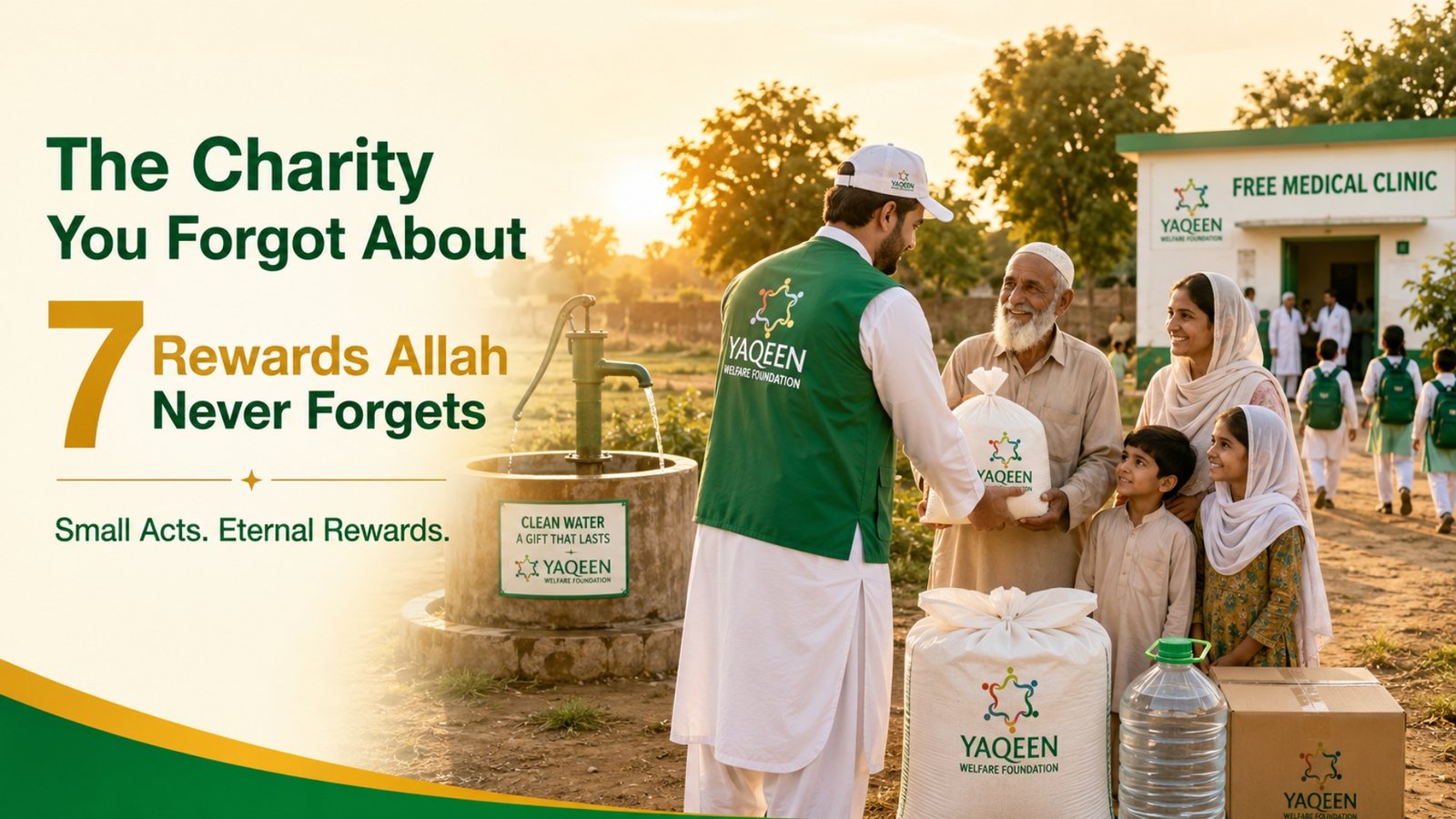
Yaqeen Welfare Foundation channels charity Allah rewards into free medical treatment, clean water projects, and direct relief for communities across Pakistan. Every donation, whether remembered or not, is placed into ongoing work that continues long after the transaction is complete.
Frequently Asked Questions
Does charity still count if I don’t remember giving it? Yes. The reward for charity is recorded at the time it is given and does not depend on the donor remembering or tracking it afterward.
What is the difference between sadaqah and sadaqah jariyah? Sadaqah is a general term for voluntary charity, while sadaqah jariyah refers specifically to ongoing charity — such as a well or clinic — that continues to benefit people over time, generating continuous reward for the giver.
Is anonymous charity better than public charity? Anonymous, or secret, charity is highlighted in several hadith as being especially protected and valued, though public charity given with sincerity is also rewarded and can encourage others to give.
Does the size of the donation determine the reward? No. Reward is tied to sincerity, intention, and what the giver could genuinely afford, not the raw monetary amount.
How can I make sure my charity has a lasting impact? Support ongoing projects such as wells, free clinics, and medical treatment programs rather than only one-time gifts, and give consistently rather than only during specific occasions.
Where can I give charity through Yaqeen Welfare Foundation? You can give directly and securely through the Yaqeen Welfare Foundation donation page.