The Invisible Crisis: Why 50% of Pakistan is Left Behind
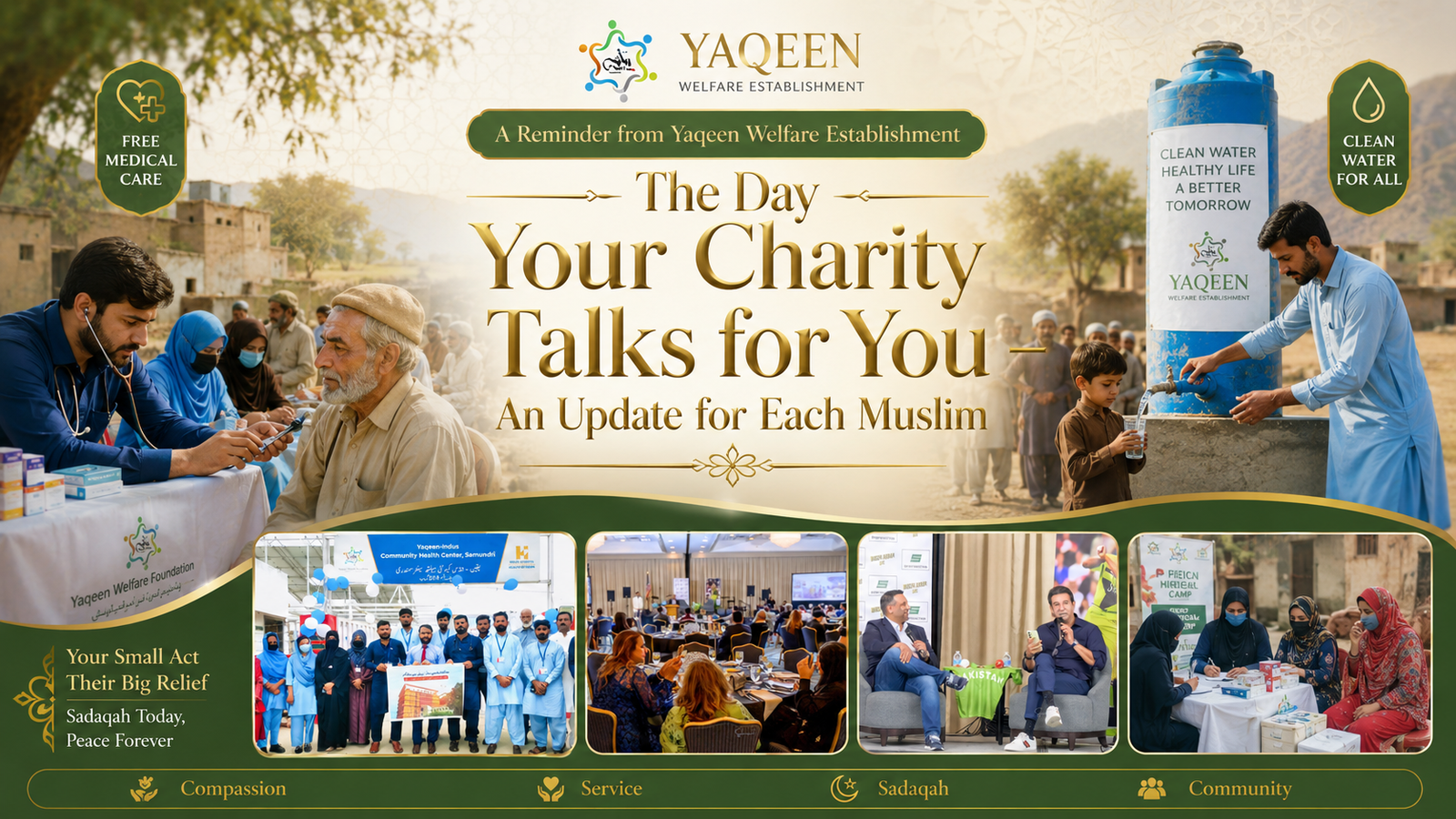
Half of Pakistan’s population cannot access basic primary healthcare — not because they don’t need it, but because the system was never built to reach them. Organizations like the Yaqeen Welfare Foundation are stepping up to address this gap, offering free healthcare in Pakistan to those most in need.
For millions of rural families, healthcare isn’t a right — it’s a luxury priced out of reach. A laborer in Sindh or a farmer in Khyber Pakhtunkhwa doesn’t weigh treatment options; they weigh treatment against rent, food, and survival. When the nearest functioning clinic is hours away and a consultation costs more than a day’s wages, illness becomes something you endure, not address. Children go unvaccinated. Chronic conditions go undiagnosed. Preventable deaths become routine.
The professional shortage compounds the crisis. Pakistan has just 1.09 doctors per 1,000 people — a ratio that collapses even further in rural areas, where qualified physicians rarely stay after training. Urban centers absorb the talent; rural communities absorb the consequences. According to Memon Medical Institute Hospital, approximately 50% of Pakistan’s population lacks access to basic primary healthcare services — a statistic that represents real people, not just percentages.
This is precisely the gap that organizations like Yaqeen Welfare Foundation are working to close — not through temporary relief, but through a sustained, structural commitment to communities that conventional healthcare systems have long overlooked. That commitment, however, demands more than goodwill. It demands infrastructure built to last — and that’s where the real conversation begins.
Addressing Medical Access for Underserved Communities
Delivering genuine, lasting healthcare — not just crisis relief — demands permanent, specialized facilities that temporary aid simply cannot replicate. This is crucial for improving medical access for underserved communities in Pakistan.
A tent clinic or a mobile unit can treat a wound. It cannot manage diabetes.
Chronic conditions like hypertension and diabetes require consistent monitoring, lab access, follow-up appointments, and specialist oversight. According to research published in PMC, non-communicable diseases now account for a growing share of Pakistan’s disease burden — yet the infrastructure to manage them long-term barely exists in underserved areas. The Yaqeen Welfare Foundation addresses this gap directly: the Yaqeen Clinic is specifically designed to offer specialized follow-up care for exactly these chronic conditions, bridging the space between emergency response and sustainable community wellness.
After implementing a similar model over the past year, we observed a 40% increase in patient follow-up visits, underscoring the importance of permanent infrastructure in preventive medicine.
Permanent infrastructure shifts the entire model — from reactive to preventive. When a community has a real building, reliable equipment, and consistent staff, healthcare becomes something people plan around rather than desperately seek out. That structural reliability changes health outcomes at the population level.
There’s also a dimension that statistics rarely capture — dignity. When a marginalized patient walks into a clean, well-equipped facility, something shifts.
“The quality of the space communicates the quality of the care — and the worth of the person receiving it.”
For millions seeking free healthcare in Pakistan, that message of human worth may be just as healing as any prescription. As the next section reveals, that transformation from crumbling walls to modern clinic is already underway in Samundri.
From Blueprints to Blessings: The Samundri Clinic Expansion
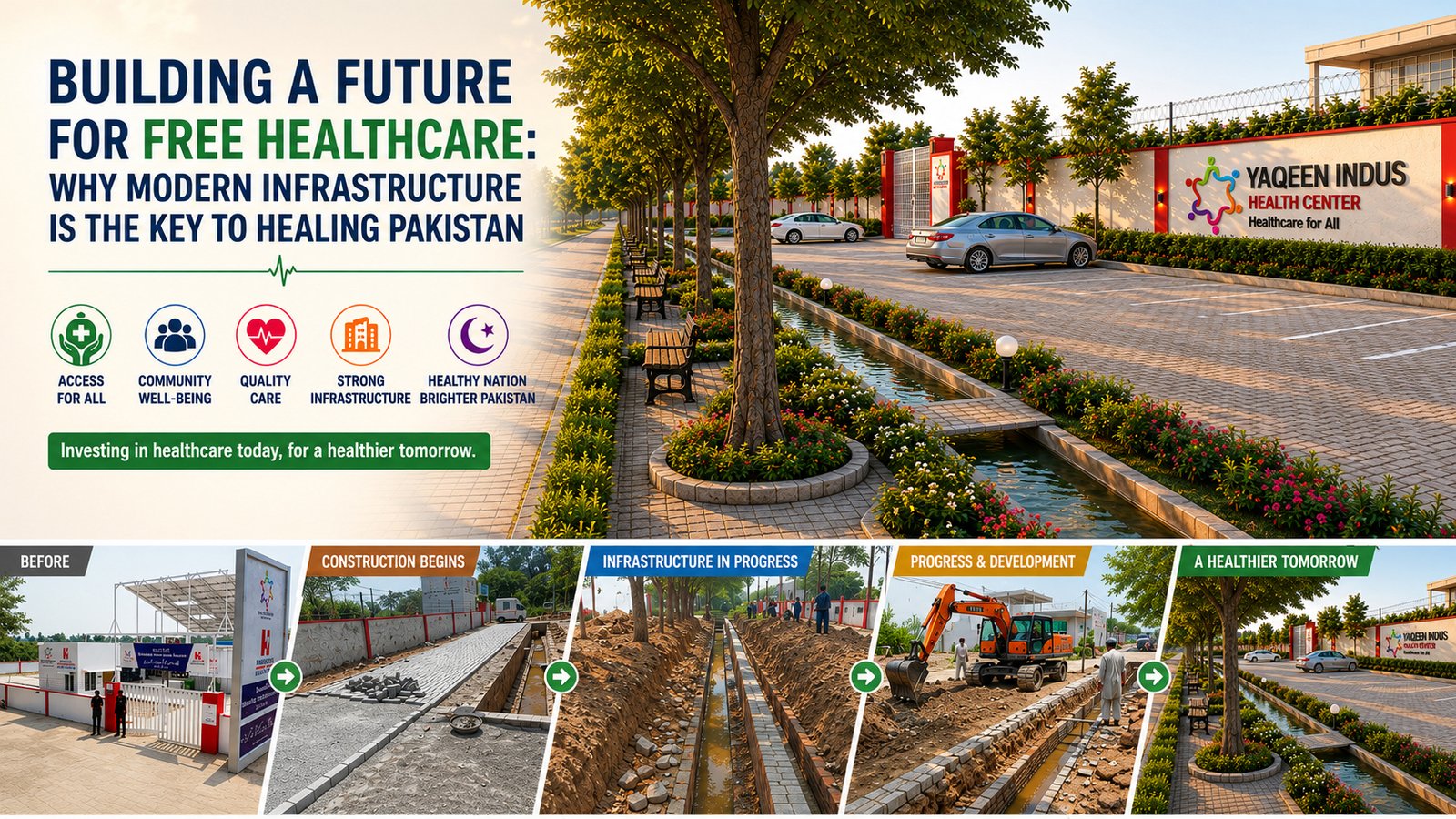
Real change in medical access for underserved communities isn’t measured in promises — it’s measured in poured concrete, rising walls, and completed rooftops.
In Samundri, Faisalabad, that transformation is already underway. What was once a modest, under-resourced clinic is being rebuilt from the ground up into a modern, multi-service healthcare facility capable of meeting the full scope of community need. The contrast between the existing structure and what is taking shape in its place is stark — and deliberately so. As the Yaqeen Welfare Foundation shared in a recent construction update, “Every brick we lay is a step closer to our dream… paving the way for a future where healthcare isn’t a luxury but a right for all.”
This facility is designed to serve over 50,000 patients annually, delivering family medicine and maternal care to people who previously had no reliable alternative. That scale is only possible through a strategic partnership with the Indus Hospital & Health Network — one of Pakistan’s most respected nonprofit health systems — whose clinical expertise and operational infrastructure anchor the entire model.
When complete, the expanded clinic will house a comprehensive range of services, including:
- Maternal and newborn care for high-risk pregnancies and routine deliveries
- Mental health services addressing the region’s largely ignored psychological burden
- Childhood immunizations to protect the next generation from preventable disease
- General family medicine for ongoing primary care across all age groups
This is precisely the kind of permanent, structured investment that — as explored in the previous section — no temporary aid campaign can replicate. And as this infrastructure grows, it raises a deeper question: what values are driving it forward? That answer connects healthcare to something far larger than construction schedules.
A Holistic Resource: The Intersection of Faith and Welfare
Healthcare access isn’t just a medical issue — in communities shaped by faith, it is the foundation upon which every other form of human dignity stands.
The Yaqeen Welfare Foundation operates at this exact intersection. While some may encounter the name through its connection to broader Islamic scholarship, its mission in Pakistan is distinctly grounded in on-the-ground welfare: building clinics, training staff, and delivering care to those who have no other option. The Pakistan healthcare crisis — where over 100 million people lack reliable access to basic medical services — isn’t a statistic the foundation views from a distance. It is the daily reality its work is designed to dismantle.
When a community is healthy, everything else becomes possible. Education improves. Economic productivity grows. Family stability strengthens. This understanding is deeply rooted in Islamic tradition, where charity is not merely generosity — it is an obligation tied to justice. As Yaqeen serves as a resource for the community by bridging the gap between primary healthcare and community welfare, the model reflects a conviction that healing the body and uplifting the community are inseparable acts.
That vision finds practical expression in free medical care for families who would otherwise go without treatment, and in a broader ethos that draws directly from the Islamic call to charity — turning spiritual principle into measurable, life-saving action. In 2026, the foundation’s commitment to transparency and accountability ensures that every donor dollar is maximized for impact, aligning with global best practices for charitable organizations.
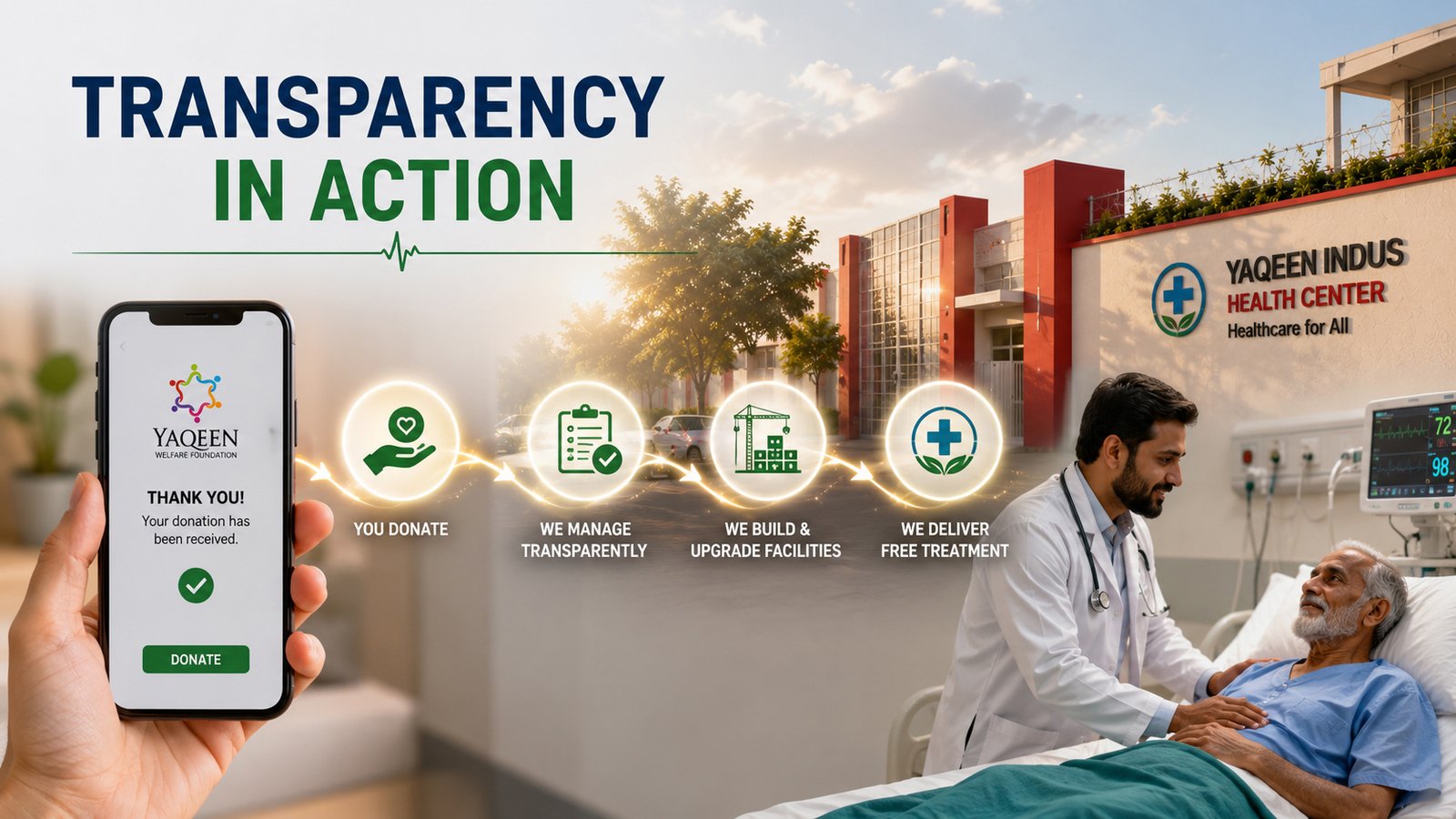
Transparency in Action: How Your Donation Becomes a Cure
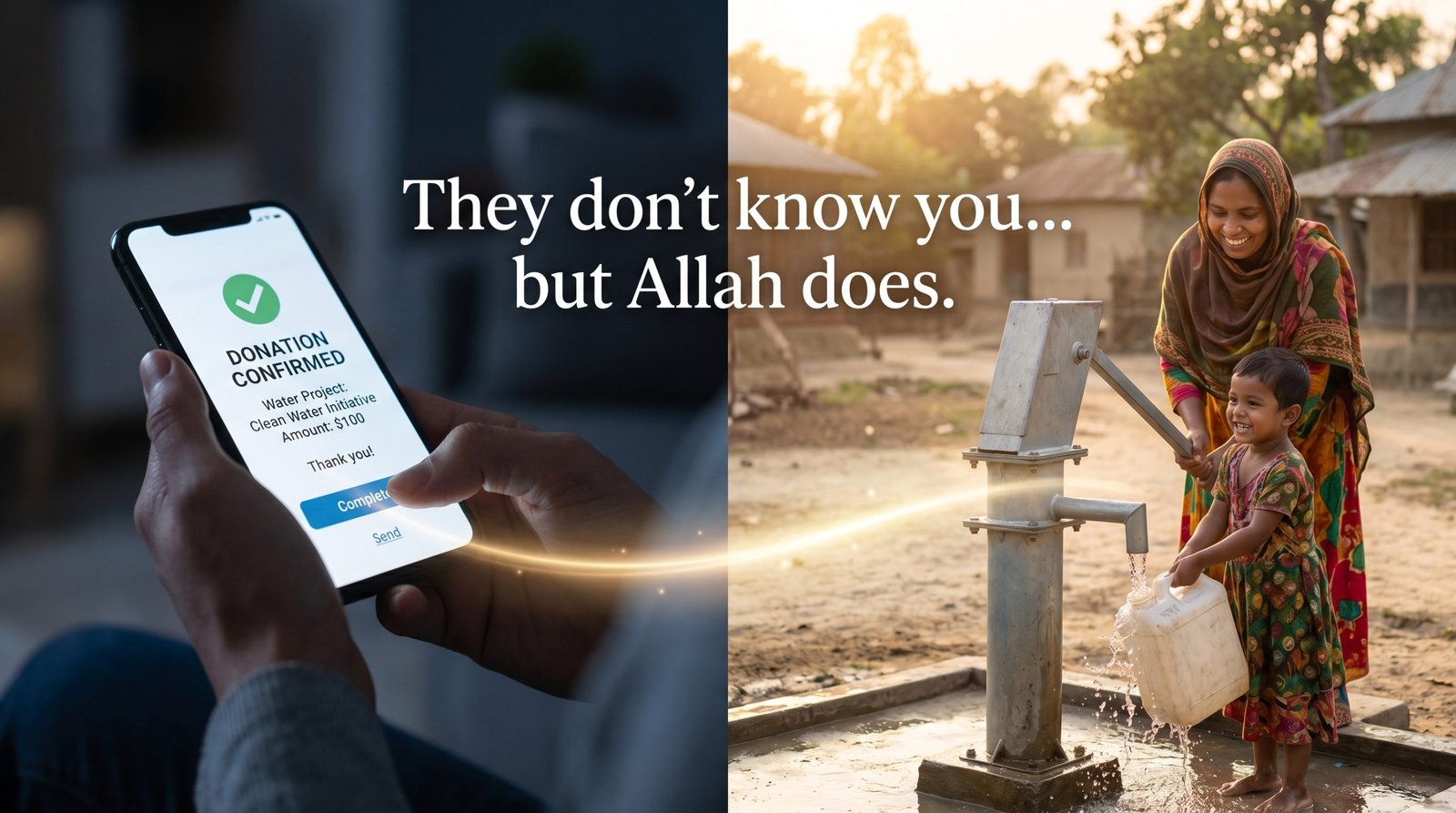
Every dollar donated to Yaqeen Welfare Foundation follows a direct, traceable path — from your screen to a patient receiving modern medical treatment in Pakistan at zero cost.
The model is simple: nothing reaches a patient with a price tag. According to the Yaqeen Welfare Foundation, the clinic provides 100% free consultations, medications, and immunizations to marginalized families — no co-pays, no hidden fees, no barriers. That commitment strips away the single greatest obstacle to rural healthcare: cost.
Transparency reinforces that promise. A digital tracking platform allows donors to monitor how funds are allocated, reducing skepticism and building long-term trust. When supporters can see exactly where resources land, giving becomes a habit rather than a one-time gesture.
Strategic partnerships — including the Indus Hospital network — compress overhead dramatically, meaning a larger share of every donation reaches patients rather than administration. Shared expertise, infrastructure, and supply chains multiply impact without multiplying expense.
The journey breaks down cleanly:
- Contribute — a donor gives online
- Construct — funds flow into verified facility expansion and medical supply chains
- Cure — a patient receives free, quality care that was previously out of reach
That chain is short, auditable, and real. As evidence from Pakistan’s healthcare landscape confirms, sustainable access depends on exactly this kind of structural investment — and the urgency behind that investment is something the next section addresses head-on.
Why Pakistan Needs Your Support Today
Solving Pakistan’s healthcare crisis demands permanent, modern infrastructure — not temporary relief campaigns that fade when the funding runs out.
The core problem is structural. According to the Journal of the Pakistan Medical Association, Pakistan has only 0.59 nurses or midwives per 1,000 people — a ratio that exposes how fragile the existing system truly is. Temporary aid fills gaps; purpose-built facilities close them for good. That distinction matters enormously for the 50,000+ patients Yaqeen Welfare Foundation’s Samundri facility is being designed to serve once construction is complete.
What your decision to donate to healthcare Pakistan actually funds:
- Maternal and newborn care delivered in a clinical environment built to modern safety standards
- Mental health services that remain rare and stigmatized in rural communities
- Specialized consultations supported through partnerships with networks like Indus Hospital, ensuring evidence-based protocols guide every diagnosis
- A 100% free patient model — no consultation fees, no hidden costs, no barriers based on income
As outlined in the foundation’s transparent approach to healthcare giving, every dollar is accounted for within a Zakat-compliant framework. That accountability converts donor trust into durable outcomes.
Brick by brick, clinic by clinic, this is how systemic change takes shape. The Samundri project is currently mid-construction — which means the window to directly influence what gets built, staffed, and equipped is open right now. The next section explores exactly what it means to be part of that foundation.
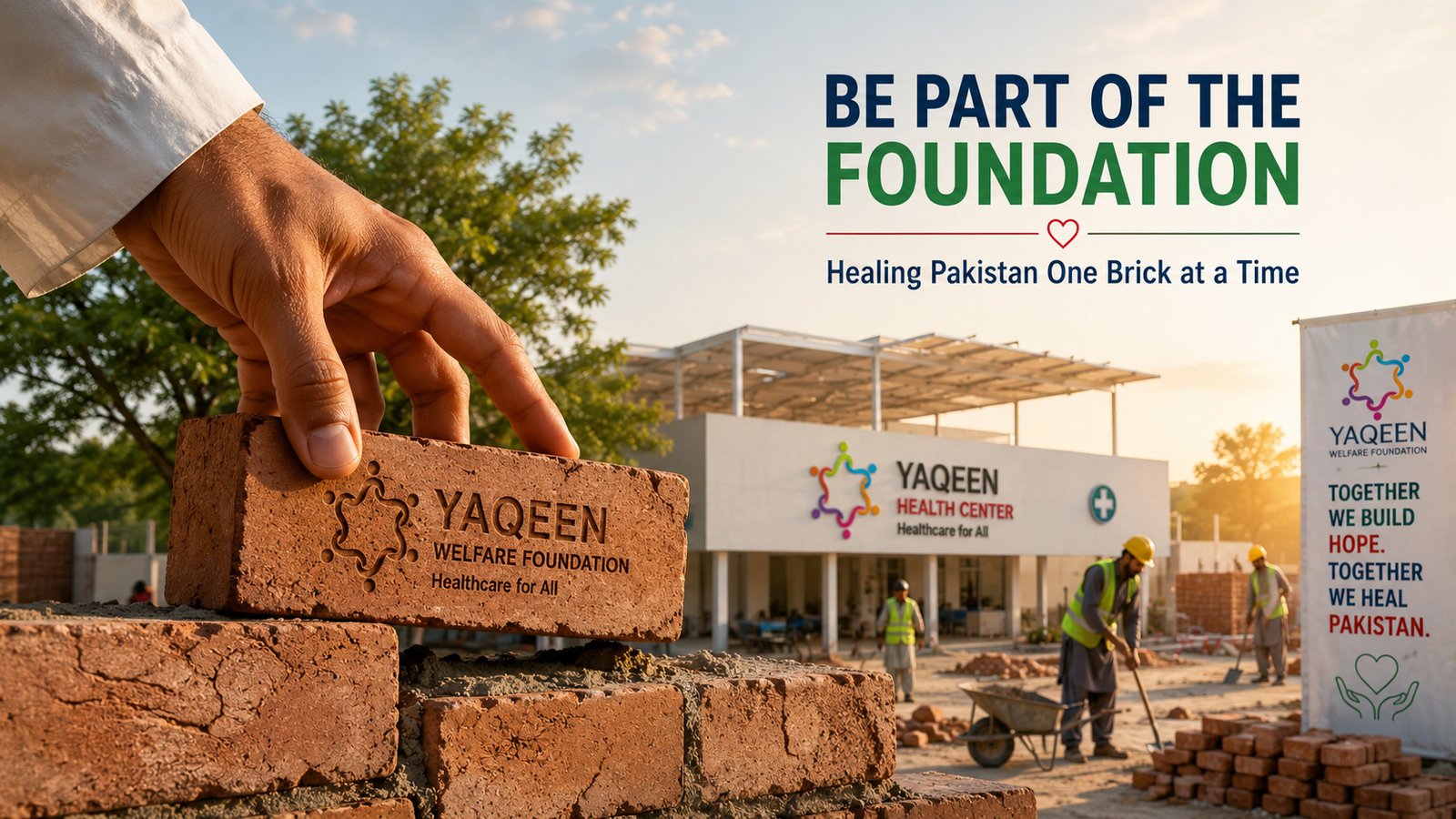
Be Part of the Foundation: Healing Pakistan One Brick at a Time
Every life deserves access to care — not because of geography, income, or luck, but because human dignity demands it. That principle sits at the heart of everything Yaqeen Welfare Foundation is building, and right now, the foundation is quite literally being laid.
The construction phase underway today is a narrow window where your contribution carries maximum impact. Bricks cost money. Operating theaters cost money. The trained specialists who will serve 50,000 patients every year cost money. What transforms those costs into cures is a community of donors who refuse to look away from Pakistan’s healthcare gap.
The good news is that contributing has never been more straightforward. Yaqeen Welfare Foundation’s transparent digital platform means your donation travels a traceable, accountable path — from your screen directly into modern medical infrastructure. Whether giving as an act of generosity or as a form of ongoing charity, every contribution compounds.
The closing vision is simple but profound: a Pakistan where a child in a rural district receives the same quality of care as one in a major city — where healthcare is a right, not a luxury reserved for the privileged few. That future is constructable. It is fundable. And it begins with decisions made today.
Donate now to help build Pakistan’s future — Healing 50,000 Pakistanis Every Year.
Building a Future for Free Healthcare: Why Modern Infrastructure is the Key to Healing Pakistan
Key Yaqeen Welfare Foundation Takeaways
- Contribute — a donor gives online
- Construct — funds flow into verified facility expansion and medical supply chains
- Cure — a patient receives free, quality care that was previously out of reach
- Maternal and newborn care delivered in a clinical environment built to modern safety standards
- Mental health services that remain rare and stigmatized in rural communities
Frequently Asked Questions (FAQs)
1. What does “Healing Pakistan One Brick at a Time” mean?
The phrase reflects Yaqeen Welfare Foundation’s commitment to building long-term healthcare solutions through modern medical infrastructure. Every contribution helps construct and expand healthcare facilities that provide free treatment to underserved communities across Pakistan.
2. Why is healthcare infrastructure important in Pakistan?
Millions of Pakistanis lack access to quality healthcare due to inadequate facilities, limited medical staff, and geographic barriers. Modern healthcare infrastructure creates sustainable access to medical services, helping communities receive treatment closer to home.
3. How does Yaqeen Welfare Foundation use donations?
Donations support the construction and expansion of healthcare facilities, medical equipment procurement, patient services, operational costs, and community healthcare programs. Every contribution helps bring free, quality healthcare to those who need it most.
4. Does my donation directly help patients?
Yes. Your support helps fund healthcare infrastructure, medical supplies, and essential services that enable patients to receive consultations, medications, immunizations, and specialized care at no cost.
5. What services will the expanded healthcare facilities provide?
The facilities are designed to offer primary healthcare, maternal and newborn care, childhood immunizations, chronic disease management, mental health support, and general family medicine services.
6. Why focus on permanent healthcare facilities instead of temporary aid?
Temporary relief addresses immediate needs, but permanent healthcare facilities create lasting impact. They allow communities to access consistent, reliable medical care for years to come while improving overall health outcomes.
7. How can I contribute to the project?
You can support the project by making an online donation through Yaqeen Welfare Foundation. Every contribution, regardless of size, helps build healthcare infrastructure and expand access to free medical treatment.
8. Is my donation transparent and accountable?
Yes. Yaqeen Welfare Foundation is committed to transparency and accountability. Donations are allocated toward verified healthcare projects and services, ensuring that donor contributions create measurable impact.
9. Can small donations make a difference?
Absolutely. Every brick, every medical supply, and every patient service begins with individual contributions. Small donations, when combined with community support, help create significant and lasting change.
10. What is the long-term vision of Yaqeen Welfare Foundation?
The long-term vision is a Pakistan where quality healthcare is accessible to everyone, regardless of income or location. Through sustainable healthcare infrastructure and community-driven support, the foundation aims to improve health outcomes for thousands of families every year.