8 Ways a Clean Water Donation Can Transform an Entire Village
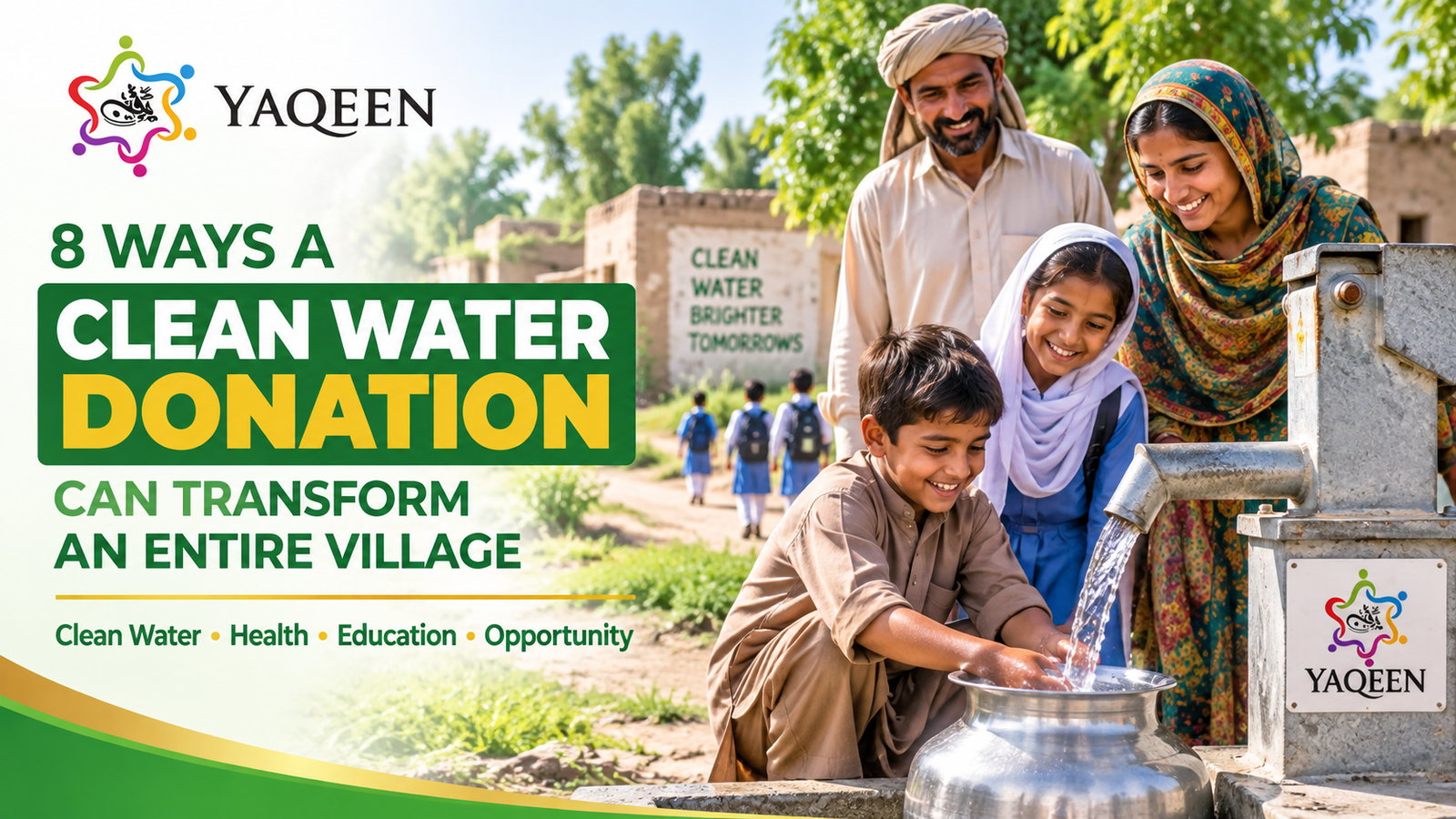
A Clean Water Donation does far more than fill a bucket. In villages across rural Pakistan, one water well, hand pump, or filtration system can change the health, income, and future of hundreds of people at once. When a community stops depending on a contaminated pond or a two-hour walk to the nearest stream, everything downstream of that single act — literally and figuratively — begins to shift.
At Yaqeen Welfare Foundation, we’ve seen this play out again and again. A single Clean Water Donation rarely stays confined to “drinking water.” It touches child health, school attendance, women’s daily workload, family income, and the long-term strength of the whole village. This article walks through why clean water matters so much, the eight specific ways a water project transforms a community, what makes these projects last, and how this kind of giving fits into the Islamic concept of Sadaqah Jariyah — ongoing charity that keeps paying forward long after the initial gift.
Why Clean Water Matters
It’s easy to take a running tap for granted. But for millions of families in rural Sindh, Punjab, and Balochistan, clean water is not a guarantee — it’s a daily struggle. According to UNICEF Pakistan, an estimated 53,000 Pakistani children under five die annually from diarrhoea due to poor water and sanitation, and repeated bouts of diarrheal illness leave many more children falling behind in school or dropping out altogether.
Globally, the picture is just as stark. The World Health Organization reports that contaminated drinking water is estimated to cause approximately 505,000 diarrhoeal deaths every year, even though safe, sufficient water is one of the simplest and most effective tools for preventing disease.
A Clean Water Donation addresses the root of this problem rather than the symptoms. Instead of repeatedly treating illnesses caused by unsafe water, a well or filtration system removes the cause entirely — and keeps removing it for years, sometimes decades, after the initial gift.
The Link Between Unsafe Water and Poverty
Unsafe water and poverty feed each other in a cycle that’s hard to break without outside help.
- Illness drains income. A sick child means missed work for a parent and money spent on medicine instead of food or school fees.
- Distance drains time. Walking long distances for water eats into hours that could otherwise go toward farming, small business, or study.
- Contamination drains productivity. Livestock that drink unsafe water get sick too, which hurts the small-scale agriculture many rural Pakistani households depend on.
A UNICEF report on Pakistan’s water crisis found that only 36% of the population has access to safely managed drinking water, while around 20 million people lack safe water altogether, and that unsafe water is linked to a large share of preventable deaths in the country. Breaking this cycle is exactly why a Clean Water Donation is considered one of the most efficient forms of charity — it interrupts poverty at one of its most basic points of entry.
8 Ways a Clean Water Donation Transforms an Entire Village
Here’s what actually changes on the ground when a village receives a reliable, safe water source.
1. Reduces Waterborne Disease
The most immediate impact of any Clean Water Donation is fewer illnesses. Diseases like diarrhea, typhoid, hepatitis A, and dysentery spread through contaminated water, and the WHO notes that WASH interventions — water, sanitation, and hygiene combined — can reduce diarrhoeal diseases by 25 to 35 percent. When a village switches from an open pond or shallow, unprotected well to a properly dug or drilled water source, exposure to these pathogens drops sharply, often within weeks of the well being commissioned.
2. Protects Children’s Health
Children are the most vulnerable to unsafe water, both because their immune systems are still developing and because repeated infections interfere with nutrient absorption. In Pakistan, chronic diarrheal illness is closely tied to child stunting, which currently affects almost 44 percent of children nationwide, according to UNICEF. A safe drinking water charity project doesn’t just prevent a single illness — it protects a child’s long-term growth, cognitive development, and overall wellbeing.
3. Improves School Attendance
Sick children miss school. Children sent to fetch water miss school. Both problems disappear, or shrink dramatically, once safe water is available close to home. UNICEF Pakistan shared the story of a girl named Farzana, who used to walk up to 20 kilometers a day for water before a hand pump was installed near her home. Afterward, she said simply: “It saves time and now I can go to school and be with my friends.” Multiply that story by every child in a village, and the effect on school enrollment and attendance becomes significant.
4. Saves Families Time
Time spent walking to distant water sources is time that can’t be spent on anything else — work, caregiving, rest, or education. A nearby well or hand pump can turn a multi-hour daily chore into a five-minute errand, freeing up hours every single day for the entire household. Over a year, those recovered hours add up to weeks of additional productive time per family.
5. Supports Women and Girls
In most households without piped water, the burden of collection falls on women and girls. UNICEF has calculated that women and girls worldwide spend a combined 200 million hours every day collecting water — time that could otherwise go toward income-generating work, childcare, rest, or their own education. A Clean Water Donation shifts this balance directly. When the walk to water disappears, women gain back hours of their day, and girls gain a real chance at staying in school instead of dropping out to help haul water.
6. Protects Household Income
Every waterborne illness carries a cost: clinic visits, medicine, and lost workdays for the adult who has to stay home and provide care. Families living close to the poverty line often cannot absorb these costs without falling further behind. By reducing how often family members get sick, a reliable water source protects household income in a very direct, measurable way — money that used to go toward treating illness can instead go toward food, school fees, or savings.
7. Strengthens the Whole Community
A single water point rarely benefits just one family. A community hand pump or well typically serves dozens of households, the local school, and sometimes a small clinic as well. This shared resource becomes a gathering point that supports hygiene practices, food preparation, and even small-scale farming or livestock care. Communities that gain reliable access to clean water often see improvements across several areas at once — health, education, and local economic activity — because these systems are so deeply interconnected.
8. Creates a Lasting Form of Charity
For Muslim donors, there’s an added dimension to funding a clean water project: it is widely regarded as one of the clearest examples of Sadaqah Jariyah, or ongoing charity. The Prophet Muhammad ﷺ was asked which form of charity was best, and among the answers attributed to him is the reply, “Providing water” (Sunan Ibn Majah). Islamic scholarship has long held up water provision — building a well, digging a spring, maintaining a water source for travelers or a community — as an act whose benefit continues long after the initial act of giving, since every person who drinks from that source may add to the reward of the one who funded it, by Allah’s will. This is why so many donors specifically look for a Sadaqah Jariyah water project: while no one can promise the exact reward a person will receive, the ongoing, communal nature of a functioning well makes it a form of charity many scholars describe as continuing to benefit others for as long as it remains in use.
What Makes a Water Project Sustainable?
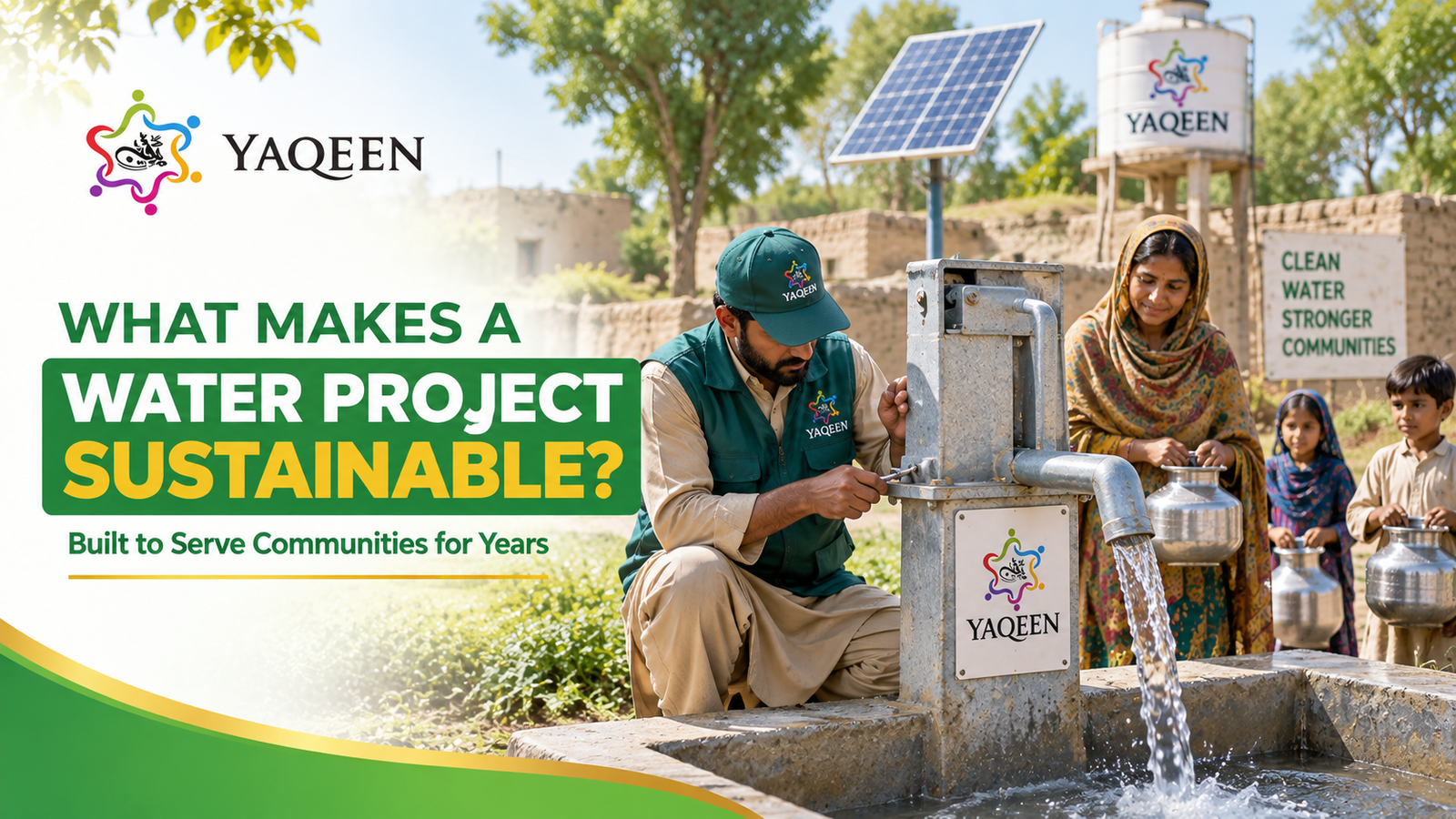
Not every water project lasts. Sustainability depends on the type of system, the terrain, and — critically — whether the community is trained and equipped to maintain it. Here’s a quick comparison of common approaches used across rural Pakistan:
| Water Solution | Typical Lifespan | Families Served | Best Suited For | Maintenance Needs |
|---|---|---|---|---|
| Hand pump (shallow well) | 10–15 years | 30–50 families | Flat terrain, high water table | Low; occasional part replacement |
| Deep community well | 20–25+ years | 60–100+ families | Areas with deeper groundwater | Moderate; motor and pump servicing |
| Solar-powered water system | 15–20 years | 100+ families | Off-grid or high sun-exposure regions | Moderate; panel and battery upkeep |
| Water filtration plant | 10–20 years | Village-wide | Areas with contaminated but present water | Higher; filter changes and testing |
A sustainable Clean Water Donation almost always includes three things beyond the physical infrastructure: a trained local caretaker or committee, a simple maintenance fund or plan, and periodic water-quality testing. Without these, even a well-built system can fall into disrepair within a few years — which is why responsible water charities budget for upkeep, not just construction.
Clean Water as Sadaqah Jariyah
Islamic tradition places water in a unique category of charity. Among the actions the Prophet ﷺ described as continuing to benefit a person after death is “a righteous child who prays for him, knowledge which he left behind and taught, or a mosque which he built, or a house which he built for wayfarers, or a stream which he caused to flow, or a Sadaqah which he gave out of his property during his life” (Sunan Ibn Majah). Classical and contemporary scholars alike have pointed to wells and flowing water specifically as one of the clearest expressions of this principle, since a functioning water source can serve a community for generations.
This doesn’t mean every donor is guaranteed a specific outcome or reward — that knowledge belongs to Allah alone. What it does mean is that a Clean Water Donation is structured, by its very nature, to keep giving. A one-time meal is consumed in a day. A well can serve a village for twenty years or more. For donors looking to combine short-term relief with long-term, ongoing impact, a water project is one of the most tangible ways to do so.
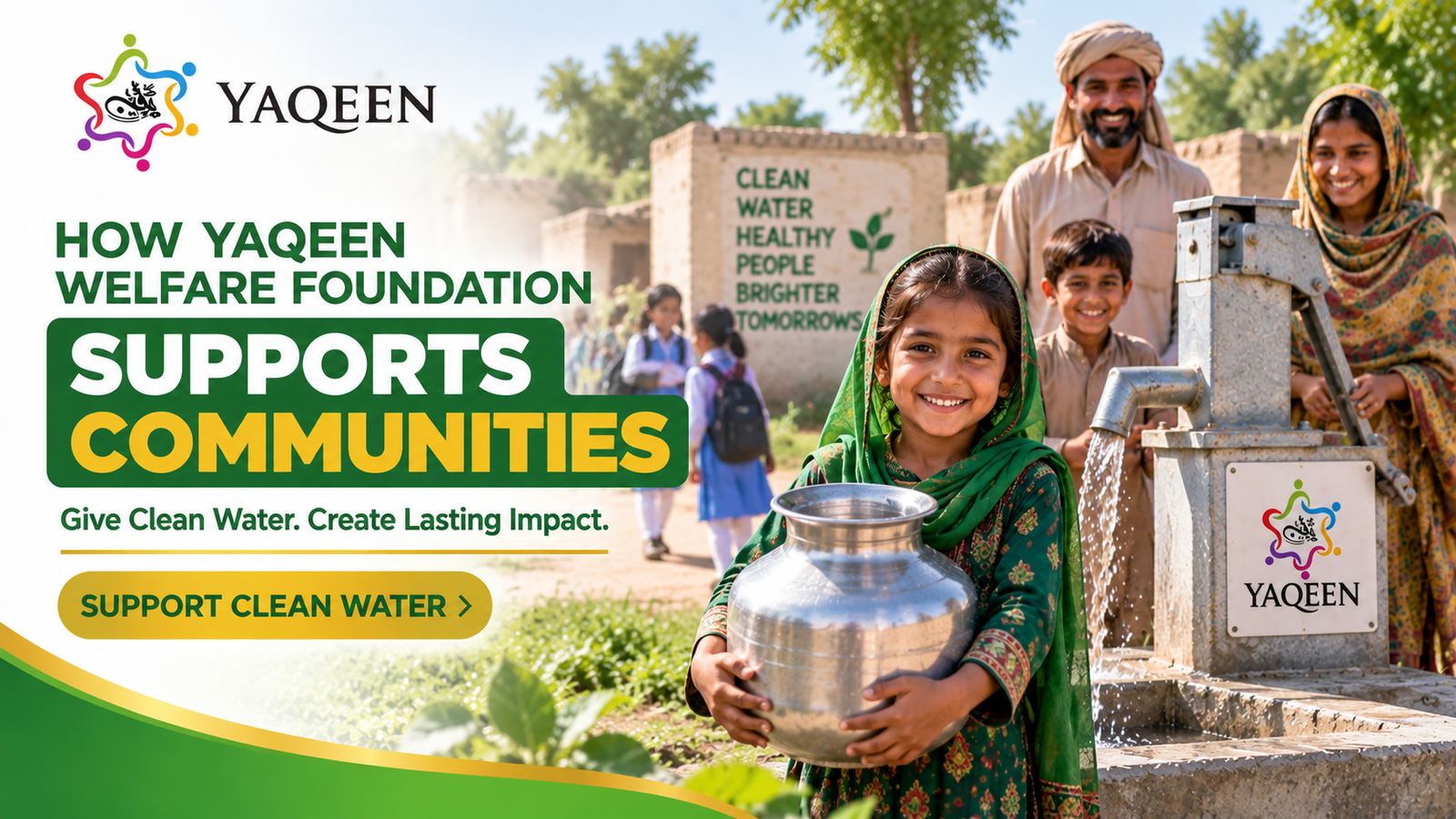
How Yaqeen Welfare Foundation Supports Communities
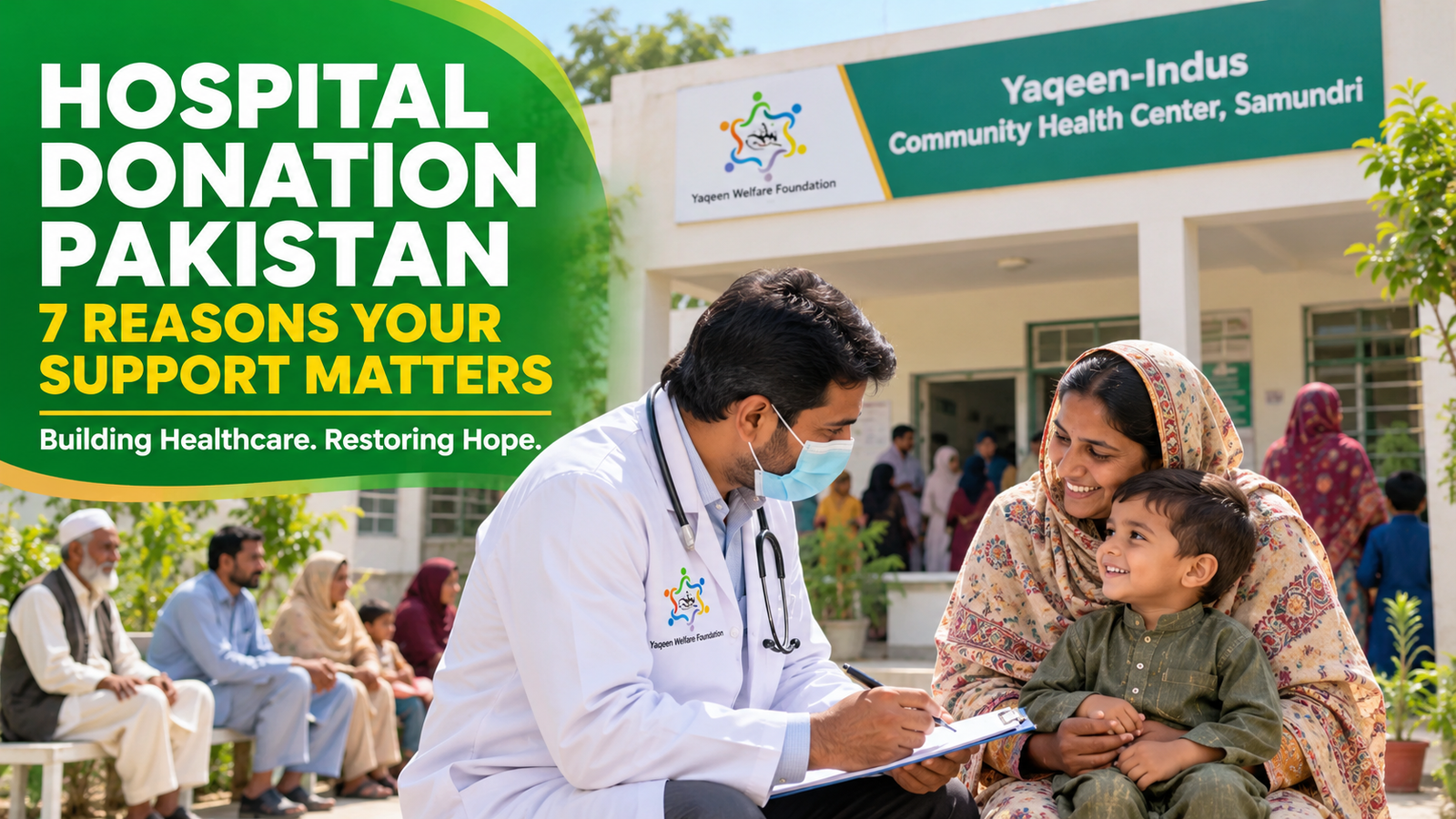
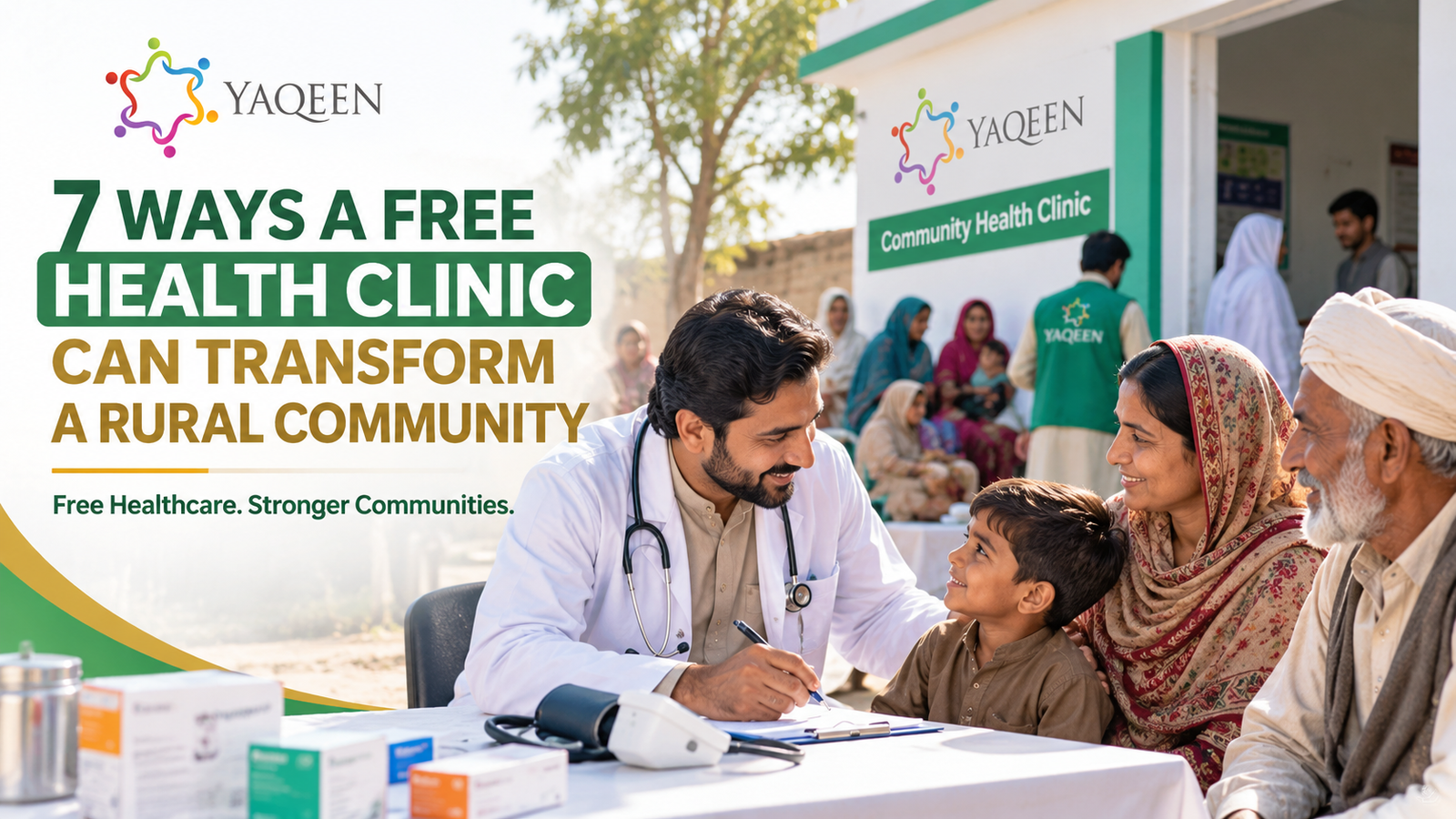
Yaqeen Welfare Foundation works alongside local communities in Pakistan to identify where clean water access is most urgently needed, and to build projects that are designed to last rather than simply installed and forgotten. Our approach pairs water access with the other pillars of community health, including our Help Heal program, which provides free medical examinations and basic medications to families who otherwise couldn’t afford them, and the Yaqeen Health Clinic, which offers ongoing medical care and referrals in underserved areas of rural Pakistan.
We also encourage donors exploring Sadaqah Jariyah water projects to look at how giving connects across the year — from Ramadan-season giving to everyday Sadaqah and Zakat obligations. Clean water, healthcare, and education all reinforce one another, which is why we design our programs to work together rather than in isolation.
FAQ: Clean Water Donation
Is a Clean Water Donation considered Sadaqah Jariyah? Many scholars view water provision as one of the clearest forms of Sadaqah Jariyah, since a well or water system can continue benefiting people for years after it’s built. As with all matters of religious reward, the outcome and its extent are known only to Allah.
How much does it cost to fund a water project in Pakistan? Costs vary depending on the type of system — a hand pump is generally less expensive than a deep community well or a solar-powered system — and on local terrain and groundwater depth. Yaqeen Welfare Foundation can provide current project costs and options on our donation page.
How many people benefit from a single well or hand pump? A typical hand pump serves 30 to 50 families, while a deeper community well can serve 60 to 100 or more, depending on the design and local population density.
Can I donate Zakat toward a water project? Zakat eligibility depends on how a specific project is structured and who it directly benefits. We recommend reviewing our guide on Zakat eligibility or contacting our team directly for guidance on a specific water project.
How does Yaqeen Welfare Foundation make sure water projects last? We prioritize projects that include local training, a maintenance plan, and periodic water testing, rather than infrastructure alone. This is why we track project outcomes and work with communities directly rather than through one-time installations.
Can I donate online, and where does my donation go? Yes. You can give safely and directly through our online donation page, where you can also reach our team with any questions about a specific project or your contribution.
A Village Transformed, One Well at a Time
A Clean Water Donation is one of the rare forms of giving where the impact is both immediate and lasting. It reduces disease within weeks, keeps children in school within months, and — if properly maintained — keeps serving a community for decades. For donors looking for a water charity Pakistan project with real, visible, ongoing impact, funding a well or safe water system remains one of the most direct ways to change a village’s future, one clean glass of water at a time.
If you’re ready to support a project like this, you can donate online through Yaqeen Welfare Foundation or reach out to our team with any questions about current water initiatives.