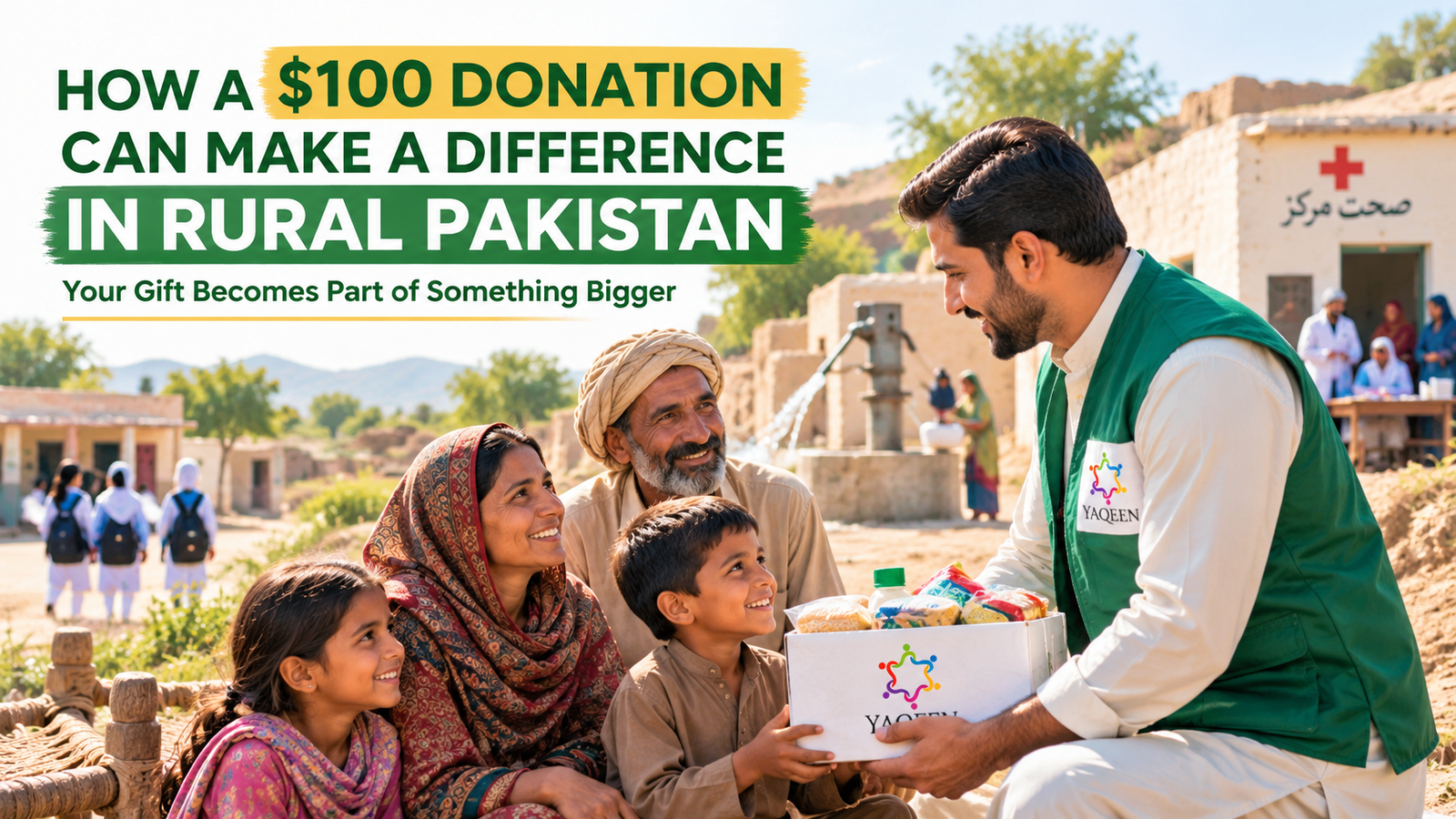
How a $100 Donation Can Make a Difference in Rural Pakistan
Donate to Pakistan with $100 and you may wonder whether the gift is too small to matter. It is a fair question. Poverty, healthcare shortages, water insecurity and housing problems are large, and one gift cannot solve them alone.
Humanitarian support does not depend on one donor funding an entire project. A single donation becomes part of something larger. One contribution may help support medical services. Another may go toward food assistance. Several donors together may fund a clean-water project. Others may help with school supplies, family assistance or safer housing.
A $100 donation does not have to solve every problem to make a meaningful contribution. Combined with responsible humanitarian programs and collective giving, it can become part of lasting change.
This article does not promise that $100 will automatically pay for a specific treatment, feed a family for a fixed number of days, build a water well or finance a child’s education. Real impact depends on several factors:
- Current local costs
- The type of humanitarian program
- Location
- The number of beneficiaries
- Project requirements
- Medical or educational needs
- Transportation and logistics
- Funding from other donors
Yaqeen Welfare Foundation works to provide free medical treatment, clean water and other forms of assistance to people in Pakistan. Below, we describe where your gift can contribute, so you can donate to Pakistan knowing what your money is for.
Why Rural Pakistan Needs Support
Pakistan has large cities and extensive rural communities, and conditions vary widely by location. Not every rural family is poor or vulnerable. Many communities are resilient and self-sufficient. This article focuses on underserved communities, where households may face barriers such as:
- Limited access to healthcare
- Unsafe or unreliable drinking water
- Food insecurity
- Educational costs
- Inadequate housing
- Long distances to services
- Limited employment
- Low household income
- Gaps in maternal and child health services
- Little help in emergencies
Poverty is usually multidimensional. A family rarely faces just one problem. A household with limited income may also live far from a clinic. Medical bills reduce the money left for food. A child’s schooling becomes harder to maintain. Poor housing or unreliable water adds more pressure.
The cycle of poverty often looks like this:
Low Income → Limited Healthcare Access → Poor Health → Lost Work → Lower Household Income → Food and Education Pressure → Greater Financial Instability
When you donate to Pakistan through a responsible charity, your gift can help address one or more parts of this cycle.
Why $100 Can Still Matter
Many donors ask, “Is $100 really enough to make a difference?”
Charitable impact should not be judged only by whether one gift can finance a whole project. Humanitarian organizations usually pool donations from many supporters:
Donor 1 + Donor 2 + Donor 3 + Donor 4 + Many Others → Larger Pool of Support → Medical, Water, Food, Education or Housing Program → Assistance for Eligible Families
A donor may not personally fund an entire clinic service, water system, scholarship or home. But that donation can help make those programs possible alongside contributions from others. Small and medium donations become powerful when many people take part.
Where Can a $100 Donation Help?
Depending on Yaqeen’s current verified programs, a donation may contribute toward the areas below. This table shows the kind of support involved, not a fixed price for each.
| Area of Support | What a Donation May Contribute Toward | Main Benefit |
|---|---|---|
| Free medical care | Consultations, medicines, basic diagnostics, maternal and child care | Lower healthcare barriers |
| Clean water | Wells, pumps, materials, installation, maintenance | Safer, closer water access |
| Food assistance | Staple foods, family food packages, emergency support | Immediate relief |
| Education | School supplies, books, student assistance, scholarships | Long-term opportunity |
| Safe shelter | Repairs, construction support, essential household needs | Family stability |
| Emergency relief | Food, water, medicine, temporary shelter | Urgent help in a crisis |
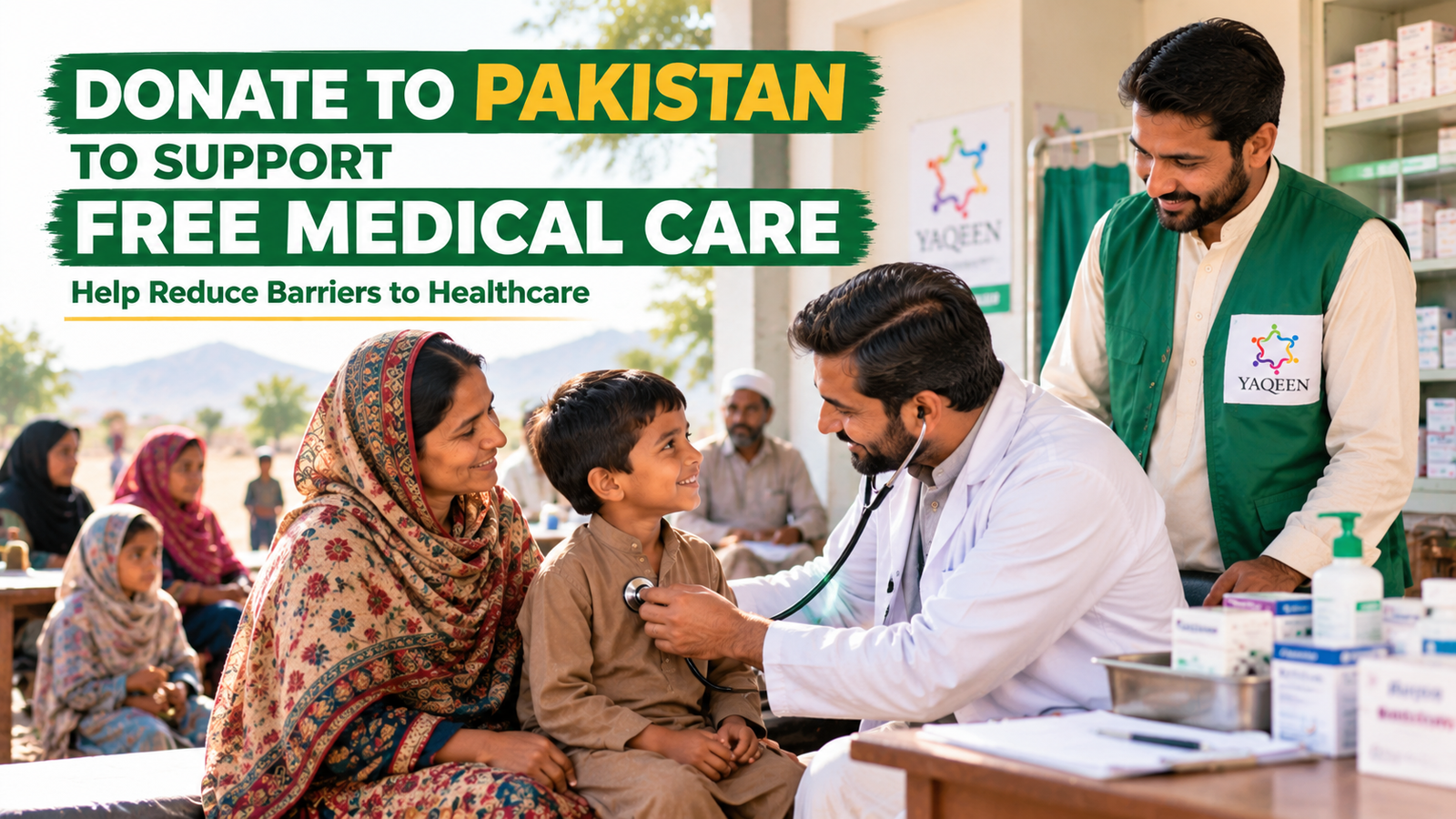
1. Donate to Pakistan to Support Free Medical Care
Healthcare can be one of the hardest expenses for a low-income household. A family may need money for:
- Medical consultations
- Medicines
- Diagnostic tests
- Follow-up appointments
- Transportation to a clinic
- Maternal and child healthcare
- Management of chronic illness
When income is limited, even ordinary healthcare creates painful choices. A parent may ask, “Do I pay for medicine or groceries?” or “Can I afford the trip to the clinic and still cover household necessities?”
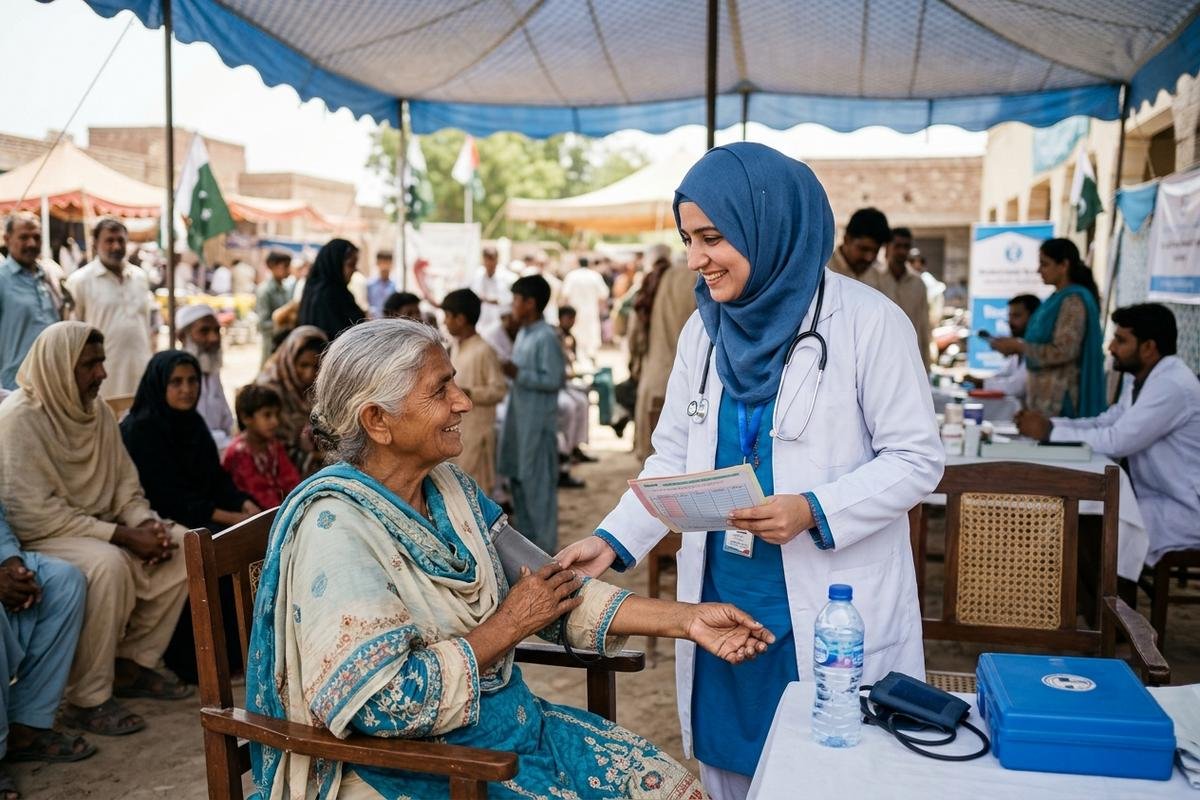
Depending on the verified Yaqeen healthcare program, donations may help support free patient consultations, medicines, basic diagnostic services, preventive care, maternal and child care, community clinic operations, medical supplies and health education.
The Impact Can Extend Beyond the Patient
A patient is often also a parent, a wage earner, a caregiver, a student or a grandparent supporting a household. Helping that person reach healthcare can have effects beyond their own condition:
Medical Assistance → Health Problem Addressed → Better Ability to Perform Daily Activities → Greater Potential to Work or Study → More Household Stability
No charity can guarantee recovery, employment or financial outcomes. But reducing medical barriers is a practical form of poverty relief.
Healthcare Can Protect Household Finances
The financial burden of illness goes beyond doctor fees. There are indirect costs too: lost wages, transportation, caregiving, missed work, repeated clinic visits and medication. When charitable healthcare covers some of these costs, families may keep more of their limited income for food, housing, education, utilities and transport.
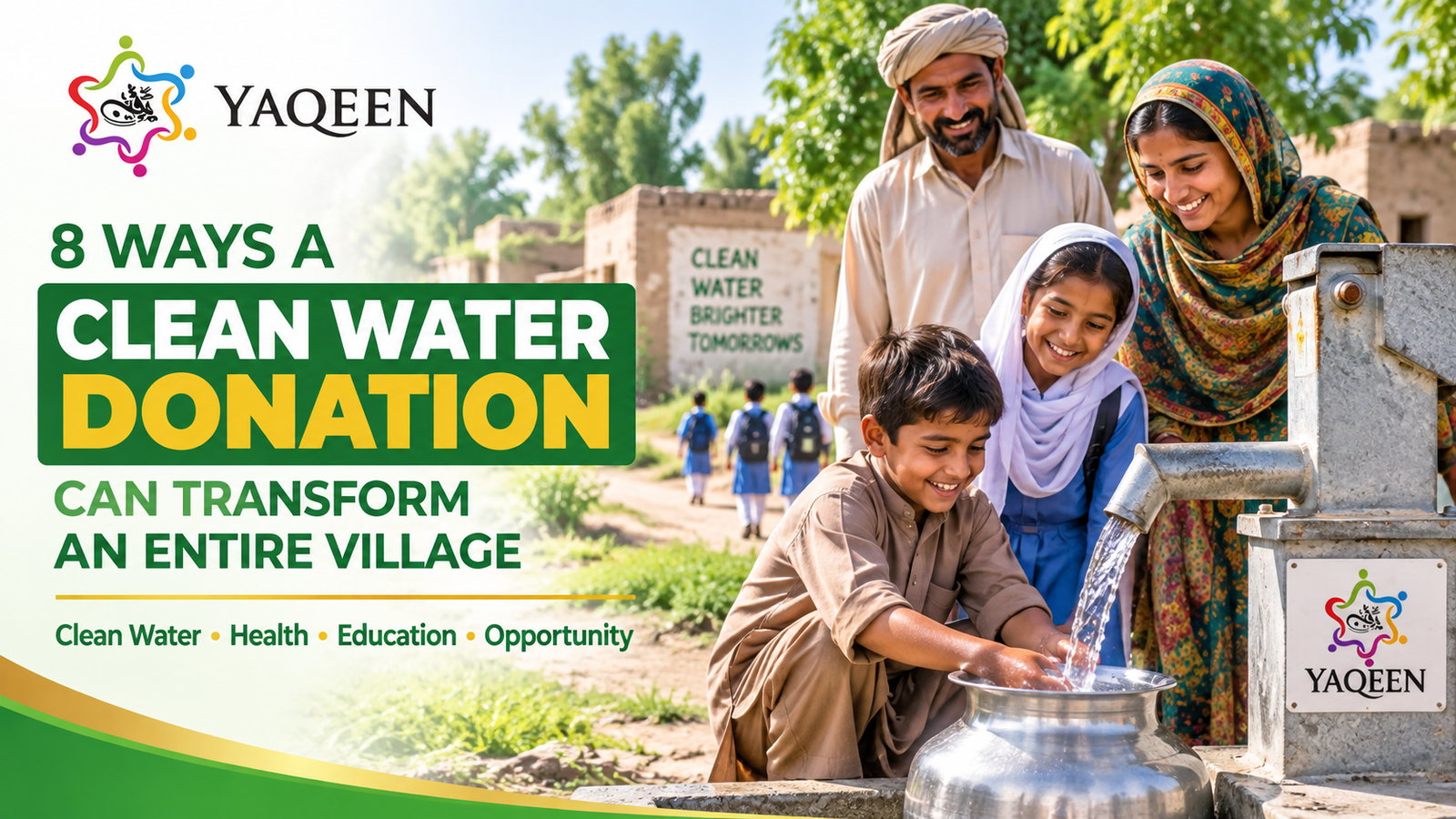
2. Expand Access to Clean Water
Safe water matters for far more than drinking. Families use it for cooking, washing food, handwashing, bathing, cleaning, laundry, sanitation and caring for children, the elderly and the sick. Where reliable water is scarce, households can face health, financial and time burdens.
To donate to Pakistan for clean water is usually to contribute toward a larger project, not to pay for one alone. Depending on Yaqeen’s verified initiatives, funds may support wells, pumps, water-access infrastructure, project materials, installation, community water systems, maintenance and water-quality measures.
We will not state that $100 builds a complete well unless Yaqeen has a current verified program where that is true. The World Health Organization explains why safe drinking water is central to public health.
One Water Project Can Help Many Households
A well-planned water source may serve several households:
Water Project → Improved Water Access → Better Hygiene → Reduced Time Burden → Support for Health and Education → Stronger Community
The benefits depend on the quality, location, maintenance and sustainability of the project.
Water Access Can Save Time
Distance to water is another form of poverty, because it costs productive time. Where household members spend hours collecting water, closer access may free time for education, household care, employment, small businesses, skills development and rest. Roles differ from village to village, so this varies by community.
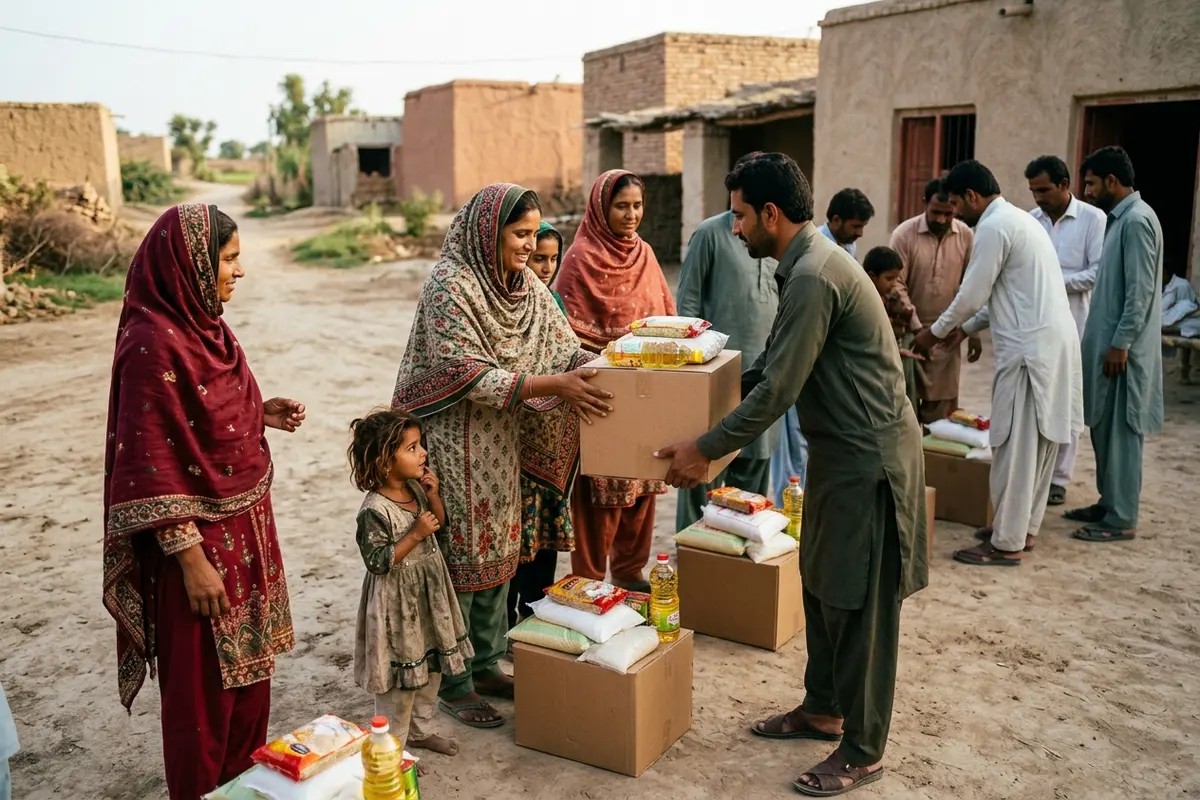
3. Provide Food Assistance
Food is one of the most immediate needs during hardship. When income falls short, families may struggle to keep meals adequate and nutritious. Food insecurity can affect nutrition, energy, children’s growth, school concentration, the ability to work, general health and family stress.
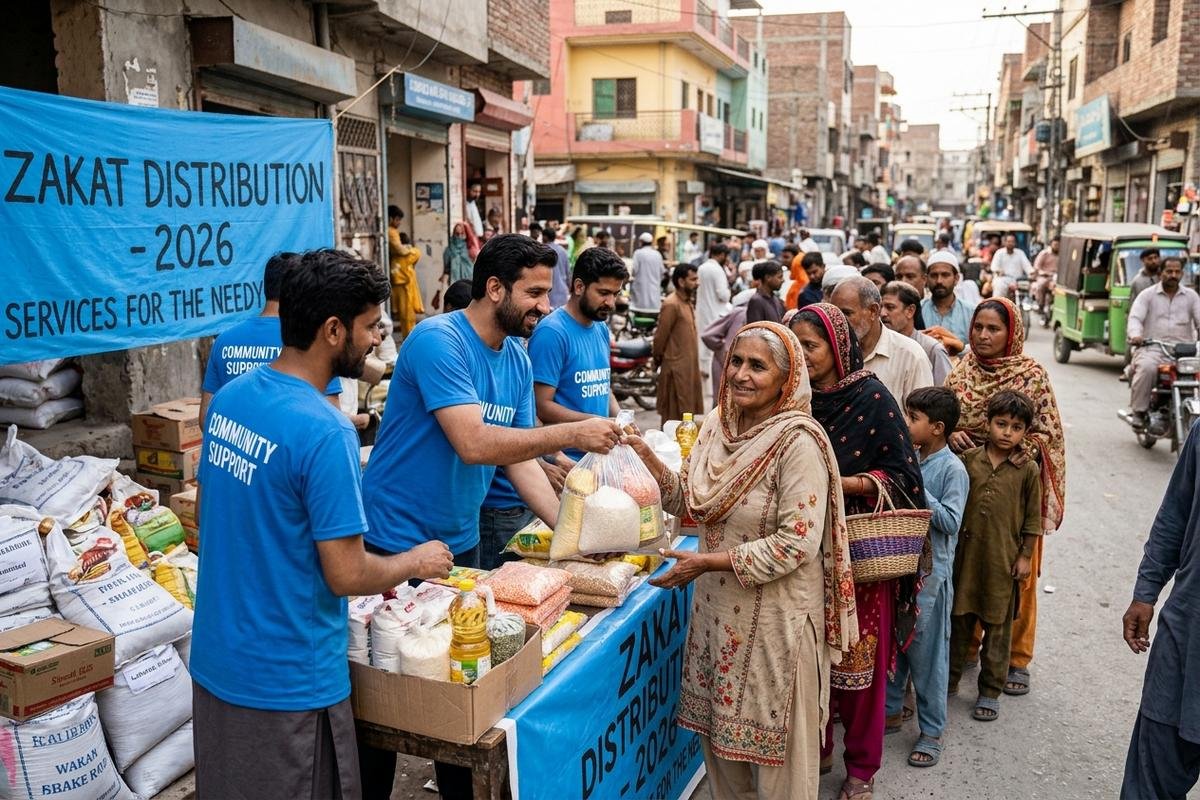
Depending on the program, assistance may include staple foods, family food packages, emergency support, seasonal assistance, meals and other essential items. We avoid promising that $100 feeds a set number of people for a set number of days unless Yaqeen has verified that figure.
Food Assistance Can Create Breathing Room
Food support affects more than hunger. If part of a household’s immediate food need is covered, limited income may stay available for other essentials:
Food Support → Reduced Grocery Pressure → More Income Available for Medicine, Transportation or Education
This does not end poverty, but it can help a family through an especially difficult period.
4. Support a Child’s Education
Education is a longer-term humanitarian investment. Low-income families may struggle with books, school supplies, uniforms, transportation, fees, learning materials and scholarship needs. A child may be motivated to study yet still face barriers unrelated to ability.
Depending on verified programs, donations may help with educational supplies, scholarships, school-related expenses, student assistance, books and learning resources.
Why Education Has Long-Term Potential
Educational Support → Continued Learning → Knowledge and Skills → Greater Future Opportunities
Education does not guarantee financial success, but it widens the options open to young people. A child who gains skills may later support their own household, their children’s schooling and their community, which makes education different from purely short-term aid.
Education Can Be Lost During a Crisis
Illness, unemployment, food insecurity, housing problems and family emergencies can quickly disrupt schooling. Support at a critical moment may stop temporary hardship from becoming long-term educational loss. The UNICEF Pakistan website offers more background on the situation of children in the country.
5. Help Families Access Safer Shelter
Shelter is more than protection from rain. Safe housing affects physical safety, privacy, health, sanitation, children’s education, family stability, protection from extreme weather and dignity. Families in unsafe housing may struggle to improve other parts of their lives because so much energy and income goes to basic survival.
Depending on Yaqeen’s verified programs, support may involve housing assistance, repairs, construction support, essential household needs and help for vulnerable families. We avoid promising that $100 will build a home. Individual donations contribute toward a larger housing effort.
Safe Shelter → Stability → Better Hygiene and Security → A More Supportive Environment for Children → Greater Ability to Plan for the Future
Housing alone does not remove poverty, but stable shelter makes it easier for families to address other needs.
6. Support Mothers and Children
Financially vulnerable families may struggle to access prenatal care, maternal nutrition, medical consultations, child healthcare, medicines, preventive services and essential supplies. Support in these areas may help the wellbeing of both mother and child.
When a mother’s health is supported, the effects may reach the children and other relatives who depend on her. When children get appropriate healthcare and nutrition, they may be better able to attend school and take part in normal childhood activities. Any medical claim should stay evidence-based and responsible.
7. Help a Family During an Emergency
A family already managing hardship is especially exposed to sudden shocks such as serious illness, loss of income, natural disaster, housing damage or unexpected medical expenses. Emergency assistance may involve food, water, medicine, temporary shelter, clothing, hygiene items and other essential supplies.
Why One Emergency Can Push a Family Deeper Into Poverty
Financially secure families often have savings, insurance, access to credit, stable income and support networks. Poorer households may have far fewer protections, so one unexpected expense can have outsized consequences. A medical emergency, for example, may lead to:
Treatment Costs → Lost Income → Borrowing → Reduced Food Budget → Interrupted Education
Charitable support can reduce some of these pressures.
Immediate Relief and Long-Term Support
Immediate relief covers urgent needs: food, medicine, emergency water, temporary shelter and essential supplies.
Long-term support helps build future stability: education, healthcare access, water infrastructure, safe housing, skills development and livelihood support.
Effective programs usually need both. Emergency relief helps a family today. Long-term programs help create opportunities for tomorrow.
Why Collective Giving Matters
This is the clearest answer to how $100 can matter. Imagine 100 people each deciding their contribution is “too small.” Nothing happens. Now imagine those same 100 people giving together. Their donations become a significant pool of humanitarian funding.
One Donor Gives $100, Another Gives $25, Another Gives $250, and Many Others Give What They Can → Collective Fund → Larger Humanitarian Program
This is why donors should not compare one gift against the total cost of solving poverty. No individual contribution has to carry the whole burden.
Small Donations Can Help Fund Large Projects
Several donations together may contribute toward operating a free clinic, purchasing medicines, supporting diagnostic services, completing a water project, providing family food assistance, funding educational support or helping construct safer housing. Large projects are built from many acts of generosity.
Why Recurring Giving Can Be Powerful
If Yaqeen currently offers recurring donations, this option can help. A one-time $100 gift contributes to present needs. Regular smaller gifts help organizations with program planning, consistent services, ongoing healthcare, regular food assistance and the upkeep of projects. Choose an amount you can comfortably sustain. Recurring giving is not the right choice for every donor, and giving within your means matters most.
$100 Should Not Be Marketed as a Guarantee
Some charities say things like “$100 will change a family’s life.” The line is emotionally appealing but misleading unless it is tied to a verified program cost. Responsible organizations separate donation amount from guaranteed outcome. Costs change over time with:
- Inflation
- Local prices
- Exchange rates
- Medical requirements
- Transportation costs
- Geographic location
- Family size
- Construction materials
- Individual needs
Yaqeen should use wording like “$100 provides X” only when it has current, verified evidence for that exact claim. Otherwise, phrases such as “Your $100 donation can contribute toward…” or “A $100 donation can help support…” keep donor trust intact.
Why Donor Transparency Matters
Donors deserve to understand how funds are managed. A responsible charity should explain its programs, who they serve, how beneficiaries are selected, how donations are allocated, how projects are carried out, how financial records are kept, how impact is documented and how beneficiaries’ dignity and privacy are protected. Be cautious of organizations that promise dramatic outcomes without explanation.
What to Look for in a Pakistan Charity
Before you donate to Pakistan, ask yourself:
- Is the organization legitimate?
- Does it clearly explain its programs?
- Are its donation channels official and secure?
- Does it share project information?
- Does it explain how beneficiaries are identified?
- Does it publish appropriate financial or impact information?
- Does it distinguish between Zakat and general donations?
- Does it avoid unrealistic promises?
- Does it protect beneficiary dignity?
- Is its contact information easy to find?
For background on Pakistan’s development context, the World Bank’s Pakistan overview is a useful independent resource.
Why Donating With Dignity Matters
People who receive charity should not be reduced to photographs of suffering. They are parents, children, students, workers, elderly people and community members. Good humanitarian work respects privacy, consent and accuracy, avoids exaggerated poverty imagery and protects children’s dignity. A donor who chooses to donate to Pakistan should expect this standard from any organization.
Donate to Pakistan as Sadaqah
For Muslim donors, general charitable giving may also be given as Sadaqah where appropriate. Sadaqah can support healthcare, food, clean water, education, family assistance, housing and emergency relief. Specific religious claims should be checked against reliable Islamic sources.
Can a $100 Donation Be Zakat?
The amount alone does not decide whether a gift is Zakat. Zakat depends on the donor’s obligation, calculation, intention and distribution to eligible recipients under Islamic rules. If you owe $100 as part of your calculated Zakat, make sure it goes through a Zakat-eligible channel. Not every program is automatically Zakat-eligible, so check Yaqeen’s donation policy to separate general donation / Sadaqah from Zakat. Yaqeen’s website offers a Zakat Calculator to help you work out your amount. You may also find it useful to read Yaqeen’s blog article, Eid Zakat vs Qurbani Donation – What Should You Give?
Can a Donation Become Sadaqah Jariyah?
Some projects provide continuing benefit, such as well-structured clean-water projects, education, healthcare infrastructure and other beneficial community facilities. The continuing nature of the benefit is central to the idea of Sadaqah Jariyah. Use qualified scholars for specific rulings. For more on giving during Eid, read What Is Qurbani Donation and Why Every Muslim Must Give One?
How Yaqeen Welfare Foundation Can Use Donations
Yaqeen Welfare Foundation aims to provide free medical treatment, clean water and various kinds of assistance to people in Pakistan. Donations may be directed to verified programs in these areas:
- Healthcare: verified medical services for people who face barriers to care.
- Clean water: verified projects that improve access to safer, more reliable water.
- Food assistance: help for eligible families facing food insecurity or emergency hardship.
- Education: verified educational initiatives, student assistance or scholarships.
- Safe shelter and family support: verified housing or family-stability work.
- Emergency assistance: humanitarian funds for families in urgent need, where available.
Specific costs, project numbers, beneficiary counts or percentages should appear only when Yaqeen has current documentation to support them.
How Different Programs Work Together
A family’s challenges are interconnected. A family may need healthcare while also lacking food security. A child may need educational support while the household struggles for safe water. A mother may need medical care while the family faces unstable housing. A combined response of healthcare + water + food + education + shelter reaches more of these needs. Collective giving lets different donors support different parts of one mission.
How to Choose Where Your $100 Goes
- Choose healthcare if you want to help patients. Your contribution may support medical care and reduce barriers to treatment.
- Choose clean water for community-level impact. Your contribution may become part of a larger water-access project.
- Choose food for immediate relief. Food assistance addresses urgent household needs.
- Choose education for future opportunity. Educational support focuses on longer-term potential.
- Choose safe shelter for family stability. Housing initiatives help build a safer foundation.
- Choose general humanitarian support if Yaqeen offers unrestricted donations. These let the organization direct funds to verified priority needs under its policies.
How to Donate to Pakistan Through Yaqeen Welfare Foundation
The process is simple:
- Visit the official Yaqeen Welfare Foundation website.
- Open the official donation page.
- Review the available humanitarian programs.
- Select the cause you want to support.
- Choose your donation amount.
- Select one-time or recurring giving, where available.
- Mark your gift correctly as Zakat, Sadaqah or another category, where the platform offers it.
- Complete the donation through the official secure payment method.
- Follow Yaqeen’s project updates and reports, where available.
Always use official channels, not unverified third parties. If you have questions before you donate, contact Yaqeen Welfare Foundation online and the team can help.
Frequently Asked Questions
Can $100 really make a difference in Pakistan?
Yes, it may contribute meaningfully to humanitarian programs, especially when combined with donations from other supporters. No specific outcome is promised unless the cost has been verified.
What can a $100 donation provide?
That depends on the program, location, current costs and individual needs. A contribution may help support healthcare, clean water, food, education, housing or other programs.
Is $100 enough to build a water well in Pakistan?
Not necessarily. Costs vary by system, depth, location, construction, materials, transportation and maintenance. Unless Yaqeen has a verified current cost, $100 should be seen as a contribution toward a water project.
Can $100 pay for someone’s medical treatment?
The cost depends on the person’s diagnosis, tests, medicines and type of treatment. A donation can contribute toward Yaqeen’s verified medical services without guaranteeing that it covers full treatment.
Can I donate specifically for food?
Where Yaqeen currently offers food-assistance options, you can choose that cause on the donation page.
Can I donate specifically for education?
Where verified educational or scholarship programs are available, donors can designate their support to them.
Can my donation help build a home?
It may contribute toward a larger housing project where Yaqeen currently runs one. $100 alone should not be expected to provide a complete home.
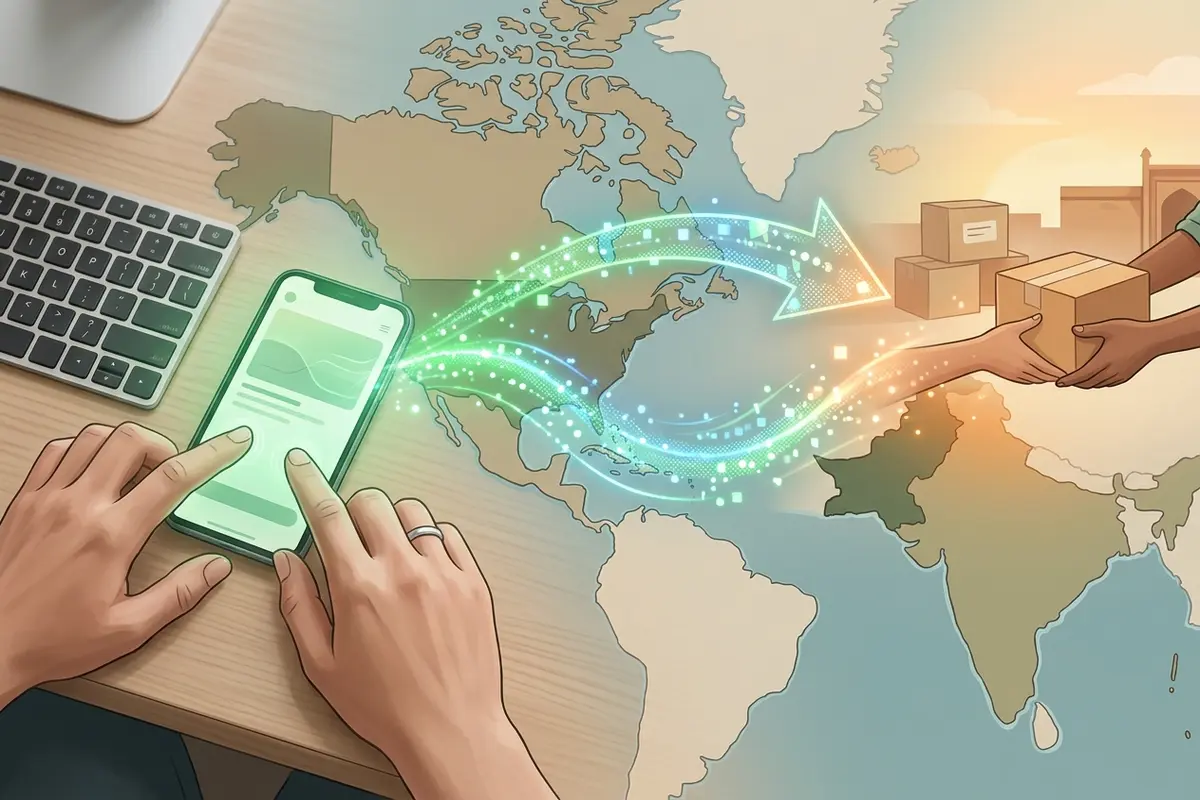
Can I donate to Pakistan from another country?
Yaqeen’s website lists the current international donation options and payment methods. Use only the official page.
Can I donate monthly?
If recurring giving is available, you can select that option when you donate.
Can my donation be Sadaqah?
General charitable donations may be designated as Sadaqah where appropriate.
Can my $100 donation count as Zakat?
Potentially, if it is part of your properly calculated Zakat and goes through an eligible Zakat channel under Islamic requirements.
Can I donate on behalf of my parents, or in memory of someone?
You can give charity on behalf of, or in memory of, a loved one. For specific religious rulings, consult qualified Islamic sources.
How can I know where my donation goes?
Look for Yaqeen’s verified reporting, documentation, transparency and donation-allocation information. You can also contact the team online with questions.
Which donation category creates the biggest impact?
No category is universally better. Healthcare helps patients, food addresses immediate hunger, water may benefit whole communities, education focuses on future opportunity and housing provides stability. The best choice depends on your goals and the verified needs of the communities.
Conclusion: Your Donation Becomes Part of Something Bigger
Can $100 really make a difference? A single donation may not end poverty in a village, build a home on its own, pay for every treatment or finance a complete water project. That does not make it insignificant. Your contribution can become part of a patient’s healthcare, a family’s food support, a community water project, a child’s education, a safer shelter, emergency assistance and a larger humanitarian mission.
One Donation → Combined With Others → Humanitarian Program → Essential Support → Reduced Pressure on Families → Greater Opportunity for Stability
The message is not that $100 will transform a family. It is this: your $100 can become part of the support that helps families move toward a healthier, safer and more hopeful future. If you are ready to donate to Pakistan, choose an official channel and give what you can.
Give What You Can. Support a Real Need. Help Build Stronger Communities in Pakistan.