Hospital Donation Pakistan: 7 Reasons Your Support Matters
Hospital Donation Pakistan is one of the most direct ways to change the health of a whole village, not just one patient. A single donation to a permanent facility gives families a place to go when a child has a fever at midnight, when a father’s blood pressure spikes, or when a mother needs a safe check-up. In rural Pakistan, that place often does not exist. Where it does, it is frequently too far away, too expensive or too short of medicine to help.
At Yaqeen Welfare Foundation, our aim is simple: to provide free medical treatment, clean water and practical assistance to the people of Pakistan. This article explains why permanent healthcare infrastructure matters so much in underserved communities. It covers what a rural facility offers, how it works and how sustained donor support can expand its reach. If you have ever wondered whether you should build a hospital in Pakistan or donate for a hospital project, read on.
Why Hospital Donation Pakistan Efforts Begin With Access
Ask anyone living in a remote village what healthcare means to them, and the answer is rarely about advanced technology. It is about access. Can I reach a doctor? Can I afford the visit? Will there be medicine when I get there?
For many rural families, the answer to all three questions is no. The nearest qualified clinic can be hours away by road. Transport costs money, a day’s wages are lost, and a sick family member may have to travel in poor conditions. By the time a patient arrives, a manageable illness has often become an emergency.
This is why Hospital Donation Pakistan campaigns focus on bringing care closer to home. A facility inside or beside the community removes the first and biggest barrier: distance. It also builds trust. When people see the same doctors and staff week after week, they start seeking help earlier, and that is when treatment works best.
The World Health Organization’s overview of primary health care makes the same point at a global level: care that is close to people, continuous and affordable keeps communities healthier than care that is distant and fragmented. You can also read about the wider health landscape through WHO’s Pakistan country office and UNICEF Pakistan, which both work on child and community health.
What a Rural Hospital Pakistan Facility Actually Provides
When donors hear “hospital,” they may picture a large urban building with many floors. In reality, the most valuable rural hospital Pakistan communities can have is often a well-run community health center. It is a permanent site that delivers the essentials reliably. Here is what that looks like in practice.
Consultations
A consultation is the entry point to everything else. A trained medical professional listens to the patient, examines them, makes a diagnosis and decides on a plan. For many rural patients, this is the first time they have spoken to a qualified doctor about a long-running problem. Free consultations mean that cost never stops a family from asking, “Is this serious?”
A good consultation also includes referral. Not every condition can be handled at a village clinic. When a patient needs specialist or hospital-level care, the clinic’s staff can refer them to a tertiary care center. Without that guidance, many families would not know where to go next.
Medicines
A prescription means little if the patient cannot afford to fill it. Many people in underserved areas stop treatment because they cannot pay for medicine, even when the diagnosis is correct. A facility with its own pharmacy and medicine store removes that obstacle. Patients leave with what they need, not just a piece of paper.
Reliable stock matters as much as the pharmacy itself. Chronic conditions such as diabetes and high blood pressure need uninterrupted supplies. Missing a few weeks of medicine can undo months of progress, so a steady donor base is what keeps shelves full.
Diagnostics
Diagnostics turn guesswork into evidence. Simple tests such as blood sugar, blood pressure readings and basic laboratory work help clinicians catch problems early and monitor those already known. Our own work for families in need includes free medicine and lab tests, as described in Donate to Poor Families in Pakistan | Yaqeen Foundation USA.
Preventive Services
Prevention is the quiet hero of healthcare. Immunizations for infants and toddlers protect children from diseases that once filled hospital wards. Health education teaches families about hygiene, nutrition and when to seek help. Regular follow-up for people with diabetes, hypertension and high cholesterol prevents complications such as stroke and kidney damage.
Every rupee spent on prevention tends to save much more in treatment later. This is a central reason a donate for hospital appeal should always include preventive care in its plan.
7 Reasons Hospital Donation Pakistan Support Matters
Now that you know what a rural facility provides, here are seven clear reasons your support makes a difference.
1. It Brings Care to People Who Cannot Travel
For a daily-wage worker, a trip to a distant city hospital can mean losing a day’s income, paying for transport and finding someone to watch the children. A local facility ends that trade-off. People get care without giving up the little they have.
2. It Makes Care Truly Free
Free care changes behavior. When families know a visit costs nothing, they come earlier, ask more questions and follow treatment through. Hospital Donation Pakistan gifts are what make “free” possible, because patients are not charged and the clinic still pays its staff, buys medicine and keeps the lights on.
3. It Protects Children Early
Vaccinations and routine check-ups in infancy and toddlerhood prevent illness that can follow a child for life. This is also why many donors choose to donate to orphans. Read about it in Donate to Orphans: 7 Ways USA Donors Bring Free Medical Care.
4. It Manages Chronic Disease
Diabetes, hypertension and high cholesterol are long-term conditions. They need monthly attention, not one-off treatment. A permanent facility is the only realistic way to provide that steady follow-up in a rural area.
5. It Creates Local Jobs and Trust
A clinic hires nurses, pharmacists, technicians, cleaners and administrators. These are salaries that stay in the community. Over time, the facility becomes part of village life, which is exactly what makes people trust it.
6. It Builds a Foundation for Growth
A building with a waiting area, treatment room, pharmacy and storage is a platform. Once it is established and well run, it can add services such as more diagnostics, visiting specialists, outreach camps and community health programs. Each layer of growth rests on the stability of what came before.
7. It Is a Lasting Form of Giving
A permanent facility keeps serving patients for years. For many Muslim donors, this fits the idea of Sadaqah Jariyah, a continuing charity whose reward lasts as long as people benefit from it. We explore the same idea in 10 Reasons Supporting a Child’s Education Is a Powerful Sadaqah Jariyah.
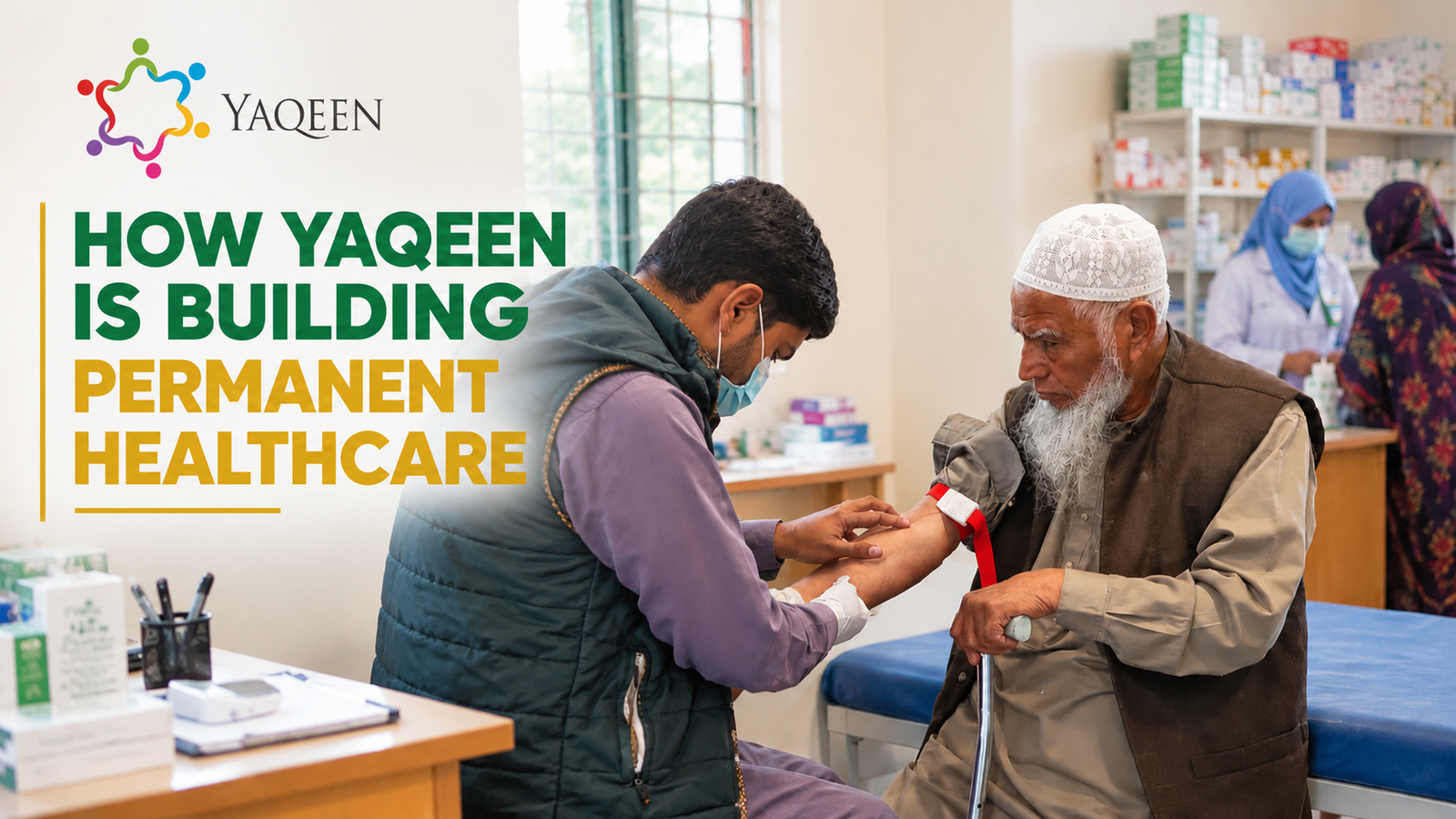
How Yaqeen Is Building Permanent Care: The Yaqeen Health Clinic
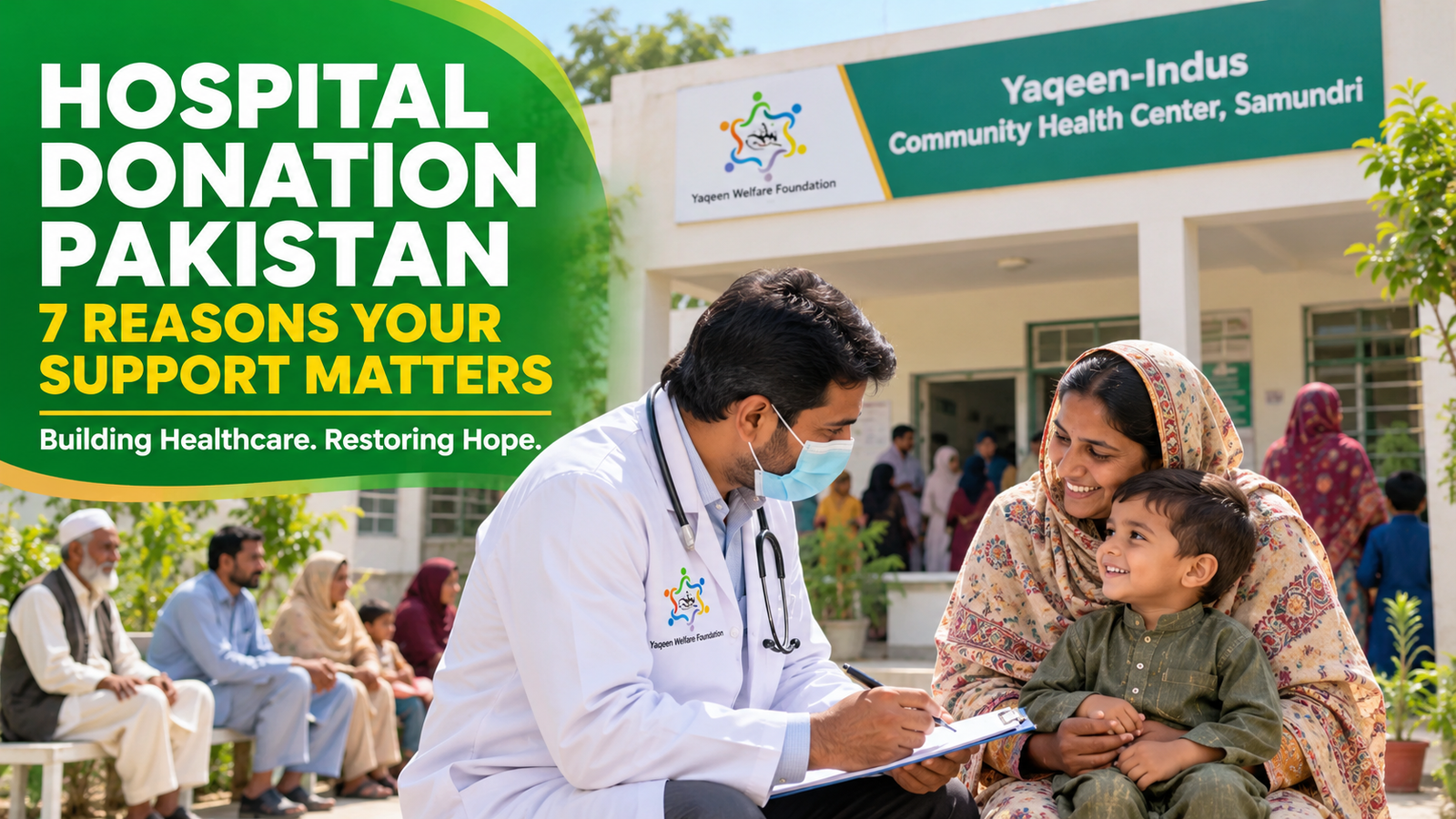
Yaqeen Welfare Foundation does not only talk about long-term healthcare; we are building it. The Yaqeen Health Clinic is one of our core projects. It is located in Chak 208 GB, Samundri, Faisalabad, Punjab. Its purpose is to give marginalized communities the basic health facilities they need.
Thanks to generous donors, the clinic building has been constructed. It includes a check-in and waiting area, a treatment room, a room for medicine and equipment storage, a pharmacy and a toilet. The team is hiring medical and support staff. The clinic is designed to offer, free of cost to poor families in the area:
- Medical consultation and referral to tertiary care centers when needed
- Follow-up care for common conditions including diabetes, hypertension and hyperlipidemia
- Free medication as needed
- Immunizations and vaccinations for infants and toddlers
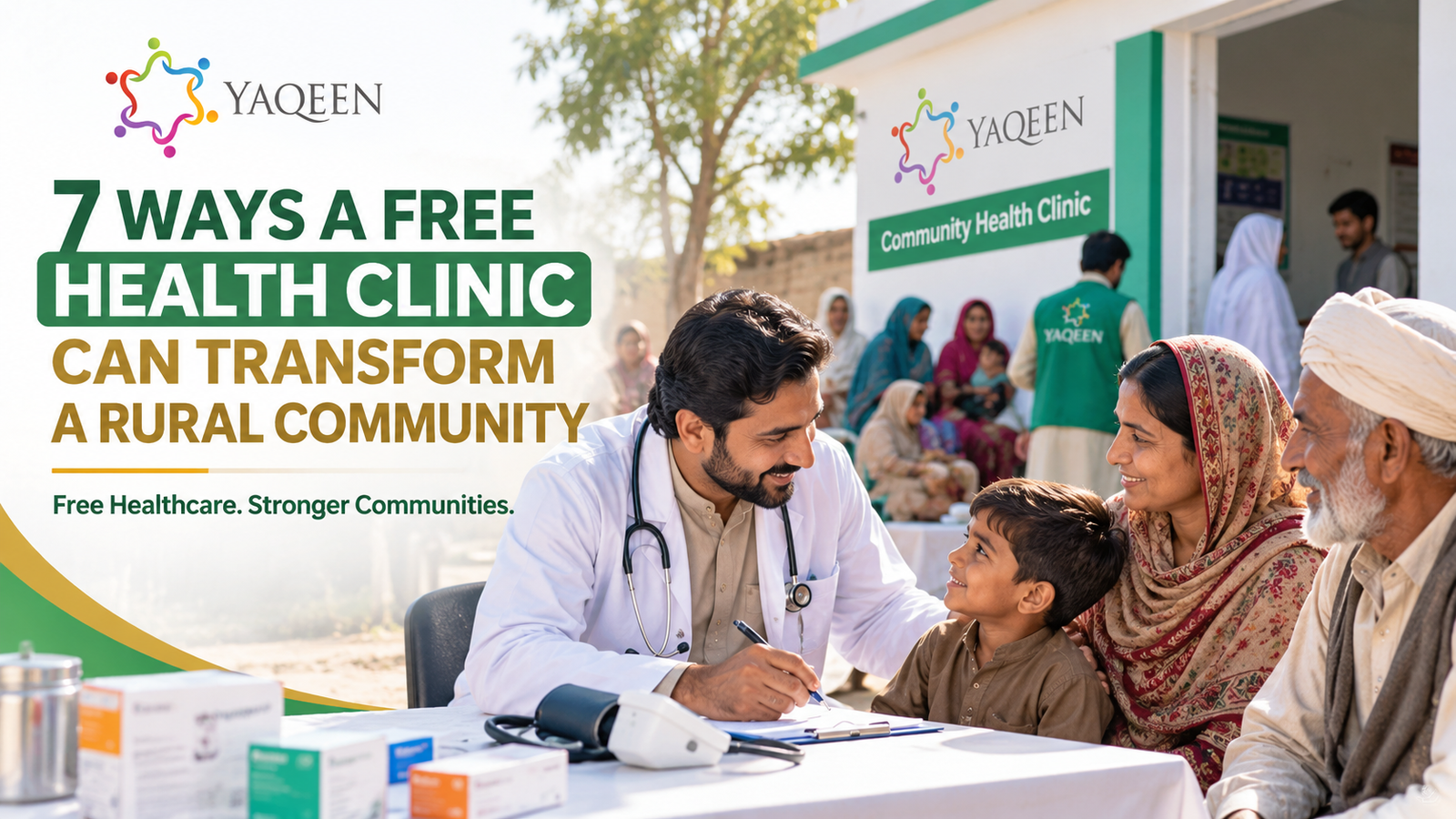
You can read more about our values and long-term goals on our Mission & Vision page. For a deeper look at the community-level effect of this kind of work, read 7 Ways a Free Health Clinic Can Transform a Rural Community.
What Your Hospital Donation Pakistan Gift Supports
The table below shows how core healthcare services connect to the needs of rural families and to the way donor support makes them possible.
| Service | What It Means for Patients | How Donor Support Helps |
|---|---|---|
| Medical consultation | A trained professional examines, diagnoses and advises | Pays for clinical staff and keeps visits free |
| Referral to tertiary care | Patients with serious conditions know where to go next | Supports coordination with larger hospitals |
| Free medication | Treatment is completed, not abandoned for cost | Keeps the pharmacy stocked |
| Diabetes, blood pressure and cholesterol follow-up | Regular monitoring prevents complications | Funds ongoing check-ups and supplies |
| Infant and toddler immunization | Children are protected from preventable disease | Supports vaccine access and community outreach |
| Basic diagnostics and lab tests | Problems are caught early | Supports testing supplies and staff |
Every line in this table depends on sustained, predictable funding. That is why the way you give matters nearly as much as the amount.
Why Sustained Hospital Donation Pakistan Support Beats One-Time Giving
A one-time gift can build a wall or buy equipment. But a facility is not a building alone; it is people, supplies and daily operations. After the ribbon is cut, the bills keep coming: salaries, electricity, vaccines, medicine and maintenance.
Healthcare charity Pakistan programs that rely only on one-off donations often struggle after launch. A clinic may open with energy and then slow down when funds run low. Sustained support avoids this. When donors give monthly or commit to a long-term plan, the clinic can:
- Hire and keep qualified staff without gaps
- Plan medicine purchases in advance
- Maintain equipment before it breaks
- Expand services step by step instead of in sudden bursts
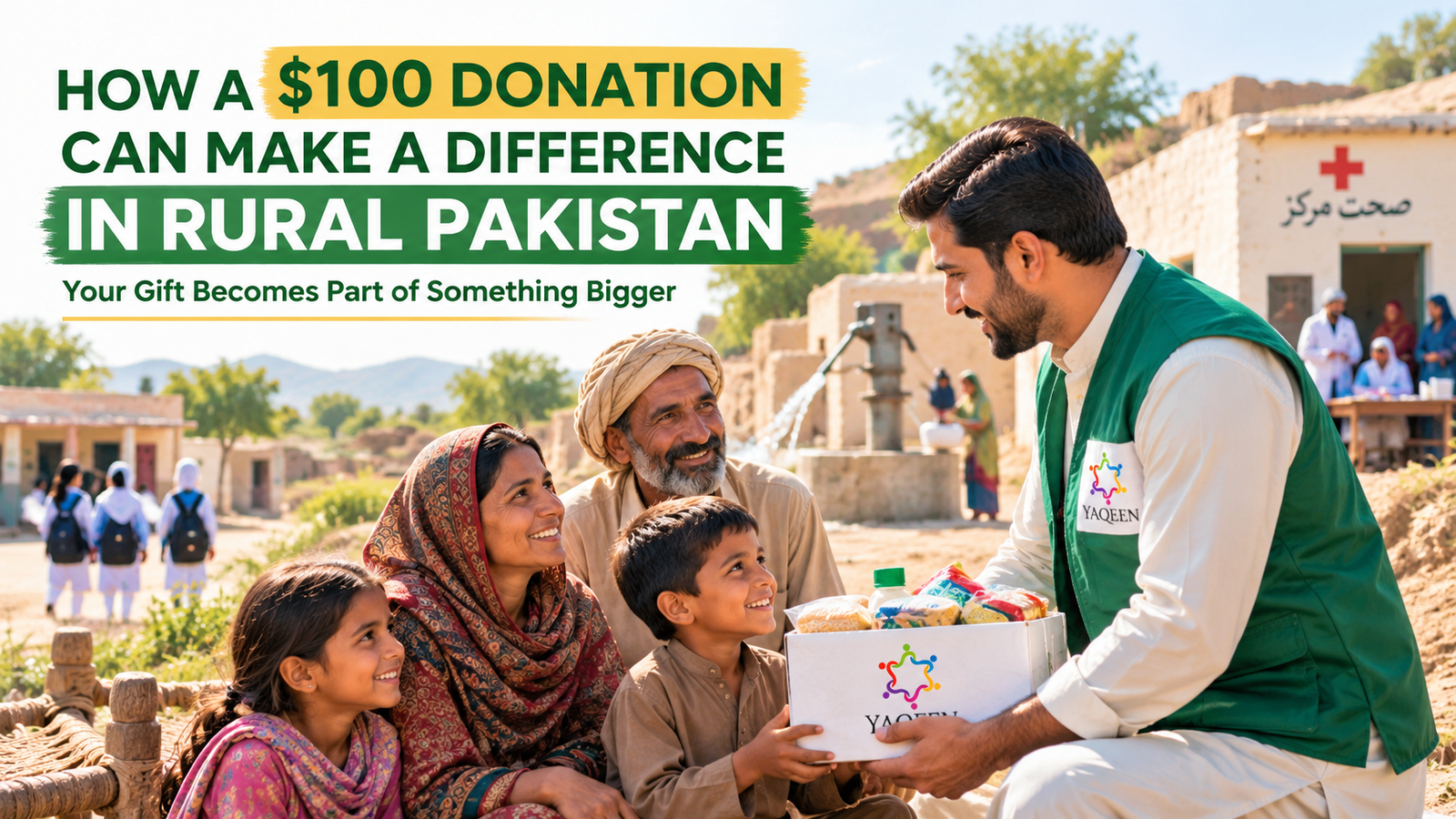
Even modest recurring gifts add up. If you wonder how far a small amount can go, read $100 Donate to Pakistan Can Make a Difference! to see how a single $100 contribution can change a family’s access to care.
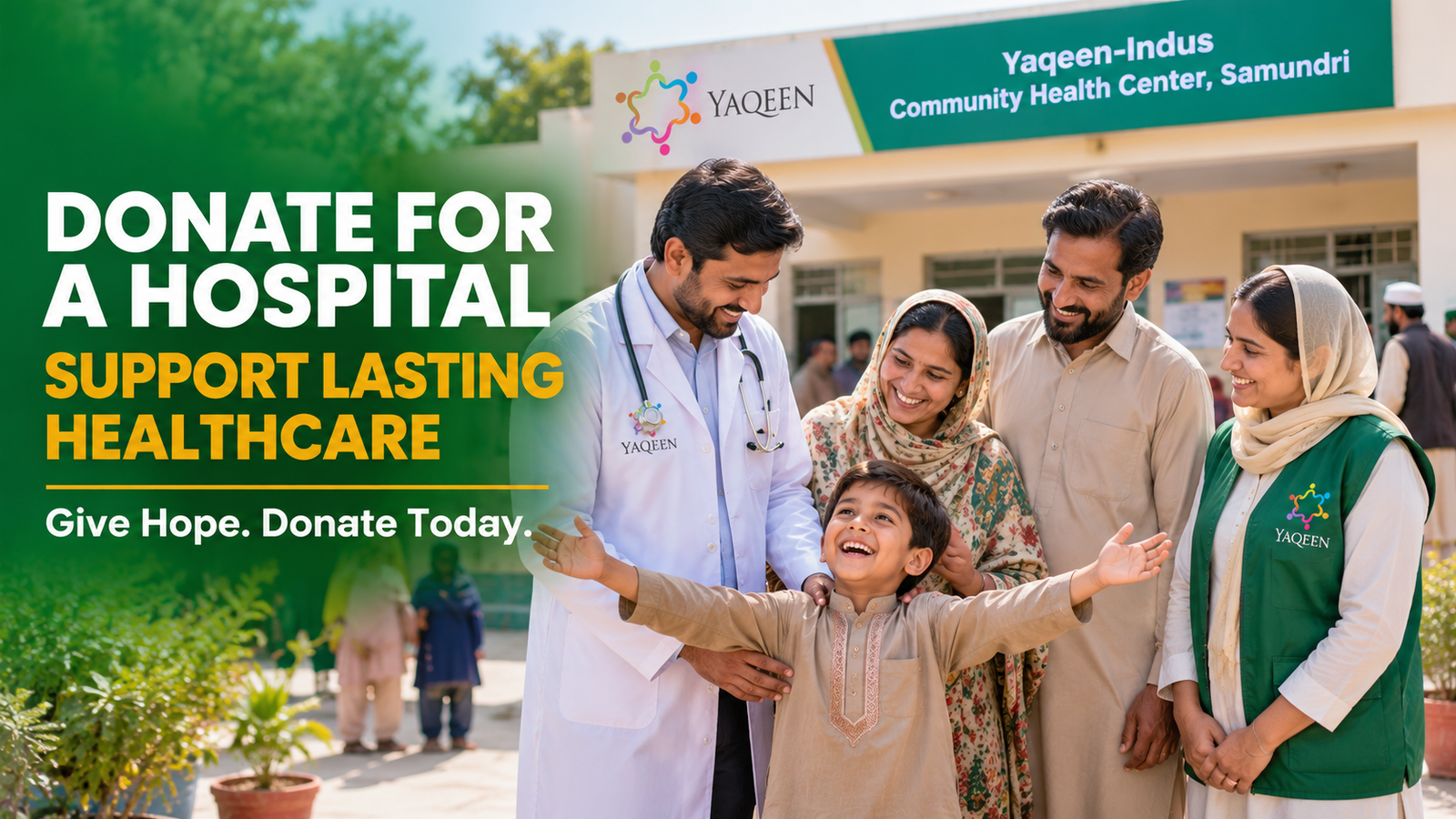
How to Donate for a Hospital the Right Way
If you want to donate for a hospital in Pakistan, a few simple questions will help you give with confidence.
1. Is the facility permanent and community-based? Look for projects with a real address, a physical building and local staff. The Yaqeen Health Clinic, for example, is in a named location in Samundri, Faisalabad.
2. Does it offer free care to those who cannot pay? Charity should reduce barriers, not recreate them.
3. Does it cover prevention as well as treatment? Vaccinations, follow-up care and health education should be part of the plan.
4. Is the organization transparent? A trustworthy charity should show you its team, its projects and its progress. You can meet our doctors, program leaders and advisors on the Board Members page and follow our work on the Events page.
5. Can I give regularly? Monthly giving gives the clinic the stability it needs. You can start through our Donate page at any time.
Zakat, Sadaqah and Healthcare Giving
Many donors want to be sure their religious giving is used properly. Healthcare for the poor is a well-recognized area of charity, and many give their Zakat and Sadaqah toward free treatment and medicine for people in need. If you are unsure how much Zakat you owe, our Zakat Calculator can help you work it out. For Ramadan giving, the Fitrana Calculator does the same for Fitrana.
Giving also benefits the giver. In Benefits of Donating to Charity for USA Donors, we explain how supporting free immunizations and healthcare enriches the donor’s own life as well as the lives of patients. For donors in the USA and elsewhere, a Hospital Donation Pakistan gift is a way to stay connected to home communities and make a lasting difference there.
Building Hospital Pakistan Projects: What Comes Next
The long-term vision behind any effort to build a hospital in Pakistan is gradual and realistic. It starts with a safe, functional building. Then comes staffing, supplies and steady operations. After that, there is room for growth, including more consultation hours, better diagnostics and expanded preventive programs.
Each stage depends on donors who stay engaged. If you give once, you help launch a service. If you keep giving, you help it last. That is the heart of effective Hospital Donation Pakistan work: not a single dramatic moment, but a long series of reliable ones that add up to a healthier community.
Frequently Asked Questions (FAQ)
What is Hospital Donation Pakistan?
Hospital Donation Pakistan means giving money, medicine, equipment or time to support healthcare facilities for people in Pakistan, especially in rural and underserved areas. At Yaqeen Welfare Foundation, donations support free consultations, medicine, immunizations and follow-up care through the Yaqeen Health Clinic.
Can I donate for a hospital from the USA or another country?
Yes. International donors can give online through our Donate page. Many of our supporters live in the USA and give regularly to support healthcare for families in rural Pakistan.
Where does my Hospital Donation Pakistan gift go?
Your gift supports free medical care for poor families, including consultations, medication, follow-up for conditions like diabetes and hypertension, and vaccinations for infants and toddlers. It also supports the staff and supplies needed to keep the clinic open.
Can I use Zakat for a healthcare charity in Pakistan?
Many donors direct their Zakat toward healthcare for people in need. Because rules on Zakat eligibility can vary by school of thought, we recommend consulting a trusted scholar if you have specific questions. You can estimate your Zakat using our Zakat Calculator.
Why is a permanent facility better than a medical camp?
Camps are valuable, but they are temporary. A permanent facility offers continuity: patients can return for follow-up, children can complete vaccination schedules, and chronic illnesses can be monitored over time. The two approaches work best together.
Is my donation tax-deductible?
Tax treatment depends on your country and the organization’s status. Please contact us directly and consult your tax advisor to confirm details for your situation.
How often should I give?
You can give once or monthly. Monthly gifts help the clinic plan ahead, so many supporters prefer them. Any amount you can sustain is useful.
How can I follow the progress of the clinic?
You can follow our updates through our Blogs, our Media page and our social channels on Facebook, Instagram, X, YouTube and LinkedIn.
Contact Yaqeen Welfare Foundation
Have a question about Hospital Donation Pakistan, a particular project or how to give? We would be glad to hear from you.
- Email: info@yaqeen.org
- Support: support@yaqeen.org
- Contact online: Visit the Yaqeen Welfare Foundation website and reach out here
- Ready to give? Donate to Yaqeen Welfare Foundation