Sadaqah is one of the most powerful acts a Muslim can perform — not just for the person receiving it but for the soul giving it. It purifies wealth, softens hearts and builds a direct connection between a believer and Allah that no other act quite replicates. At Yaqeen Welfare Foundation your Sadaqah supports people who need it most in Pakistan — including life-changing projects like the Yaqeen Health Clinic providing completely free medical care to communities that have never had a doctor within reach. Understanding Best Times and Methods for Giving Sadaqah is not just about reward — it is about giving with the right intention and method that makes every single rupee count for this world and the next.
Understanding Sadaqah in Islam
What Sadaqah Really Means
The word Sadaqah comes from the Arabic root Sidq — meaning sincerity and truth. When a believer gives Sadaqah they are not just transferring money or resources. They are making a statement about their faith — that they trust Allah enough to give from what they have, that they believe His promise of reward, and that they genuinely care about the human being in front of them.
Sadaqah in Islam covers a remarkably wide spectrum. The Prophet ﷺ said:
“Every act of goodness is Sadaqah.” (Sahih Muslim)
A smile toward your brother. Removing a harmful object from the road. Sharing knowledge. Giving food. Donating money. Funding a water well. All of it counts. All of it is Sadaqah.
How Sadaqah Differs From Zakat
This distinction matters practically. Zakat is an obligation — a fixed 2.5% of qualifying wealth held above Nisab for one lunar year, distributed to eight specific categories defined in the Quran. It is a pillar of Islam. Non-negotiable. Due whether you feel like giving or not.
Sadaqah is voluntary. No fixed amount. No specific timing. No restricted recipients. You give what you want, when you want, to whoever needs it. A non-Muslim neighbour in need. A stray animal that is thirsty. A child who needs school supplies. Sadaqah reaches all of them.
The key practical point — Sadaqah can never replace Zakat. They are separate acts serving separate purposes.
Why Sadaqah Transforms the Giver
The Quran describes charity not as a loss but as a loan to Allah:
“Who is it that would loan Allah a goodly loan so He may multiply it for him many times over?” (Surah Al-Baqarah 2:245)
The spiritual benefits of giving Sadaqah are documented across dozens of authentic narrations. It extinguishes sins the way water extinguishes fire. It protects from calamity. It opens doors of provision that were previously closed. The Prophet ﷺ told us that charity does not decrease wealth — and those who give consistently find this truth confirmed in their own lives in ways they cannot always explain.
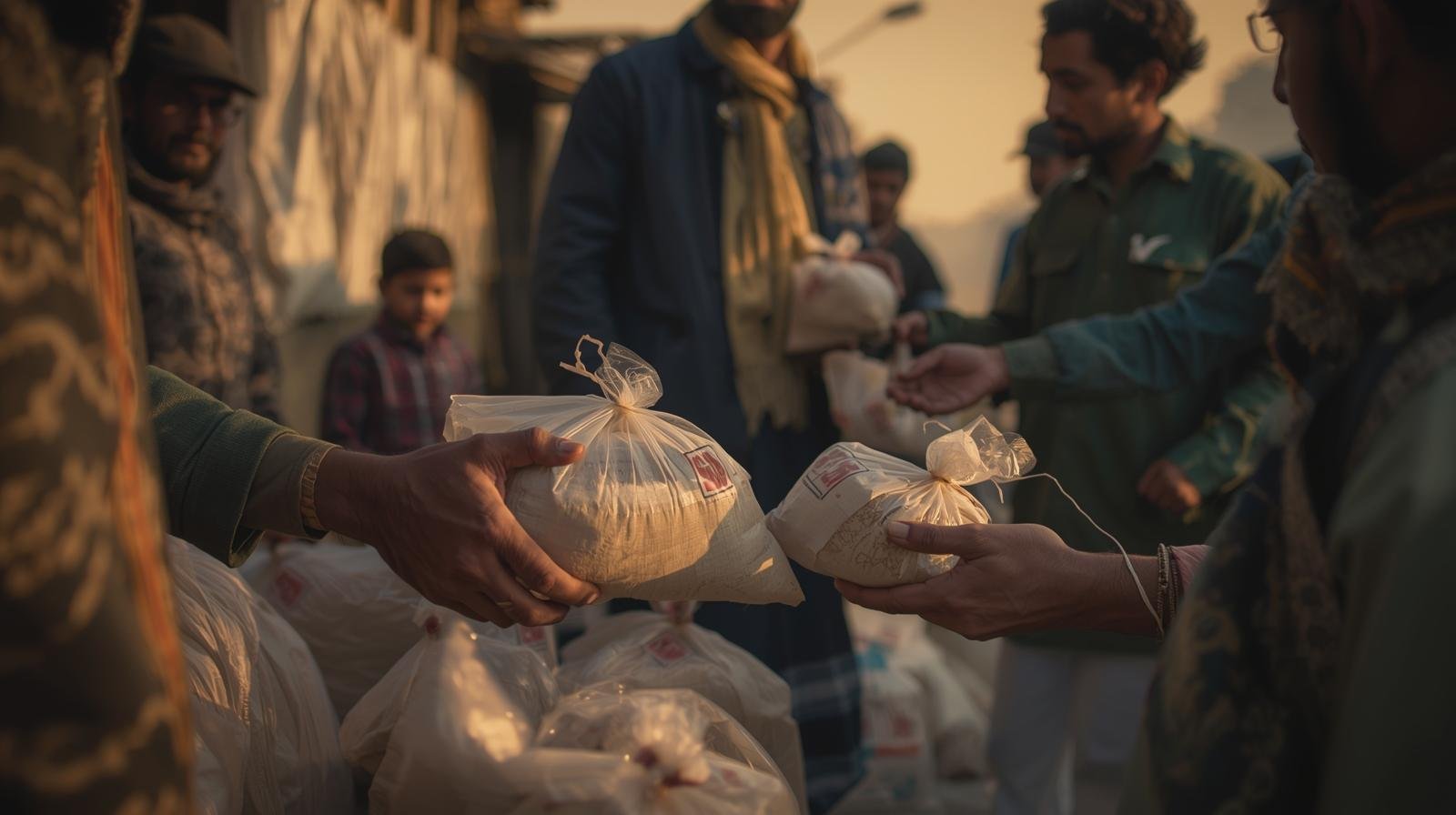
Best Times for Giving Sadaqah
Why Timing Your Sadaqah Matters
Islam is a religion of intentionality. The same act performed at different times can carry vastly different rewards — and knowing when Allah has made certain times more blessed is not a technicality. It is wisdom.
Giving Sadaqah Daily
The Prophet ﷺ said that every day the sun rises, giving Sadaqah is an obligation on every joint of the human body — and that two rakats of Duha prayer covers this. But voluntary daily giving — even something small — is among the most beloved acts to Allah.
He ﷺ said:
“The most beloved deeds to Allah are those done consistently, even if they are small.” (Bukhari and Muslim)
A small daily Sadaqah — even fifty rupees, even a kind word — maintained consistently outweighs a large occasional donation in terms of spiritual development and closeness to Allah.
Fridays — A Weekly Window of Blessing
Friday is the most blessed day of the week in Islam. It is the day of Jummah, the day Adam ﷺ was created, the day that holds a hidden hour when every dua is accepted. Giving Sadaqah on Fridays carries extra weight — and making it a weekly habit is one of the simplest and most effective giving practices a Muslim can build.
Ramadan — When Every Good Deed Multiplies
The Prophet ﷺ was described as being more generous during Ramadan than the wind that brings rain. Every act of worship is multiplied during this month — and Sadaqah is no exception.
Ramadan is when Yaqeen Welfare Foundation sees the most impact from donations — because the spirit of giving is alive in donors and because the need in Pakistan’s rural communities does not pause for any season.
Muharram — A Sacred Month Often Overlooked
Muharram is one of the four sacred months in Islam. Charitable acts during this month carry immense spiritual reward — yet it is among the least discussed times for giving Sadaqah. The 10th of Muharram — Ashura — is a day of particular significance, marked by fasting and increased worship. Giving generously during Muharram is a practice the Prophet ﷺ encouraged through his own example of increased worship in this month.
If you have been meaning to give Sadaqah but have not yet — today is a good day to start. You can give right now to support people in rural Pakistan through Yaqeen Welfare Foundation and let your giving reach someone who genuinely has nothing else.
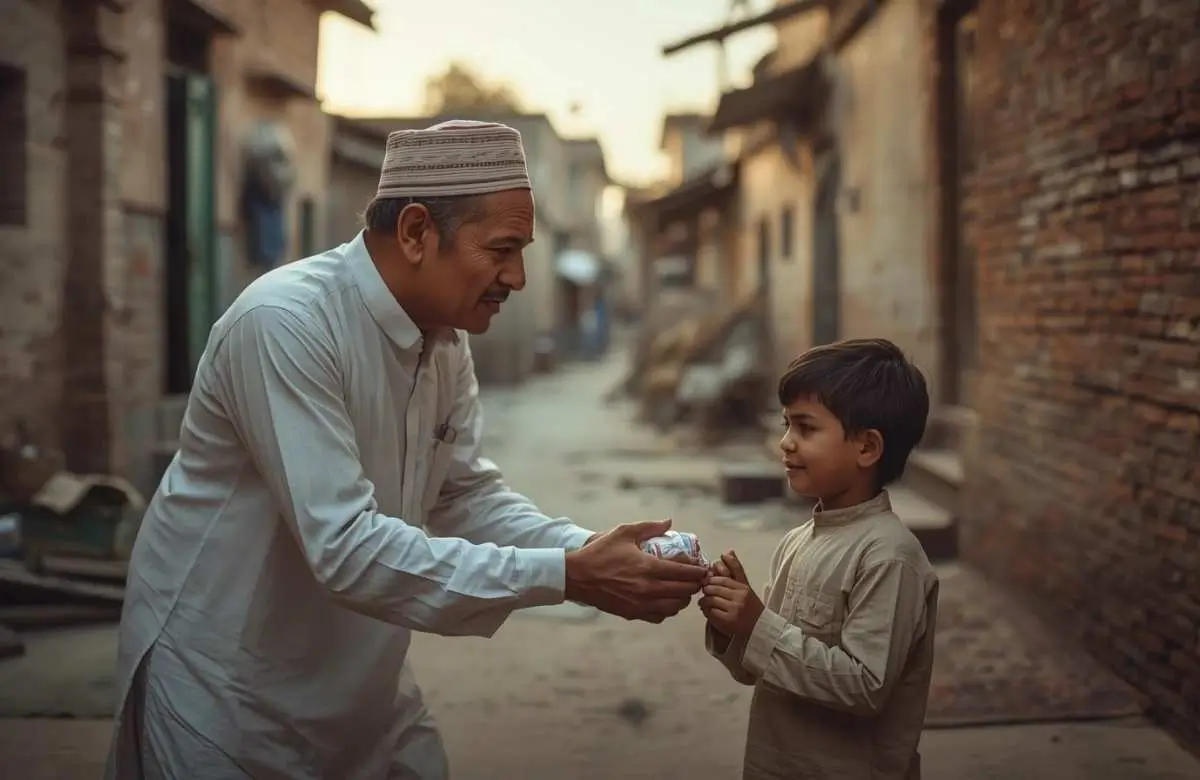
Methods of Giving Sadaqah Effectively
Cash Giving — Direct and Immediate
Handing money directly to someone in need is the most immediate form of Sadaqah. The eye contact. The human moment. The direct transfer from your hand to theirs. There is something about that which no digital transaction fully replicates.
But cash giving has real limitations — you can only reach the people immediately around you. For those who want their Sadaqah to go further, other methods carry equal or greater reward.
Online Giving — Sadaqah Without Borders
Online giving has transformed charitable access. A Muslim in London, Karachi or Dubai can now direct their Sadaqah to a family in interior Sindh within minutes. The reward is identical to giving in person — what matters is the intention.
Yaqeen Welfare Foundation provides a secure, transparent online giving platform at yaqeen.org/donate. Every donation is tracked and directed to active projects — whether clean water, free healthcare or community support. You give from wherever you are. It reaches someone who needs it in rural Pakistan.
Sadaqah Jariyah — The Giving That Never Stops
This is the method that separates a moment of generosity from a lifetime of reward.
Sadaqah Jariyah — ongoing charity — continues benefiting people after the act of giving. The Prophet ﷺ told us that when a person dies, three things remain open: ongoing charity, beneficial knowledge and a righteous child who prays for them.
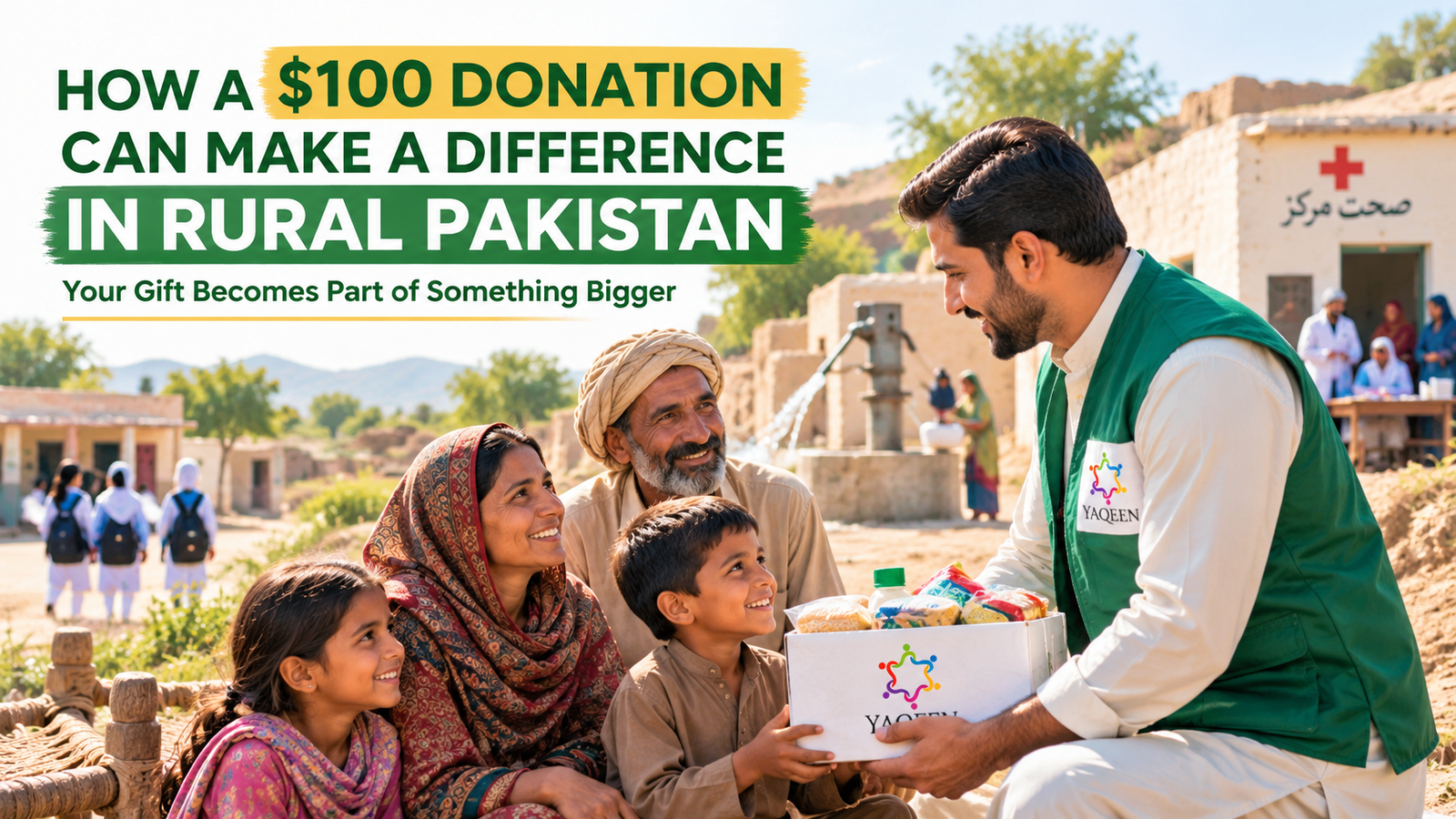
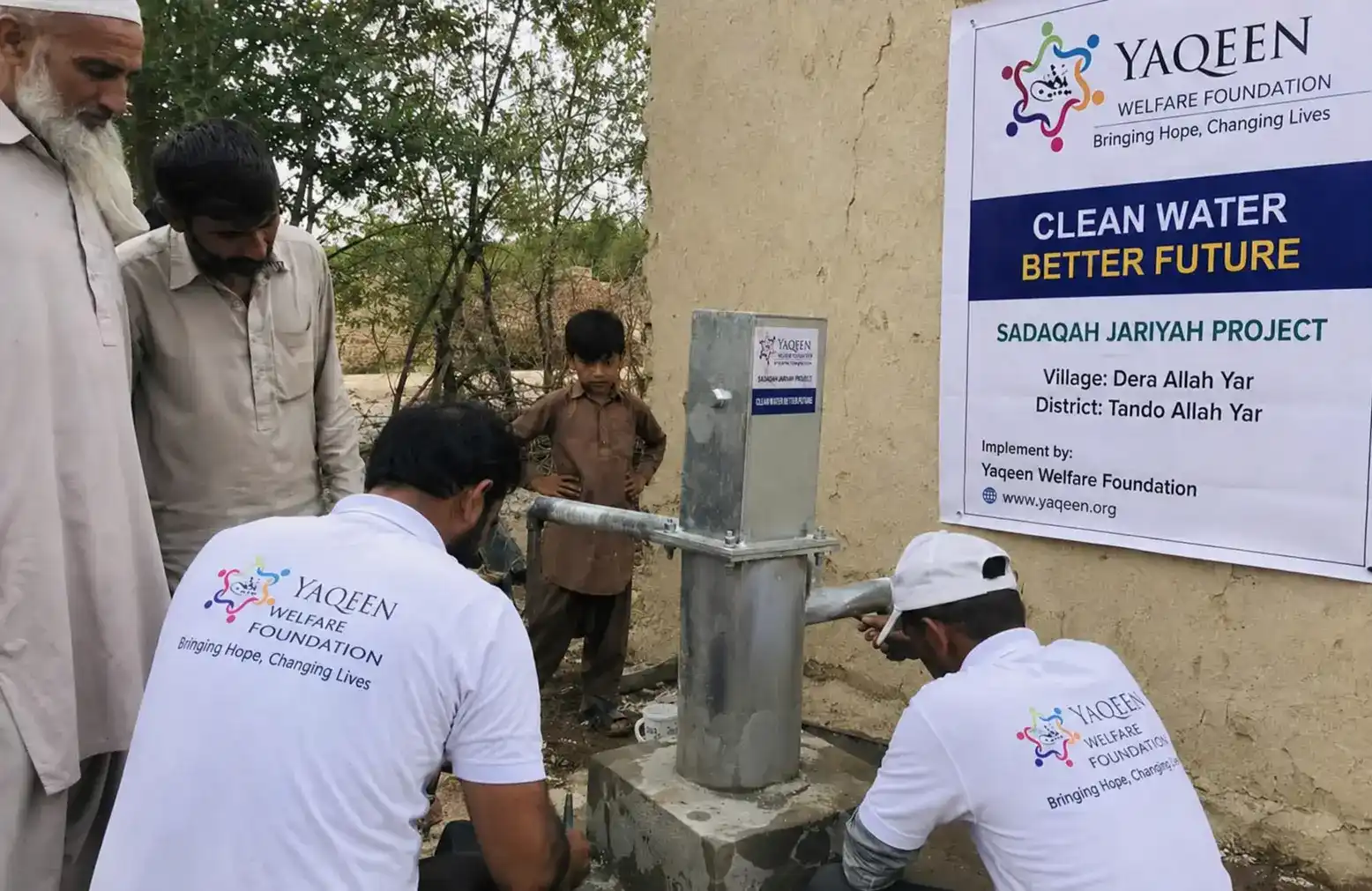
A water well funded through Yaqeen Welfare Foundation serves a village for ten to twenty years. Every morning a family wakes up and uses that water — the reward flows back to the donor. Every patient treated at the Yaqeen Health Clinic because of a donor’s contribution — that donor earns reward each time.
Your Sadaqah provides essential care and services for people who need it most in rural Pakistan. And when given as Sadaqah Jariyah — it never really stops providing.
Donate now to support the Yaqeen Health Clinic and transform lives.
How Yaqeen Welfare Foundation Uses Your Sadaqah
Where Your Money Actually Goes
This is the question every donor deserves a straight answer to. At Yaqeen Welfare Foundation, we do not use donor funds for administrative overhead that does not serve people directly. Every rupee is directed toward active projects in Pakistan’s most underserved communities.
Yaqeen Health Clinic — Free Healthcare for Those Who Have None
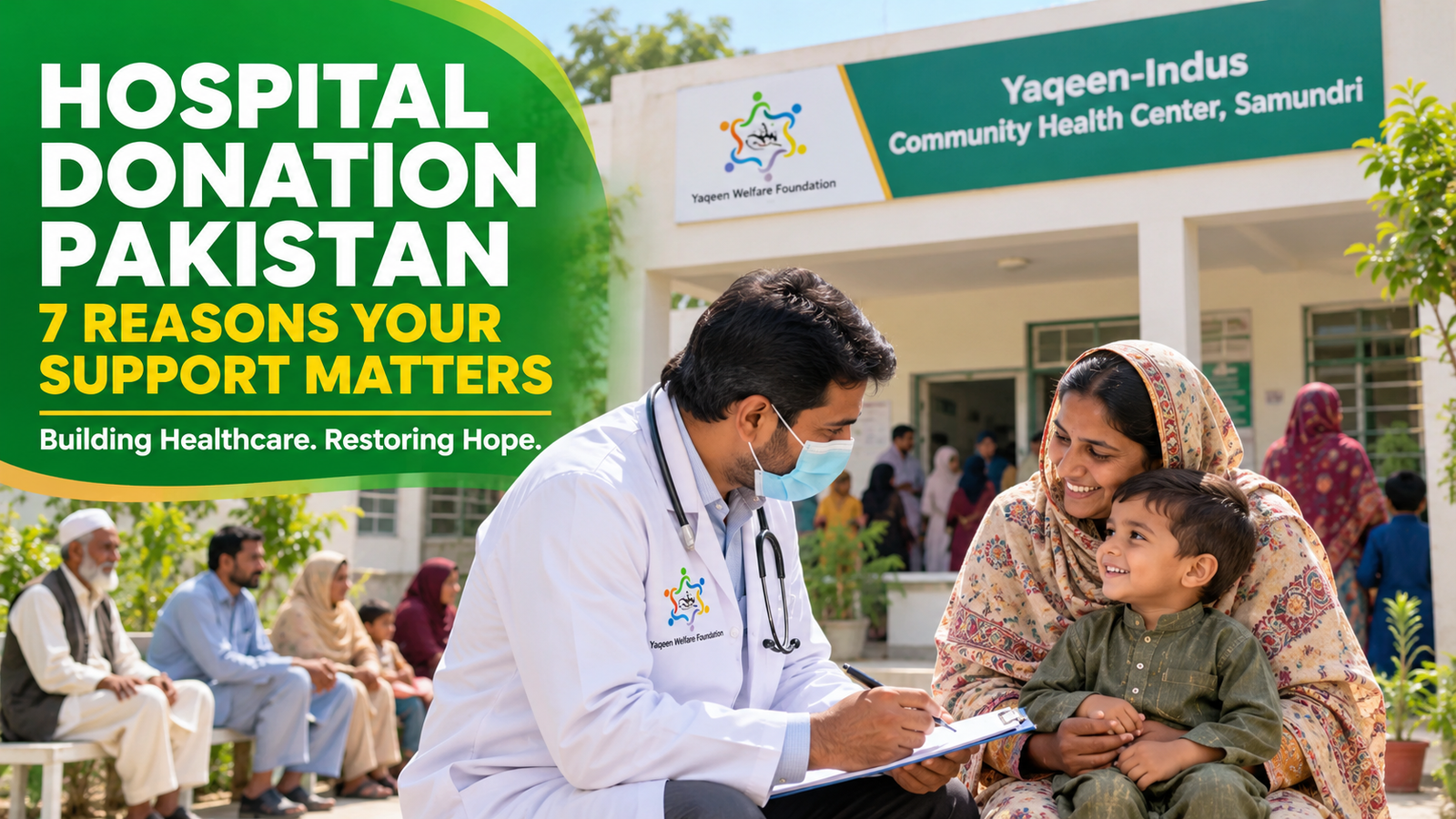
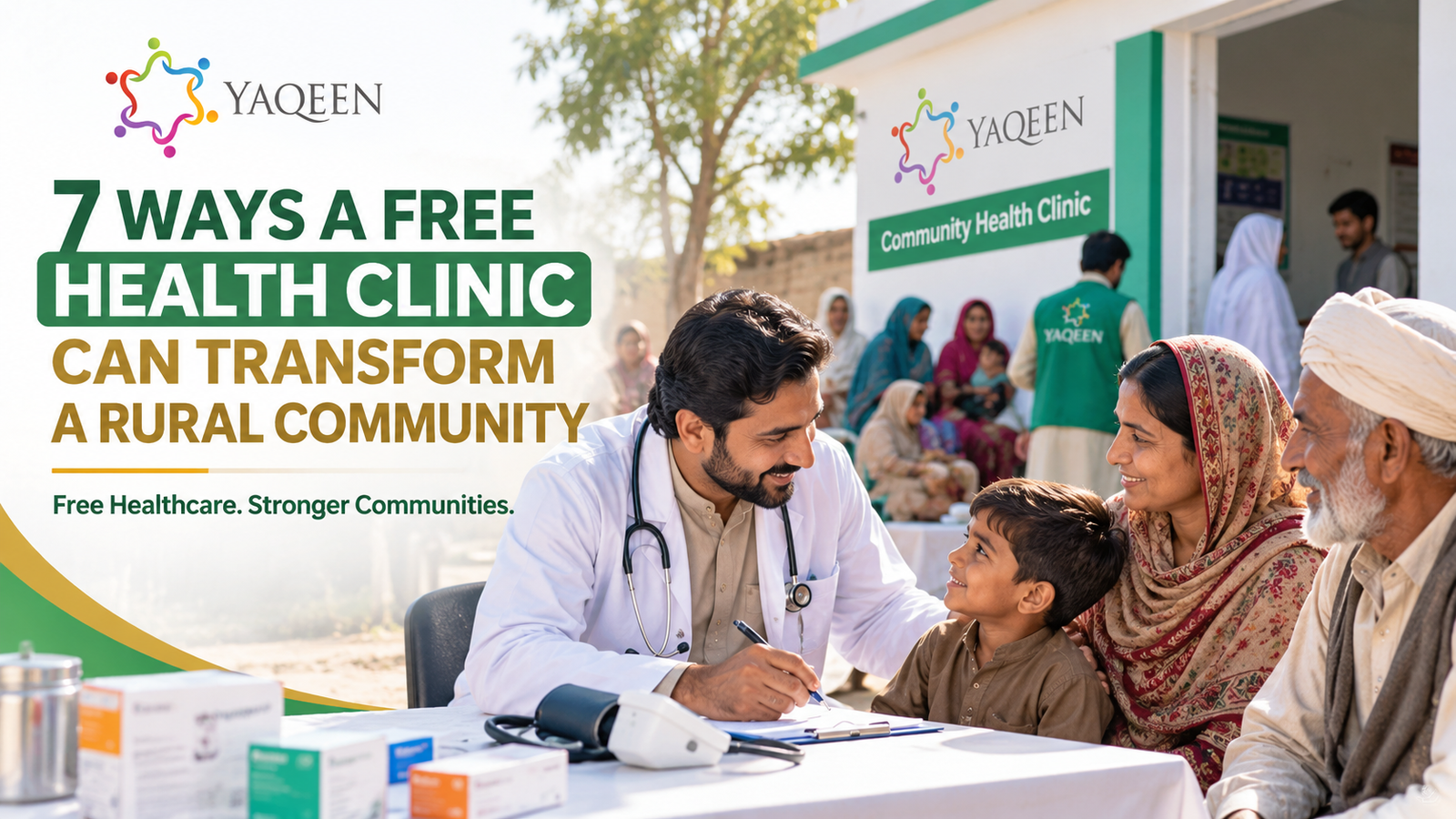
The Yaqeen Health Clinic — Yaqeen Indus Health Clinic — provides completely free medical consultations, diagnosis and medicine to communities where a paid doctor visit was never a realistic option. Patients with conditions ignored for months because treatment cost money they did not have. Mothers who had never had a proper checkup. Children whose illnesses had gone untreated.
Your Sadaqah funds the staff, the medicine, the equipment and the running costs that keep those clinic doors open every week. Every patient treated is a direct result of someone deciding to give Sadaqah through Yaqeen Welfare Foundation.
Clean Water Projects — Sadaqah That Runs Every Morning
We install clean water pumps and water sources in remote villages across Pakistan where families rely on contaminated water that makes them sick. The process is documented — site assessment, installation, community handover, follow-up. Donors receive updates.
According to recent UNICEF and WHO reports, millions of people in Pakistan still struggle to access safe and clean drinking water, especially in rural communities where families rely on contaminated water sources every day. Water experts continue to warn about Pakistan’s growing water crisis while waterborne diseases remain a major threat to children and vulnerable families across the country. This ongoing shortage of clean water is affecting health, education and daily life for countless communities in need.
Every pump we install is a long-term act of Sadaqah Jariyah — for the donor who funded it and for the community that drinks from it.
Your Sadaqah can change lives. Donate today and help those who need it most in Pakistan.
Give Sadaqah Today — The Impact Is Real, and It Starts Now
Sadaqah is not something to schedule for later. The Prophet ﷺ warned against delaying charity while health and ability are present. The best time to give Sadaqah is right now — when the intention is alive, and the means are there. In rural Pakistan tonight, families are drinking contaminated water because clean water has never reached their village. Patients are sitting at home with conditions that could be treated — if only the clinic were reachable and the cost were not there. Yaqeen Welfare Foundation exists to close that gap. The Yaqeen Health Clinic is open because donors gave. The water pumps running in remote villages are there because someone decided their wealth had a better purpose. Be that person today.
Give your Sadaqah today through Yaqeen Welfare Foundation and help provide healthcare and clean water to people who need it most in Pakistan.
UNICEF directly recognizes Sadaqah as one of the most meaningful acts a Muslim can perform — and channels it toward life-saving food, clean water, and urgent medical care for the most vulnerable children and families in the world. Over two decades, UNICEF-supported programs helped over 2.1 billion people gain access to safe drinking water and reached 150 million children with education — proof of what sustained, intentional giving can accomplish at scale.
Source: UNICEF
FAQs About Giving Sadaqah
Can Sadaqah be given online?
Yes — completely and without any reduction in reward. Islam does not require physical presence for charity to be valid. What matters is the intention behind the giving and the trustworthiness of who receives it. Yaqeen Welfare Foundation provides a secure, monitored online donation platform where your Sadaqah intention is honoured and tracked. You can donate at yaqeen.org/donate and receive confirmation that your giving reached an active project in Pakistan.
Who can receive Sadaqah?
Unlike Zakat — which is restricted to eight specific categories — voluntary Sadaqah in Islam can go to anyone in genuine need. Rural communities in Pakistan are among the most deserving recipients globally. Families without clean water. Patients who cannot afford basic medical care. Children in areas where education is inaccessible. At Yaqeen Welfare Foundation, we work specifically with these communities — the people who need Sadaqah most and receive it least.
What is Sadaqah Jariyah and why does it matter?
Sadaqah Jariyah is ongoing charity — giving that continues benefiting people after the moment of donation. The Prophet ﷺ described it as one of three deeds that continue for a person after death. A water well, a funded clinic, an education programme — all of these are Sadaqah Jariyah. At Yaqeen Welfare Foundation, our clean water and health clinic projects are specifically designed to carry this ongoing reward for every donor who contributes.
Is Sadaqah limited to money?
Not at all. The Prophet ﷺ told us every act of goodness is Sadaqah. Volunteering time. Sharing knowledge. Providing food. Helping someone carry a heavy load. Teaching a child to read. All of it counts. That said, monetary Sadaqah — especially when directed toward sustainable projects like water wells and free clinics — carries a unique capacity for scale and lasting impact that other forms cannot always reach.
Does giving Sadaqah during Muharram carry more reward?
Yes. Muharram is one of Islam’s four sacred months and acts of worship — including giving Sadaqah — carry increased spiritual weight during this time. The Prophet ﷺ described Muharram as Allah’s month and encouraged increased fasting and worship throughout it. Ashura — the 10th of Muharram — is particularly significant. Giving generously during this month is a meaningful way to honour its status and earn multiplied reward.
How do I know my Sadaqah reaches the right people?
Transparency is foundational at Yaqeen Welfare Foundation. We document every project with photographs, location records and beneficiary information. Donors who give toward specific projects receive updates showing the impact of their contribution. Our ground teams assess need before every project and follow up after completion. You are not giving into a black box — you are giving into a verified, monitored process with real people at the other end.
Can non-Muslims give Sadaqah?
The concept of Sadaqah as an Islamic act of worship applies to Muslims. However, humanitarian giving — contributing toward clean water, free healthcare and community support — is open to everyone regardless of faith. Yaqeen Welfare Foundation welcomes contributions from anyone who wants to support vulnerable communities in Pakistan. The people receiving help are not asked about the faith of the donor. Need is universal. So is compassion.