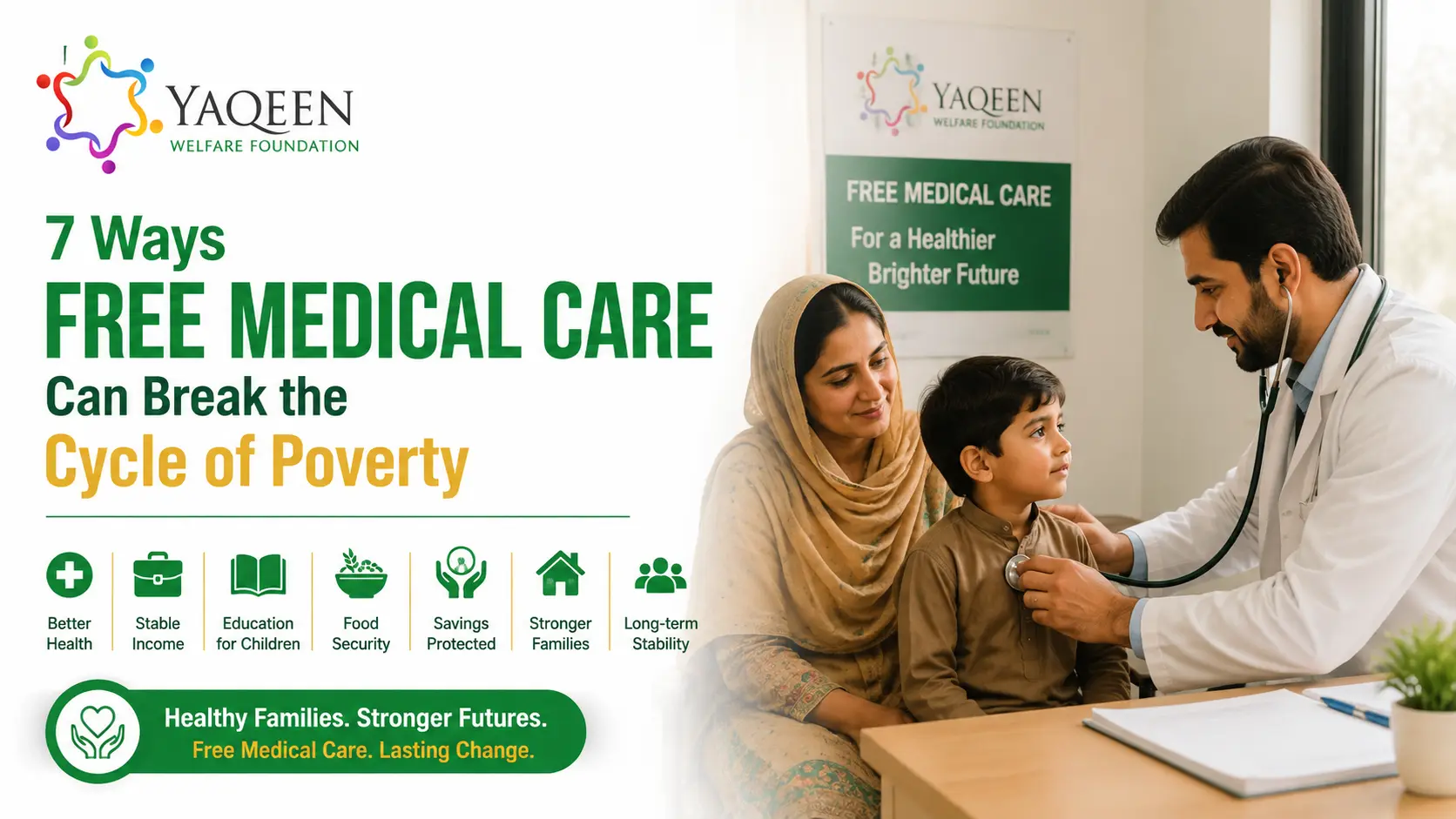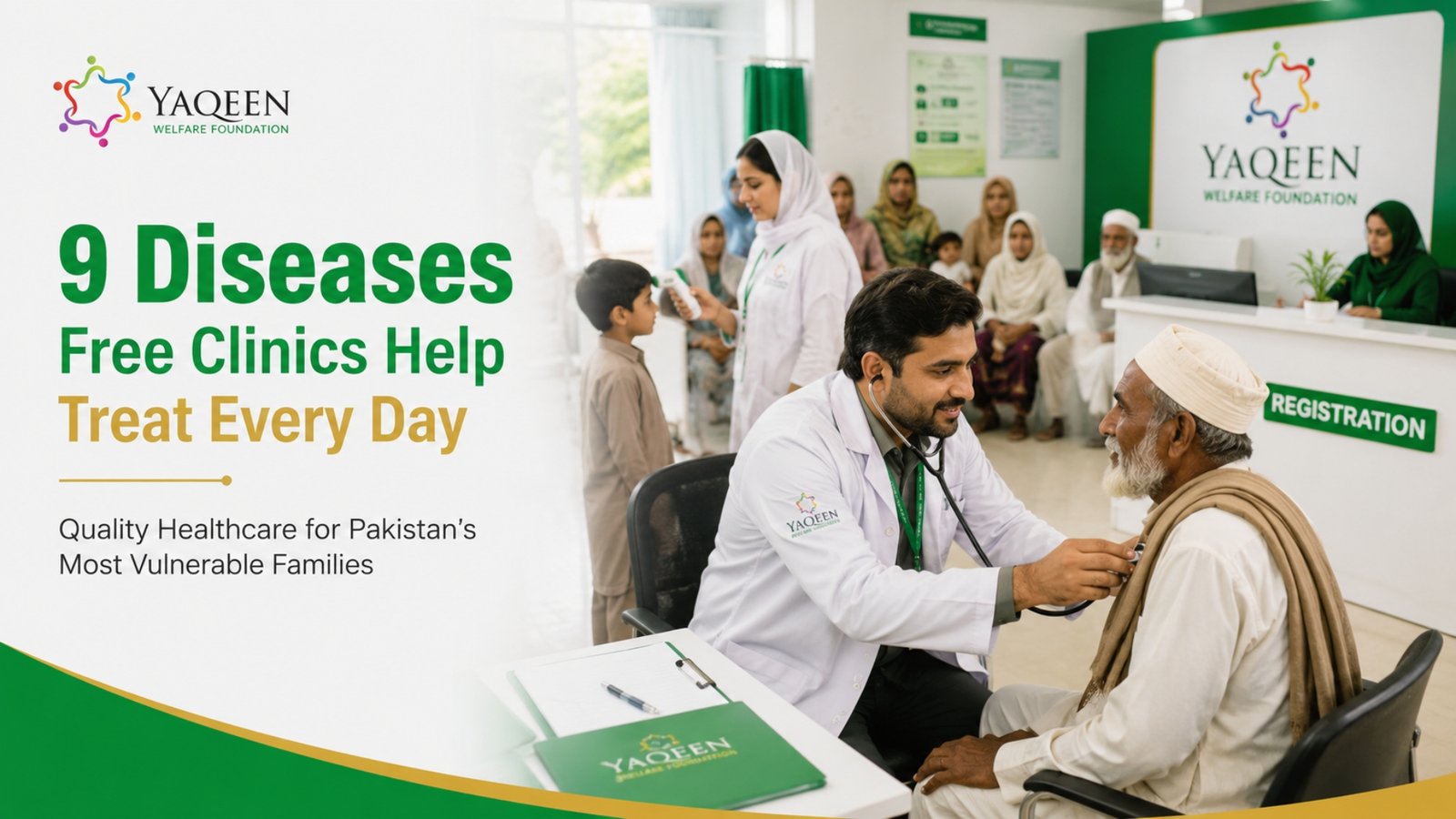
Free Clinics are often the only line of defense standing between a family in rural Pakistan and a disease that could otherwise go untreated for years. Across Punjab, Sindh, Khyber Pakhtunkhwa, and Balochistan, millions of people live without reliable access to a doctor, a diagnostic lab, or even basic medicine. For them, a free clinic is not a convenience — it is the difference between a manageable illness and a medical emergency.
Every single day, Free Clinics across the country open their doors to patients who cannot afford a private consultation, let alone ongoing treatment. Some walk for hours. Some bring children who have never seen a doctor. Some are elderly and living with conditions that have quietly worsened for years because no one could examine them. This article looks at the nine diseases that Free Clinics in Pakistan treat most often, why these conditions are so widespread, and how organizations like Yaqeen Welfare Foundation are working to close the gap.
The diseases on this list are not rare or unusual. They are common, largely preventable, and — with early diagnosis — highly treatable. What separates a patient who recovers quickly from one who suffers for years is almost always access: access to a doctor, access to a basic test, and access to medication that does not cost a month’s income. That access is exactly what Free Clinics are built to provide, and understanding these nine conditions helps explain why consistent, community-based healthcare remains one of the most effective forms of aid a family can receive.
Why Free Clinics Are Essential in Pakistan
Pakistan’s public health system is stretched thin. Rural districts often have one government hospital serving hundreds of thousands of people, and private care is simply out of reach for low-income households. This is where Free Clinics step in. They are usually staffed by volunteer or low-cost medical professionals, funded by donations, and built specifically to serve communities that the mainstream healthcare system overlooks.
Free Clinics do more than hand out medicine. They screen patients early, refer serious cases to hospitals, track chronic conditions over time, and educate families on prevention. In many villages, a free clinic visit is the first time a person has ever had their blood pressure checked or their blood sugar tested. That first visit often uncovers a disease that has been silently progressing for years.
The 9 Diseases Free Clinics in Pakistan Treat Every Day
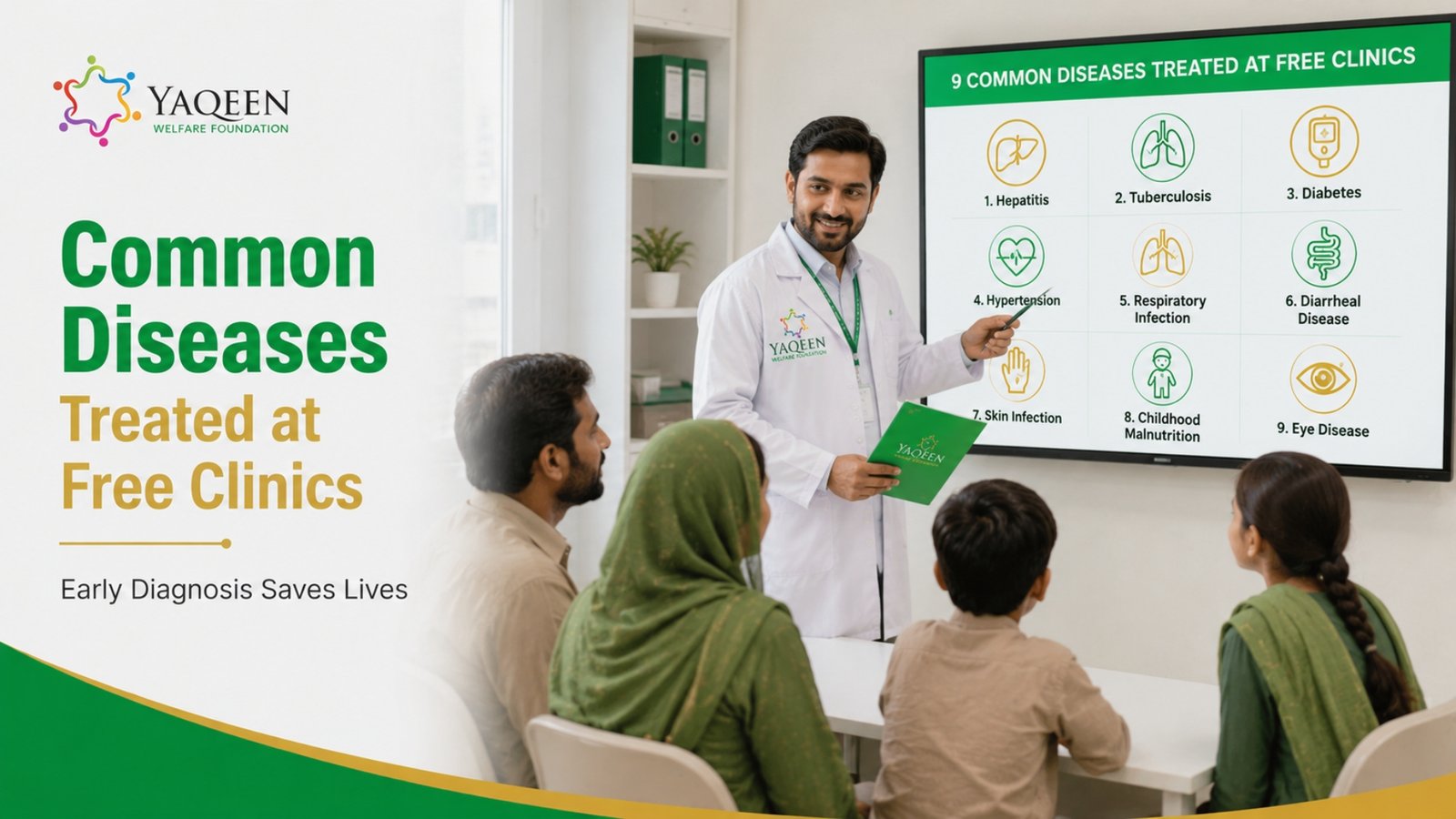
Below are the nine conditions that show up most consistently in the patient logs of Free Clinics operating in underserved parts of Pakistan.
1. Hepatitis B and C
Pakistan carries one of the heaviest hepatitis burdens in the world. According to the World Health Organization’s regional office for the Eastern Mediterranean, the country has an estimated 3.8 million people living with hepatitis B, and only a small minority of those infected with hepatitis B or C are even aware of their condition, which keeps them from seeking treatment in time. Because hepatitis often causes no symptoms until liver damage is advanced, free screening at community clinics is one of the only ways many patients ever find out they are infected.
2. Tuberculosis (TB)
TB remains endemic in Pakistan, spread through the air and concentrated in crowded, poorly ventilated housing. According to WHO’s regional tuberculosis program, Pakistan sees an estimated 510,000 new TB cases every year, ranks fifth among the world’s high-burden countries, and accounts for roughly 61% of the TB caseload in its surrounding region. Free clinics play a frontline role here, offering sputum testing, X-ray referrals, and the months-long medication courses that TB treatment requires — courses most families could never afford on their own.
3. Type 2 Diabetes
Diabetes has become one of the fastest-growing chronic conditions in Pakistan, driven by diet, sedentary lifestyles, and genetics. Many patients only discover they have diabetes after developing complications like blurred vision, slow-healing wounds, or numbness in the feet. Free clinics routinely run blood glucose tests during general checkups, catching cases early enough to manage with diet changes and affordable medication rather than costly, advanced-stage treatment.
4. Hypertension (High Blood Pressure)
High blood pressure is sometimes called a “silent” disease because it rarely produces obvious warning signs until it causes a stroke or heart problem. Free clinics treat hypertension constantly, largely because a blood pressure cuff and a few minutes of a nurse’s time are all it takes to detect it. Ongoing monitoring and low-cost medication, both offered through community clinic programs, keep patients stable and out of emergency rooms.
5. Respiratory Infections
Pneumonia, bronchitis, and other respiratory infections are extremely common, especially among children and the elderly, and especially during Pakistan’s smog-heavy winters. Indoor cooking with solid fuel, overcrowded housing, and poor ventilation all contribute to the problem. Free clinics see a steady stream of coughs, chest infections, and breathing difficulties, and quick treatment with antibiotics or inhalers can prevent a routine infection from becoming a hospitalization.
6. Diarrheal Diseases
Waterborne and diarrheal illnesses remain a leading cause of illness and death among young children in Pakistan, largely due to unsafe drinking water and limited sanitation. Free clinics treat dehydration, provide oral rehydration therapy, and — just as importantly — educate families about safe water practices. This is one of the clearest examples of why clean water access and free medical care are so closely linked in Pakistan’s public health picture.
7. Skin Infections and Scabies
Skin conditions like scabies, fungal infections, and bacterial rashes spread quickly in crowded households and communities with limited access to clean water for washing. These conditions are rarely life-threatening on their own, but left untreated they cause chronic discomfort and can lead to secondary infections. Free clinics treat dozens of skin cases each week with simple, inexpensive topical medications that are otherwise hard for low-income families to source.
8. Malnutrition in Children
Childhood malnutrition, ranging from stunted growth to acute wasting, is a persistent problem in Pakistan’s poorest districts. Free clinics screen children during routine visits, identify early signs of malnutrition, and connect families with supplemental nutrition programs. Catching malnutrition early dramatically improves a child’s long-term development, which is why growth monitoring is a standard part of most free clinic pediatric visits.
9. Eye Conditions
Cataracts, conjunctivitis, and other treatable eye conditions are widespread, particularly among older adults who have never had access to an eye exam. Left untreated, cataracts alone can lead to preventable blindness. Free eye camps and clinic-based screenings allow patients to be diagnosed and, where needed, referred for low-cost surgery that restores their vision and independence.
Free Clinics Diseases Treated: A Quick Comparison
Common Conditions, Symptoms, and Free Clinic Response
| Disease | Common Symptoms | Typical Free Clinic Treatment |
|---|---|---|
| Hepatitis B and C | Fatigue, jaundice, abdominal pain | Screening, referral for antiviral therapy |
| Tuberculosis | Persistent cough, weight loss, night sweats | Sputum testing, months-long medication course |
| Type 2 Diabetes | Excess thirst, fatigue, slow-healing wounds | Blood glucose testing, diet counseling, medication |
| Hypertension | Often none; headaches, dizziness | Blood pressure monitoring, low-cost medication |
| Respiratory Infections | Cough, fever, chest congestion | Antibiotics, inhalers, follow-up checks |
| Diarrheal Diseases | Dehydration, abdominal cramps | Oral rehydration therapy, hygiene education |
| Skin Infections/Scabies | Itching, rash, sores | Topical medication, hygiene counseling |
| Childhood Malnutrition | Low weight, stunted growth, fatigue | Growth screening, nutrition referral |
| Eye Conditions | Blurred vision, cloudy eyes, redness | Vision screening, surgical referral |
What to Expect During a Visit to a Free Clinic
Many families hesitate to visit a free clinic simply because they do not know what the process looks like. In practice, it is straightforward. Patients register at the front desk, often with no paperwork beyond a name and a brief description of symptoms. A nurse or community health worker records basic vitals, and a doctor sees the patient shortly after. If a condition requires medication that is stocked on-site, it is dispensed immediately at no charge. If further testing or a specialist referral is needed, the clinic coordinates the next steps, sometimes covering transport or connecting the family with a partner hospital.
This simplicity is intentional. Free Clinics are designed for patients who may never have interacted with a formal healthcare system before, including first-time mothers, elderly patients living alone, and daily-wage workers who cannot afford to lose a day’s income waiting in a crowded government hospital. Removing paperwork, fees, and long wait times means more people actually walk through the door — and more diseases get caught before they become emergencies.
Prevention: What Free Clinics Teach Patients Beyond Treatment
Treating disease is only one half of what a free clinic does. The other half is prevention, and it often has the bigger long-term impact. During a typical visit, health workers walk patients through simple habits that reduce the risk of the same nine conditions returning: boiling or filtering drinking water to prevent diarrheal disease, washing hands and bedding regularly to control scabies and skin infections, recognizing the early warning signs of TB so family members can be tested quickly, and understanding portion sizes and physical activity to manage blood sugar and blood pressure.
This kind of education rarely happens in a system where patients only see a doctor once a disease has already progressed. Because Free Clinics see the same families repeatedly, they are able to build trust and reinforce these habits over months and years, rather than delivering a single rushed consultation. Over time, this steadily reduces how often the same preventable diseases reappear in a community.
How Free Clinics Diagnose and Treat These Conditions
Free Clinics rely on simple, repeatable systems rather than expensive infrastructure.
A typical visit starts with basic vitals — weight, blood pressure, temperature — followed by a conversation with a doctor or trained health worker. From there, common tests like blood glucose checks, rapid hepatitis screening, or a chest exam for TB symptoms help narrow down a diagnosis. Because Free Clinics are built to serve high patient volumes with limited resources, they focus on the tests and treatments that catch the most common, most preventable diseases first. Chronic cases, like hypertension or diabetes, are tracked over repeat visits so treatment can be adjusted as needed.
Why Free Clinics Matter More in Rural Pakistan
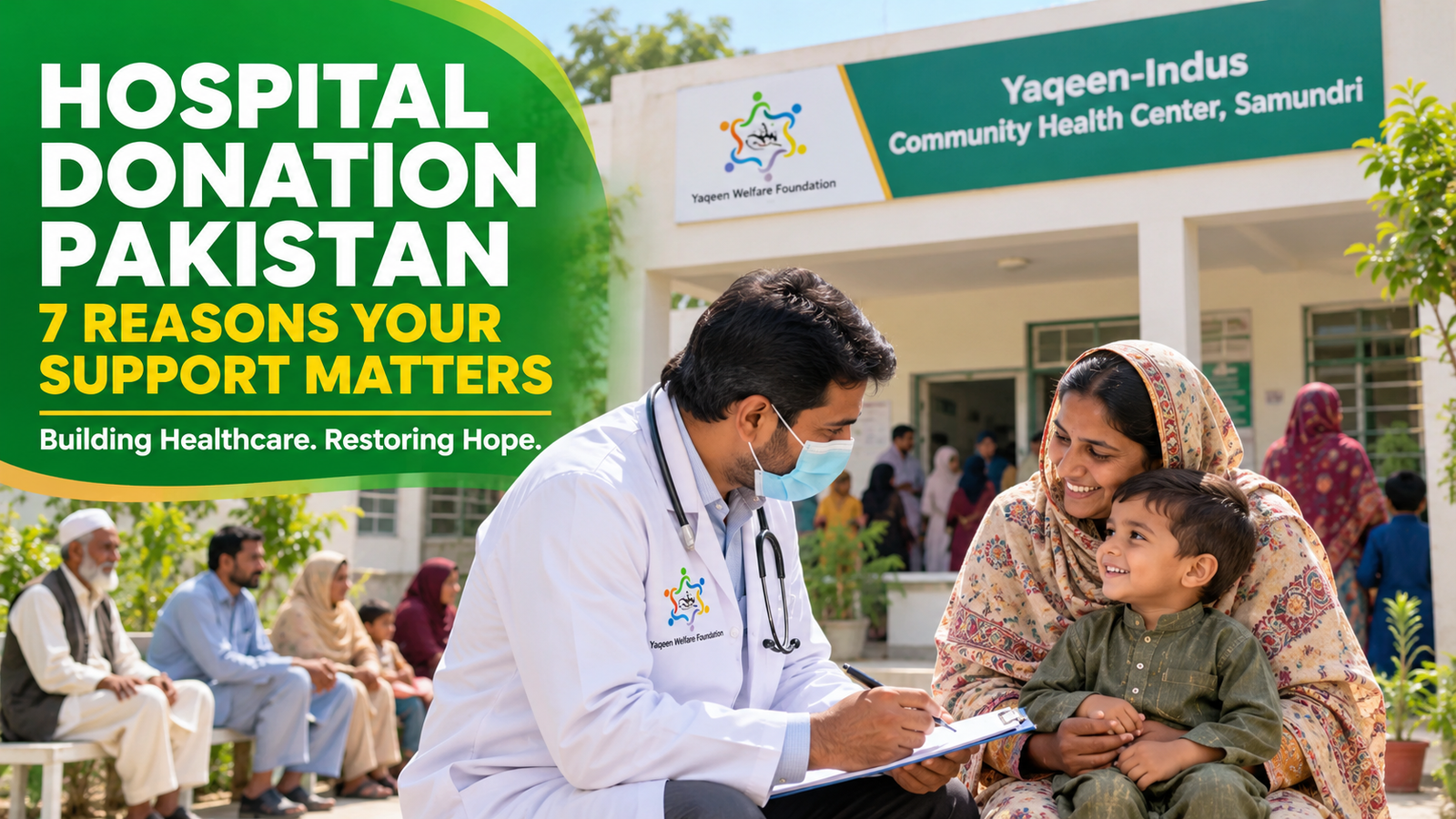
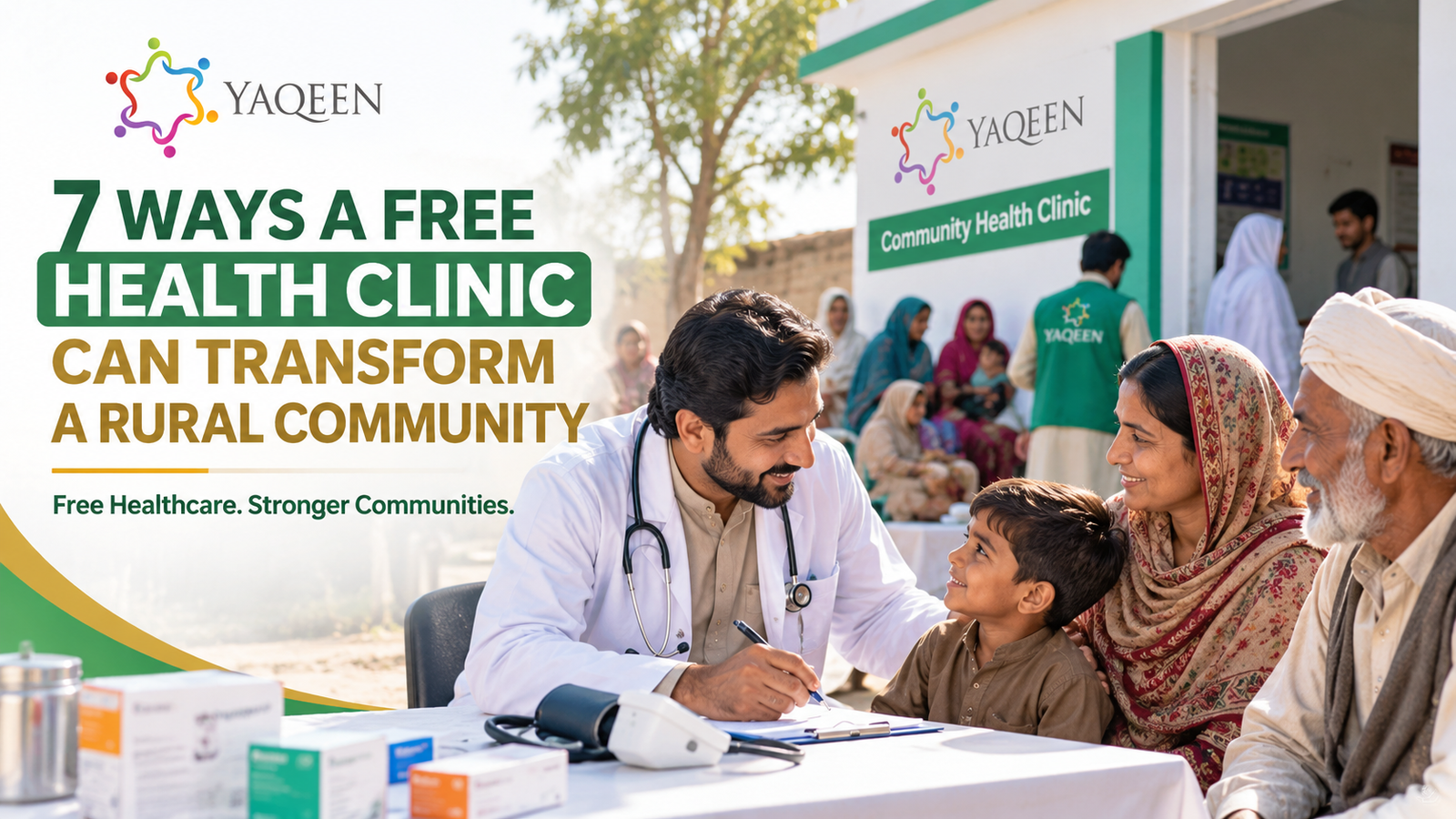
Rural communities face a compounding set of challenges: fewer hospitals, longer travel distances, lower household income, and less health education. A Yaqeen Health Clinic built directly inside an underserved district removes almost every one of these barriers at once. Patients no longer need to travel hours to a city hospital or skip treatment because they cannot afford a private doctor’s fee. This model — a clinic embedded in the community it serves — is central to the Yaqeen Welfare Foundation’s mission of making healthcare a right rather than a privilege.
The ripple effects go beyond the individual patient. A parent who is treated for tuberculosis can go back to work. A child who is treated for malnutrition can grow and attend school. A grandmother whose cataracts are removed can care for herself again. These outcomes are part of why supporters describe charity as something that changes the giver as much as the receiver — the impact of a single free clinic visit rarely stops with just one person.
There is also a financial dimension that is easy to overlook. In households living on a daily wage, a single hospital admission or a course of imported medication can wipe out months of savings, or push a family into debt they never fully recover from. Free Clinics interrupt that cycle before it starts. By catching hypertension before it causes a stroke, or treating a chest infection before it becomes pneumonia, a free clinic visit does not just save a life — it protects a family’s entire financial stability for years to come. This is one of the quieter reasons Free Clinics remain one of the highest-impact forms of charitable giving in Pakistan today.
Real Stories Behind the Numbers
Behind every statistic in this article is a family whose situation shifted because a free clinic existed nearby. Yaqeen Welfare Foundation has documented some of these moments in posts like Your Charity Saved Lives: 8 Heartwarming Stories, which shows how consistent, community-based healthcare quietly reshapes entire households. These stories are a reminder that treating disease is only part of the picture — restoring dignity and stability is the other half.
Frequently Asked Questions About Free Clinics in Pakistan
What diseases do Free Clinics in Pakistan treat most often? Free Clinics most commonly treat hepatitis B and C, tuberculosis, type 2 diabetes, hypertension, respiratory infections, diarrheal diseases, skin infections, childhood malnutrition, and treatable eye conditions like cataracts.
Are Free Clinics really free, or is there a hidden cost? Genuine Free Clinics, including those run by Yaqeen Welfare Foundation, do not charge patients for consultations, basic diagnostic tests, or standard medication. They are funded entirely through donations.
How do Free Clinics diagnose diseases without expensive equipment? Most conditions on this list can be identified through basic tools: a blood pressure cuff, a glucose meter, a stethoscope, and simple lab tests. This allows Free Clinics to serve large numbers of patients efficiently.
Can Free Clinics treat chronic conditions long-term, or only emergencies? Free Clinics are built for ongoing care, not just emergencies. Conditions like diabetes, hypertension, and hepatitis require repeat visits, and clinics track patients over months or years to keep these conditions under control.
Do Free Clinics also help with clean water and nutrition, or only medical treatment? Many Free Clinics, including those run by Yaqeen Welfare Foundation, combine medical treatment with broader support such as nutrition guidance and education on safe drinking water. Since several of the nine diseases covered here are directly linked to unsafe water and poor nutrition, addressing both sides at once leads to better long-term outcomes for patients.
How can I support Free Clinics like Yaqeen Health Clinic? You can support ongoing treatment, medicine, and staffing costs by donating directly. Every contribution helps a Free Clinic reach more patients with the nine conditions covered in this article.
Help Free Clinics Reach More Patients
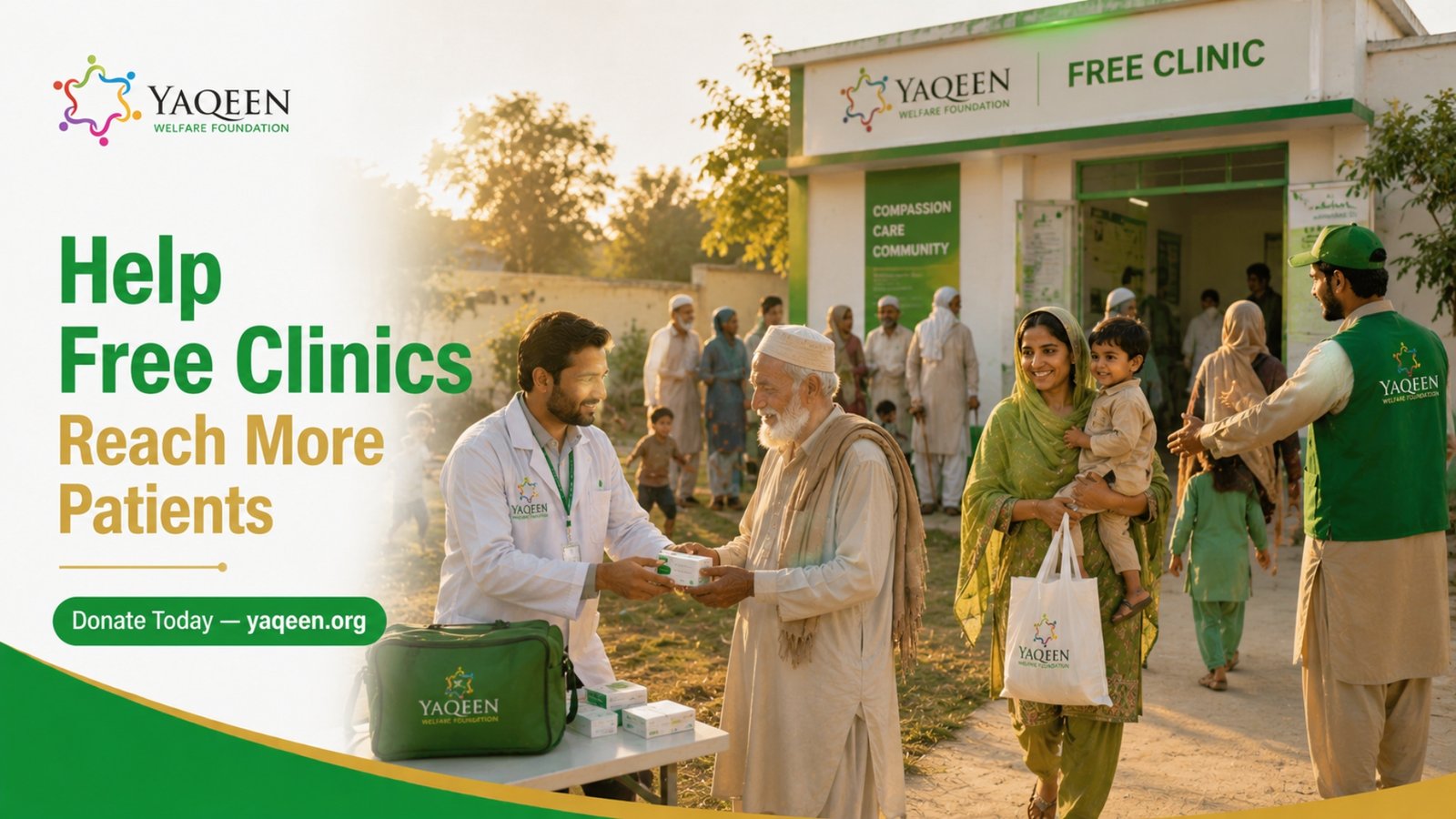
Every disease on this list is treatable, and every treatment starts with access. If you would like to support the work of Free Clinics providing no-cost medical care across Pakistan, you can contact Yaqeen Welfare Foundation and donate here. Your support keeps clinic doors open for the patients who need them most.