Giving in Islam is not optional. It is woven into the faith at every level — from the obligatory Zakat that purifies wealth to the voluntary Sadaqah that softens hearts and builds communities. But giving well requires more than intention. It requires choosing where your donation goes with the same care you would give to any important decision in your life. Because not every charity delivers what it promises. Not every donation reaches the person it was meant for. And not every cause creates the kind of change that lasts beyond the day of giving.
The question of what are the best charities to give to is one that every conscious Muslim donor eventually asks. The answer depends on several things — the nature of the need, the trustworthiness of the organization, the sustainability of the impact, and the Islamic reward attached to the cause.
At Yaqeen Welfare Foundation, we work in two of the most impactful areas of charitable giving — free healthcare through the Yaqeen Health Clinic and clean water access through water well projects across Pakistan. In this guide we break down how to evaluate charities, which causes carry the greatest reward and impact, and how to make sure your giving reaches someone who genuinely needs it.
Understanding Charity in Islam: Giving That Creates Real Impact
Charity in Islam is not simply an act of generosity. It is an act of worship — carrying the same spiritual weight as prayer, fasting and pilgrimage when performed with the right intention and directed toward genuine need.
Charity as Worship, Not Only Generosity
The Quran describes spending in the way of Allah as one of the defining characteristics of the believer:
“Those who spend their wealth in the way of Allah and then do not follow up what they have spent with reminders of it or injury — they will have their reward with their Lord.” (Surah Al-Baqarah 2:262)
This framing matters. Charity is not something you do when you have surplus. It is something you do because you believe — because you trust that what you give for Allah’s sake returns to you multiplied in ways this world cannot always show.
Why Intention and Benefit Work Together
Intention alone is not enough to make giving impactful. The Prophet ﷺ said:
“The most beloved deeds to Allah are those done consistently, even if they are small.” (Bukhari and Muslim)
Consistent, intentional giving to causes that produce lasting benefit is the model Islam endorses. Not emotional one-time reactions to appeals. Not giving to feel good in the moment. Giving that is purposeful, sustainable and directed toward real change.
Understanding this principle is the first step toward answering what the best charities to give to are — because impact and intention are not separate considerations. They work together.
How to Decide Which Charity Deserves Your Donation
Before choosing where to give, every donor needs a framework. Emotion is a starting point — not an endpoint. Here is what to look at before committing your Sadaqah.
Transparency and Accountability
A trustworthy charity shows you where your money went. Not vague reports. Not generic impact statements. Specific documentation — photographs, location records, beneficiary numbers, financial breakdowns. If an organization cannot show you what your donation did, that is a serious warning sign.
At Yaqeen Welfare Foundation, every project is documented. Donors receive confirmation when contributions arrive and updates showing exactly where and how they were used.
Direct Community Impact
The closer a charity operates to the people it serves, the less is lost in the gap between donation and delivery. Organizations with on-the-ground presence — teams that identify need directly, install projects themselves and follow up afterward — create more reliable outcomes than those working through multiple intermediary layers.
Sustainable Results
A donation that creates temporary relief is valuable. A donation that creates lasting change is more valuable. Evaluate charities based on whether the impact they create continues after the donation has been spent. A water well that runs for fifteen years. A clinic that treats patients every week. These are not one-time acts — they are ongoing investments in human wellbeing.
Urgent Needs vs Long-Term Change
Both matter. Emergency relief during floods or crises saves lives immediately. Long-term projects build resilience that reduces the need for emergency relief in the future. The best giving portfolio includes both — responsive to immediate suffering and committed to structural change.
Quick checklist before donating:
- Does the charity publish financial reports and project updates?
- Do they have a verified on-ground presence?
- Can you track the specific outcome of your donation?
- Does the cause align with your Islamic giving priorities?
- Is the impact ongoing or one-time?
Read our full guide on how to give Sadaqah for a practical breakdown of giving with maximum reward and impact.
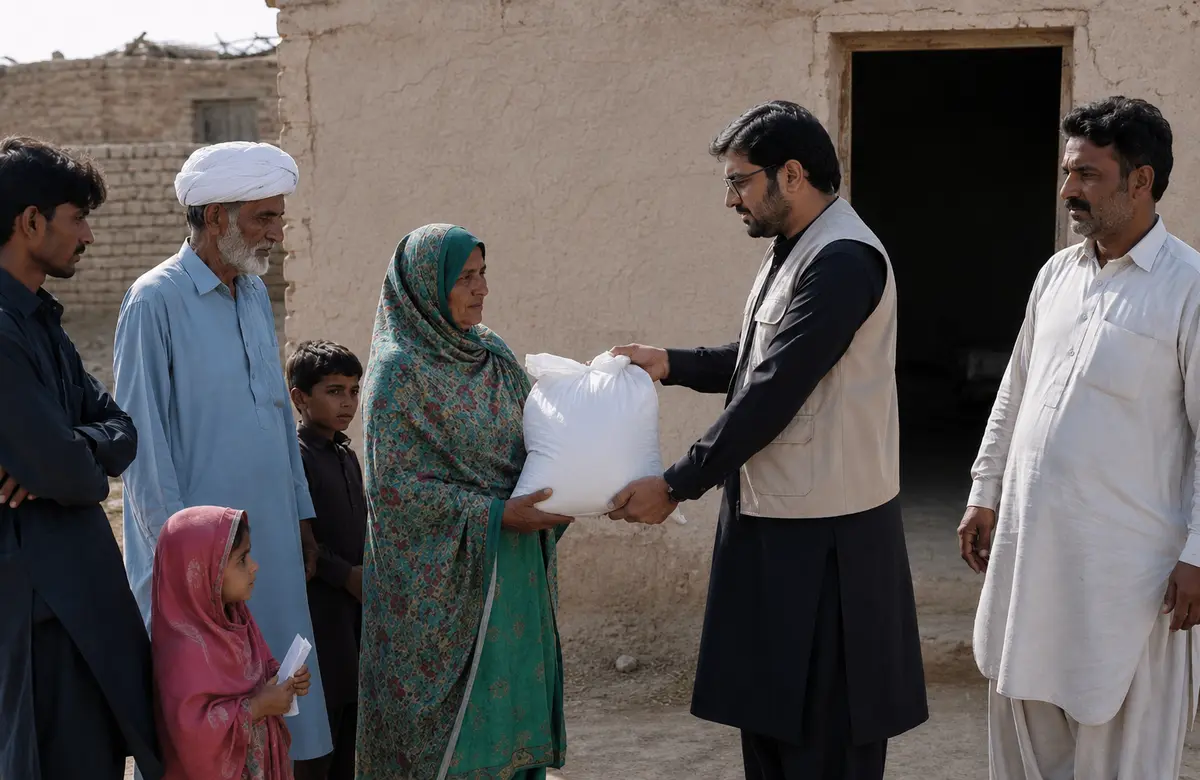
The Most Meaningful Charities to Support in Islam
Every cause deserves giving. But some causes carry unique weight — either in the scale of human need they address, the Islamic reward attached to them or the sustainability of the change they create. Here is an honest look at the most impactful categories.
Clean Water Projects
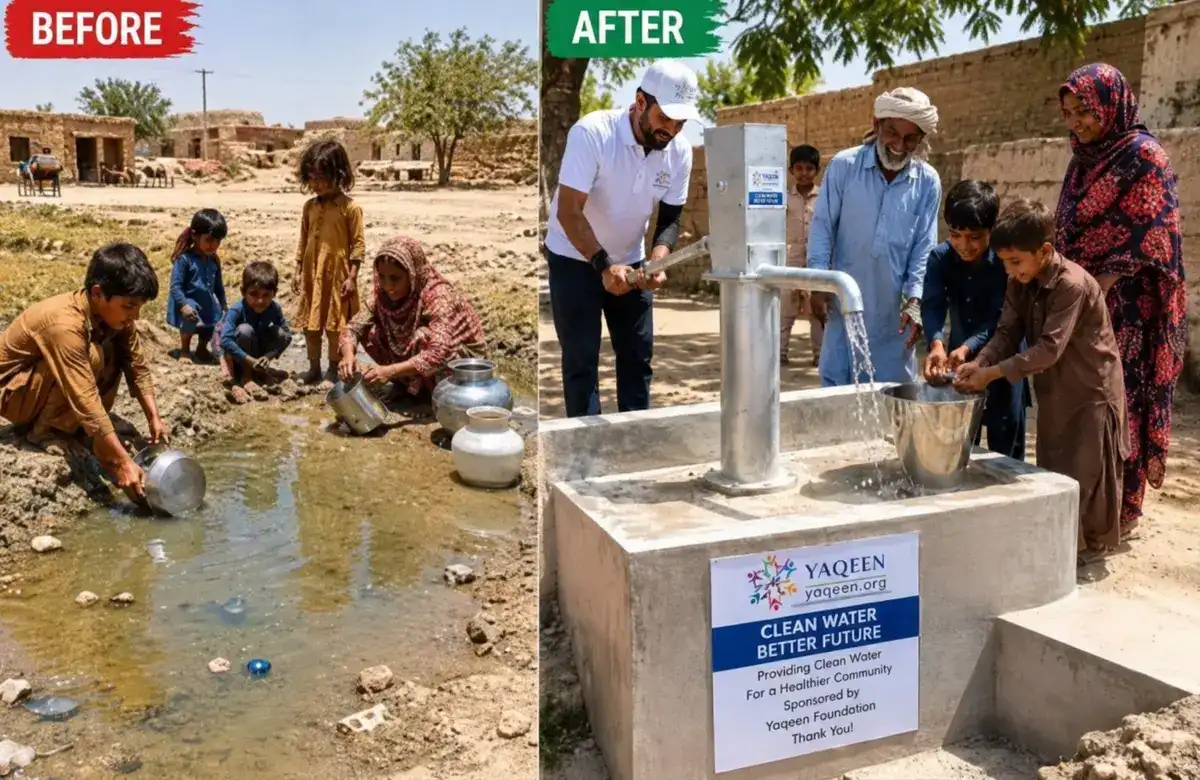
Water is described in the Quran as the foundation of all living things. And in Pakistan — where millions of rural families rely on contaminated sources — providing clean water is not an act of generosity. It is an act of restoration.
The Prophet ﷺ was asked what the best Sadaqah was for a deceased loved one. His answer was a single word:
“Water.” (Abu Dawud)
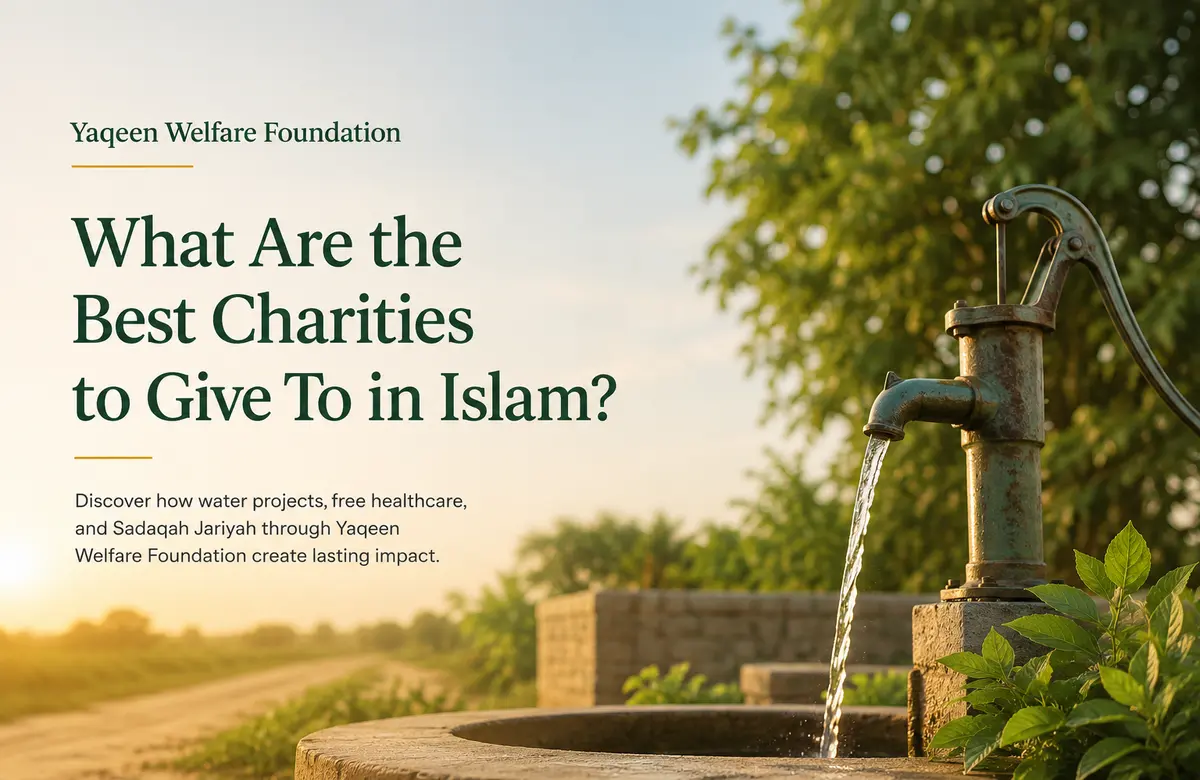
Water charity in Islam carries a unique reward because it addresses a continuous, universal need. A water well or pump installed in a village does not serve one person. It serves every person in that community — every morning, every day, for years. Each use generates ongoing reward for the donor. This is Sadaqah Jariyah at its most direct.
Beyond the Islamic reward — the practical transformation a water project delivers is extraordinary. Women who spent hours daily collecting water have those hours returned. Children whose attendance at school was disrupted by water collection duties go back to class. Waterborne illness rates in communities with clean water access drop significantly. The community does not just drink better. It lives better in every measurable way.
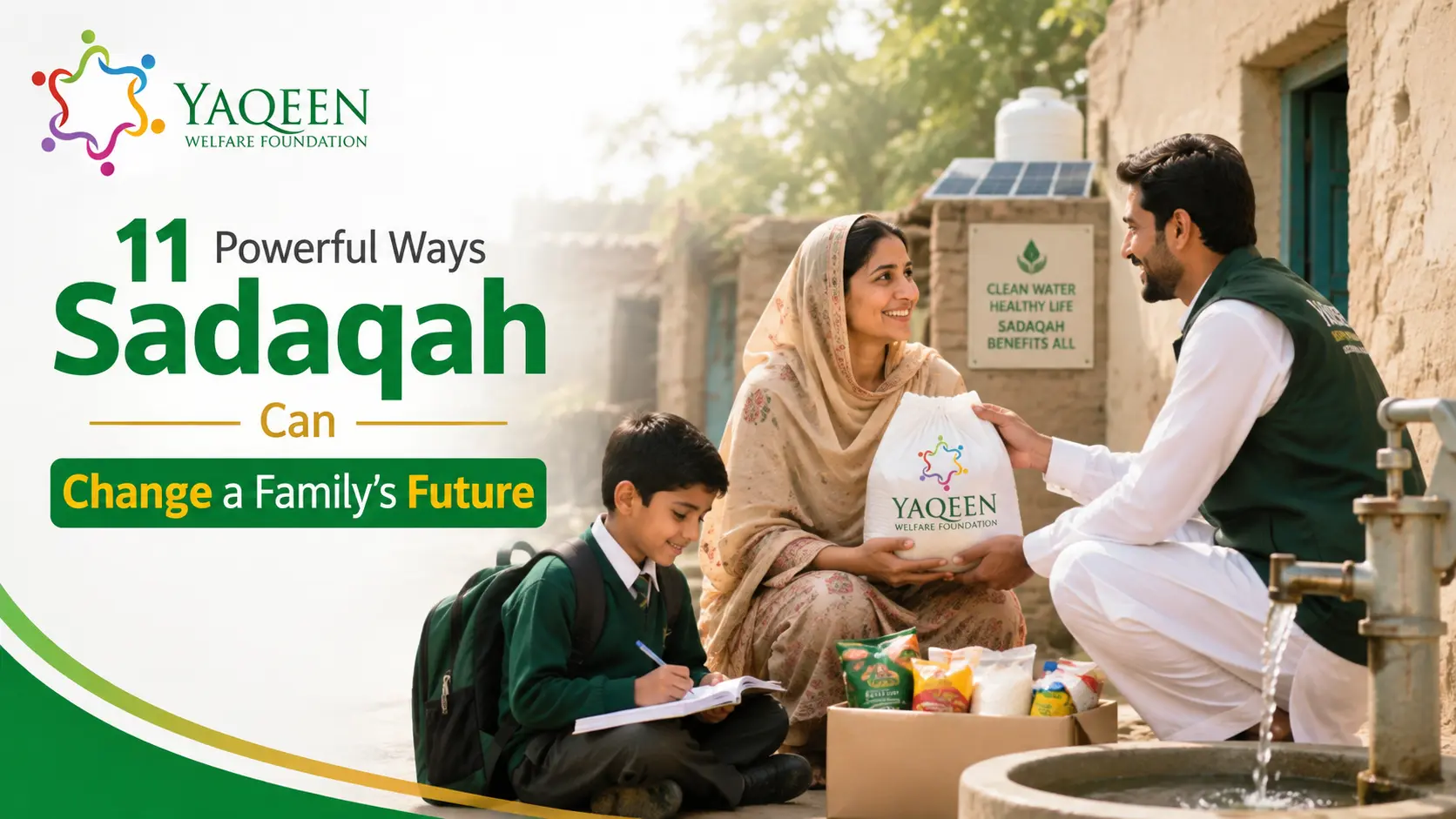
Yaqeen Welfare Foundation runs active water well projects in underserved communities across Pakistan — installing pumps in villages where clean water has never existed. Learn more about water well giving in our post on Sadaqah Jariyah water well.
Free Healthcare and Medical Access
Healthcare is one of the most urgent unmet needs in Pakistan’s rural communities. Not because no one wants to seek care — but because the cost of a single consultation, diagnostic test or prescription can represent an entire day’s income for a daily wage worker.
The consequences of that barrier are not abstract. Conditions that could be managed with early treatment become serious. Illnesses that were preventable become life-altering. Children whose fevers were treatable in week one become critical in week three. Mothers who needed a prenatal checkup delivered without it.
Free healthcare removes that barrier entirely. It allows a patient to walk in, be seen by a qualified doctor, receive a diagnosis and leave with medicine — at zero cost. The donor who funded that consultation does not just give money. They potentially change the trajectory of that patient’s life.
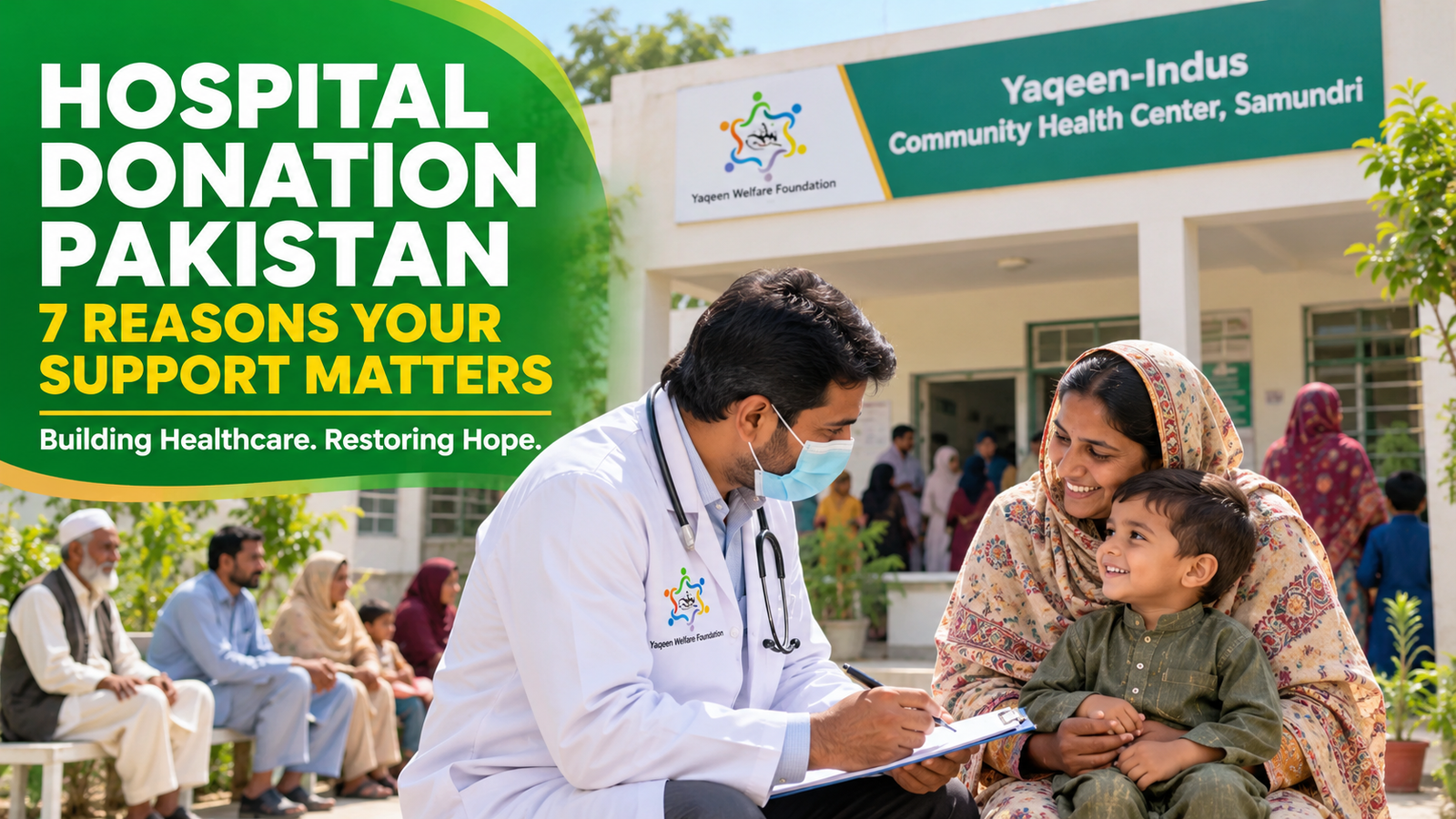
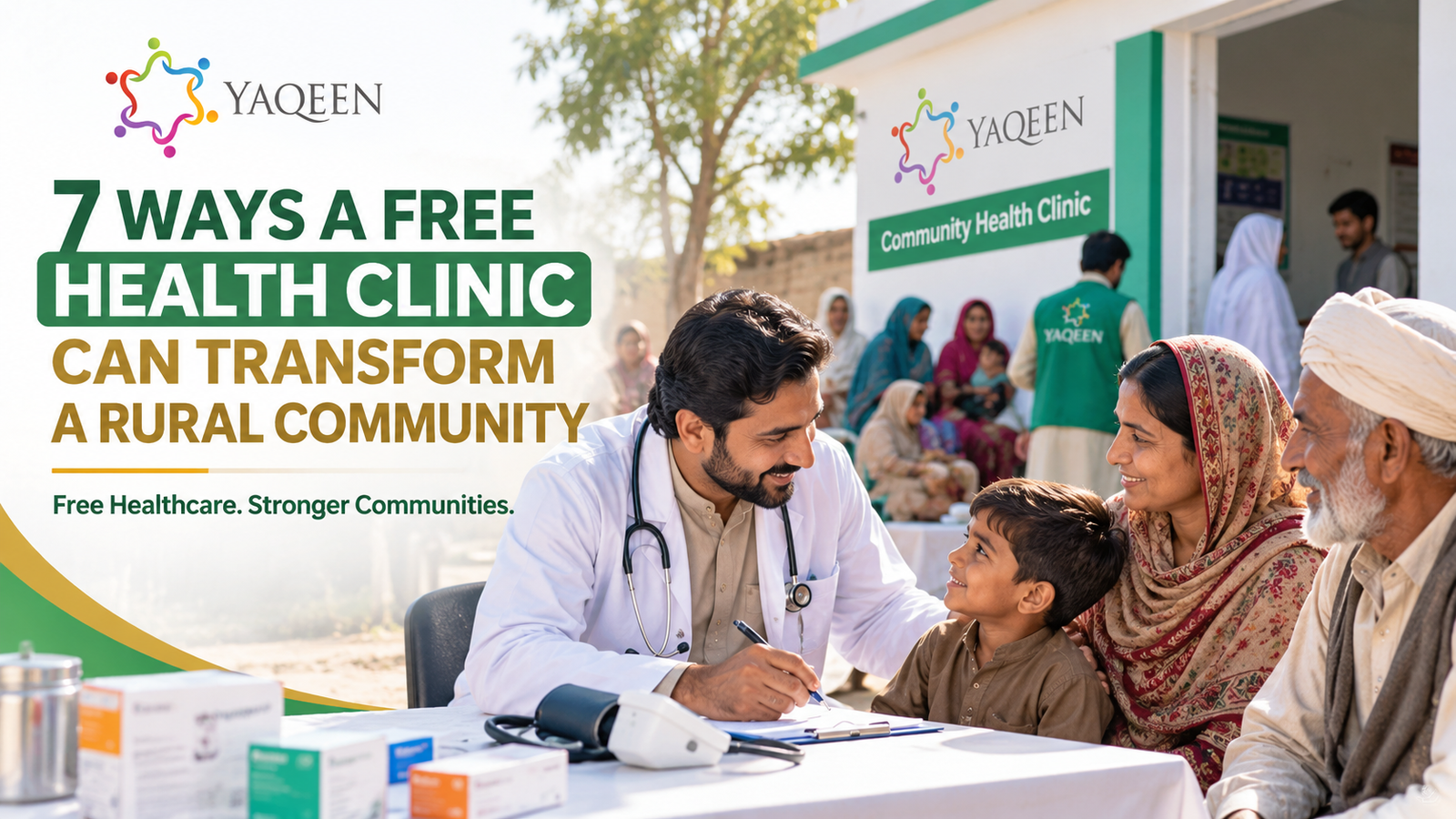
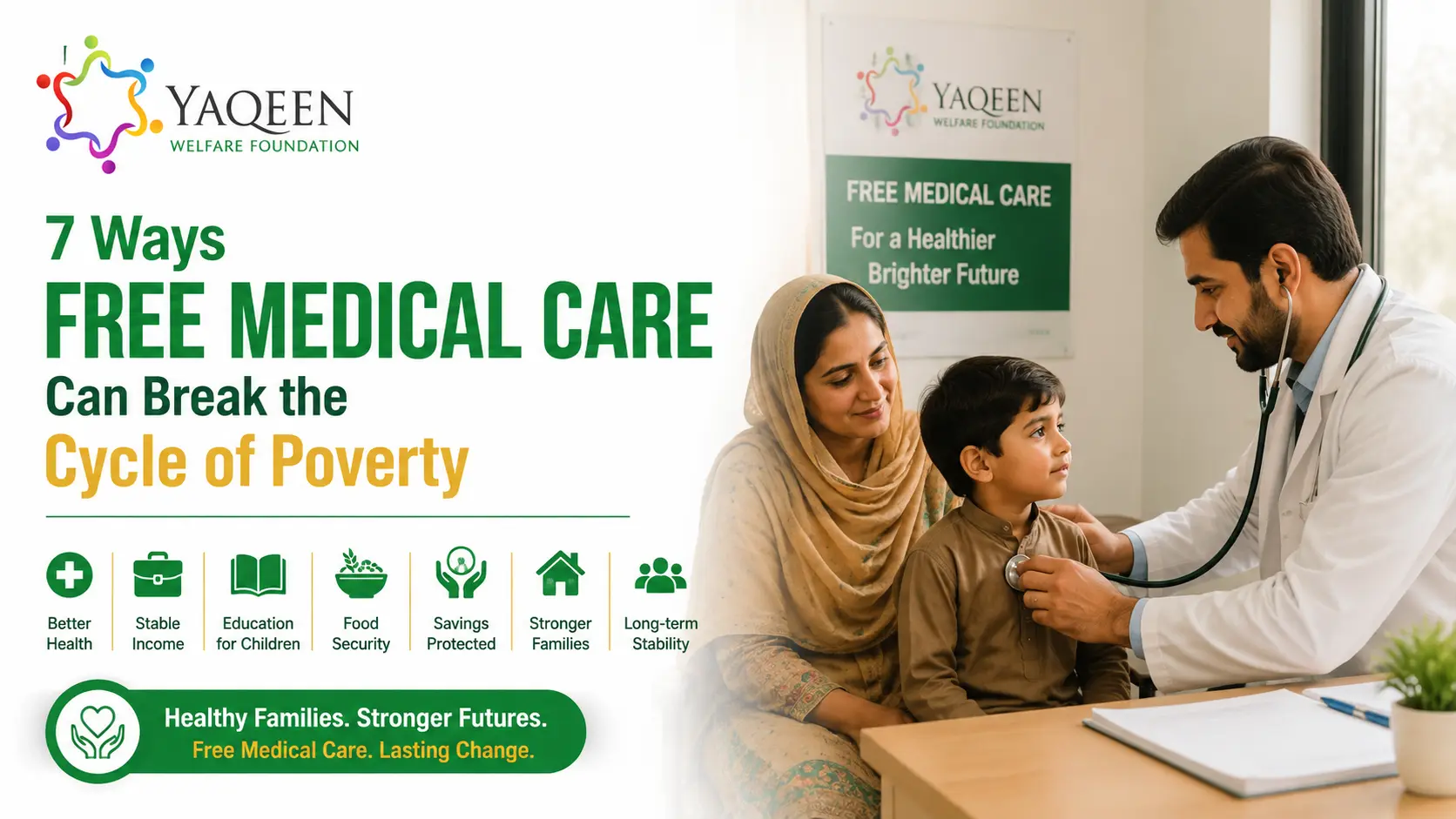
The Yaqeen Welfare Foundation operates the Yaqeen Health Clinic — a free medical facility serving communities in Pakistan where paid healthcare has never been accessible. Every donation funds consultations, medicines and emergency care for patients who have no other door to knock on. Healthcare giving through a functioning clinic is Sadaqah Jariyah — every patient treated after your donation is part of your ongoing reward.
Learn about the full benefits in our post on the benefits of free healthcare.
Feeding Families and Hunger Relief
Food charity is among the most immediately impactful forms of giving. The Prophet ﷺ described feeding a hungry person as one of the acts that earns the reward of Jannah. During Ramadan, disasters or seasons of acute shortage — food giving meets a need that cannot wait for structural solutions.
The limitation of food giving is that it does not create lasting change on its own. A family fed today faces the same hunger tomorrow without an underlying shift in their conditions. Food charity is essential — particularly during crises — but works best alongside causes that address root conditions. Learn how different giving types compare in our guide on the best Sadaqah in Islam.
Supporting Children and Vulnerable Communities
Children are the most vulnerable population in any society experiencing poverty or healthcare gaps. Giving that specifically reaches children — vaccinations, nutrition support, educational resources — creates benefits that compound across an entire lifetime and into the next generation.
A healthy, educated child becomes a capable adult. A capable adult contributes to their family and community. The social return on investing in a child’s wellbeing is among the highest of any charitable cause — and the Islamic reward of protecting a vulnerable person is explicitly emphasized across dozens of Hadith.
Education and Skills Development
Knowledge that benefits others is one of the three deeds the Prophet ﷺ described as continuing after death. Funding education — whether formal schooling, vocational training or Islamic learning — is among the most sustainable forms of giving because its effects multiply through everyone the recipient educates in turn.
This is giving that creates givers. Skills and knowledge pass forward. A teacher trained today teaches hundreds of students over a career. A woman who learns a skill teaches it to her children. Education giving generates returns that are genuinely incalculable. For more on giving that lasts — read our post on Sadaqah Jariyah for the deceased.
Emergency and Crisis Relief
Pakistan experiences regular crises — floods, earthquakes, heatwaves, displacement. When disaster strikes, immediate relief is the most relevant form of giving. Food, shelter, clean water and medical support in the aftermath of a disaster save lives that structural giving cannot reach in time.
Emergency giving is not less valuable because it is urgent. It is the appropriate response when the immediate need is survival. The best donors maintain capacity for both emergency response and long-term structural investment — because the world requires both simultaneously.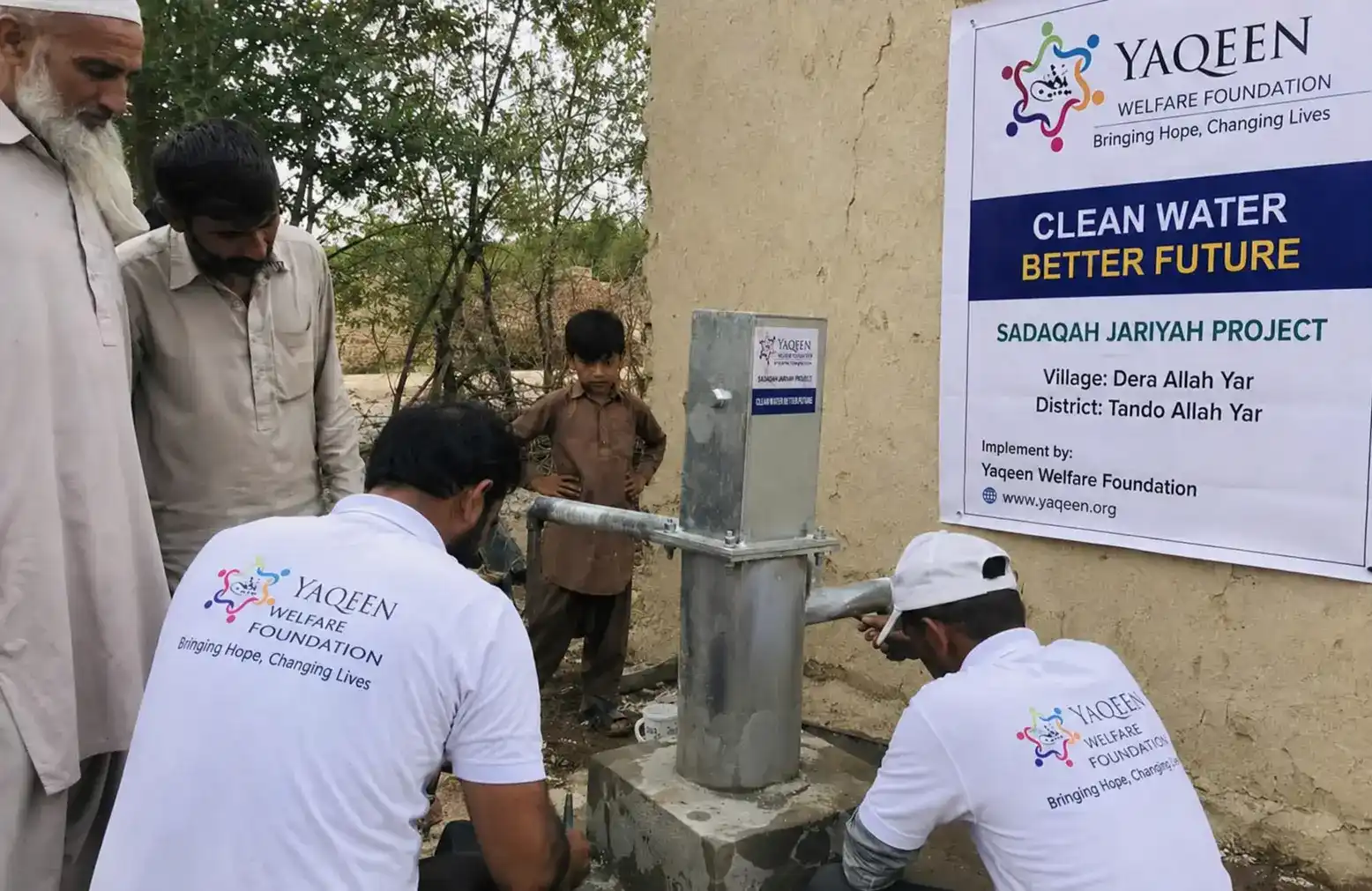
Which Type of Charity Creates the Greatest Long-Term Impact?
Every category of charitable giving has a role. But when the question is specifically about long-term impact — the ranking becomes clearer.
Water creates perhaps the most self-sustaining impact of any single intervention. Once a water source is installed, it serves the community continuously with minimal ongoing cost. The health improvements, time savings and educational benefits it generates flow forward indefinitely.
Healthcare ranks alongside water for long-term impact — particularly when delivered through a functioning facility rather than one-time mobile camps. A clinic that operates every week treats thousands of patients annually. The cumulative benefit of consistent free healthcare access in an underserved community changes the health trajectory of that community across years.
Food charity creates immediate and essential impact but requires continuous input to maintain benefit. It is indispensable during crises and seasons of acute need — but does not create the self-sustaining change that water and healthcare projects deliver.
Education creates the slowest but potentially biggest long-term change. The effects compound slowly — but a community with access to quality education generates its own problem-solvers, healthcare workers and social leaders over time.
Emergency relief is highest impact in the immediate window of a crisis and lowest impact afterward. It is essential but time-bounded.
No single category fits every situation. The most thoughtful giving combines immediate responsiveness with strategic long-term investment in causes that keep working after the donation is made.
Why Healthcare and Water Projects Continue Helping Long After Donation
Among all charitable causes — healthcare and water consistently demonstrate the greatest staying power. Here is why.
Removing Barriers to Healthcare
When cost is removed as a barrier to medical care, people seek help earlier. Early treatment prevents complications. Prevented complications mean fewer deaths, fewer disabilities, and fewer families financially devastated by medical costs. The benefit of one removed barrier — cost — multiplies across every patient who walks through the door because of it.
A funded free clinic does not treat one patient. It treats every patient who comes — this week, next month, next year — for as long as the clinic remains operational and funded. Your donation does not end when you give it. It extends through every patient treated afterward.
Building Sustainable Access to Clean Water
A water well or pump installed in a village creates infrastructure that requires no recurring input beyond basic maintenance. The community trains on upkeep. The source runs. Families access clean water every morning without cost, without travel and without contamination risk.
The Yaqeen Welfare Foundation water well projects are built with long-term sustainability in mind — community handover, maintenance training and follow-up visits ensure the projects keep working for the decade or more they are designed to serve.
Community Benefits Beyond Immediate Relief
Both healthcare and water create what economists call multiplier effects — one benefit generates several others. Clean water reduces illness, which increases school attendance, which improves educational outcomes, which builds community capacity. Free healthcare reduces the financial burden of illness, which stabilizes household finances, which allows families to invest in food, education and small enterprise.
The benefit of your donation does not stop at the first person it reaches. It travels through communities in ways that are genuinely difficult to fully measure.
Common Mistakes People Make When Choosing a Charity
Even well-intentioned donors make avoidable errors. These are the most common.
Donating purely emotionally. Compelling images and urgent appeals create emotional responses — and emotional giving is not wrong. But emotion without evaluation leads to giving to organizations that are not transparent, not accountable and not delivering what they claim. Let your heart open the door. Let your mind decide where the donation goes.
Ignoring transparency. If a charity cannot show you financial records, project documentation or evidence of outcomes — that is a red flag worth taking seriously. Legitimate organizations are eager to demonstrate impact because it builds the donor trust they depend on.
Chasing popularity. Large name-recognition charities are not automatically the most effective. Some of the most impactful giving happens through smaller, focused organizations with direct community presence and lower administrative overhead. Ask about the percentage of donations that reach beneficiaries — not just how well-known the name is.
Forgetting long-term outcomes. A disaster relief campaign looks urgent and compelling. But if the same organization has no sustainable programming — no water projects, no clinics, no education initiatives — your giving stops working the moment the campaign ends. Ask what happens after the emergency is over.
Not verifying on-ground presence. An organization that claims to work in remote Pakistan but cannot show you photographs, location data or beneficiary accounts is not one you should trust with your Sadaqah. Verified presence matters.
Final Thoughts
The question of what are the best charities to give to does not have one answer. It has criteria — and those criteria, applied consistently, lead every thoughtful donor toward giving that actually changes lives.
Give to causes that create lasting benefit. Give to organizations that show you the evidence of their work. Give to projects that continue serving people after your donation is spent. Give to the causes Islam has specifically endorsed — water, healthcare, feeding the hungry, supporting the vulnerable.
At Yaqeen Welfare Foundation, we believe your giving should count twice — once in this world through the real impact it creates, and once in the next through the reward Allah attaches to sincere, purposeful charity. Our free health clinic and water well projects in Pakistan are built on exactly that principle.
If you are looking for somewhere your Sadaqah reaches people who genuinely have no other option — Yaqeen Welfare Foundation is here. Every donation is tracked. Every project is documented. And every rupee goes to someone who needs it.
Give today through Yaqeen Welfare Foundation and let your charity count.
More than 57% of Pakistan’s total healthcare spending is borne directly by patients and families through out-of-pocket costs, and in 2024, over 14.8 million people in Pakistan faced catastrophic health expenditures, with 11.1 million pushed below the extreme poverty line because of medical costs.
Source: Human Rights Watch
Frequently Asked Questions
What are the best charities to give to in Islam?
The best charities in Islam are those that create real, lasting benefit for people in genuine need — with full transparency about how donations are used. Water projects, free healthcare, education and feeding programmes all rank highly in Islamic tradition. The Prophet ﷺ specifically mentioned water as the best Sadaqah for a deceased loved one. Ongoing causes — those that continue benefiting people after your donation — carry the additional reward of Sadaqah Jariyah.
Is supporting water projects a good form of charity?
Yes — it is one of the most explicitly endorsed forms of charitable giving in Islamic tradition. Water charity is Sadaqah Jariyah — every person who uses the water source generates ongoing reward for the donor. In communities where clean water access does not exist, a single water installation transforms health outcomes, daily routines and community resilience simultaneously.
Does supporting healthcare count as ongoing charity?
Yes. A funded free clinic that treats patients every week is ongoing Sadaqah Jariyah — every consultation, every medicine dispensed, every patient treated generates reward for the donors who made that treatment possible. Healthcare giving through a functioning facility has a multiplying effect that extends far beyond the original donation. Read more in our post on the difference between Zakat and Sadaqah.
How can I know whether a charity is trustworthy?
Look for published financial records, project documentation with photographs and location data, clear explanation of how donations are allocated and evidence of on-ground presence in the communities they claim to serve. A trustworthy organization does not ask you to trust them blindly — they show you the evidence and let you evaluate it.
Is local giving more effective?
Local giving can be highly effective — you can verify the impact directly, and the administrative path between your donation and the recipient is shorter. But local giving also limits your reach to your immediate geography. Organizations with verified presence in high-need areas — like rural Pakistan — can multiply the impact of your donation by reaching communities that local giving in your area simply cannot access.
[IMAGE PLACEHOLDER — Yaqeen Health Clinic interior, doctor with patient]