Yaqeen Welfare Foundation

eid-zakat-vs-qurbani-donation CategoriesBlog

Eid Zakat vs Qurbani Donation – What Should You Give?

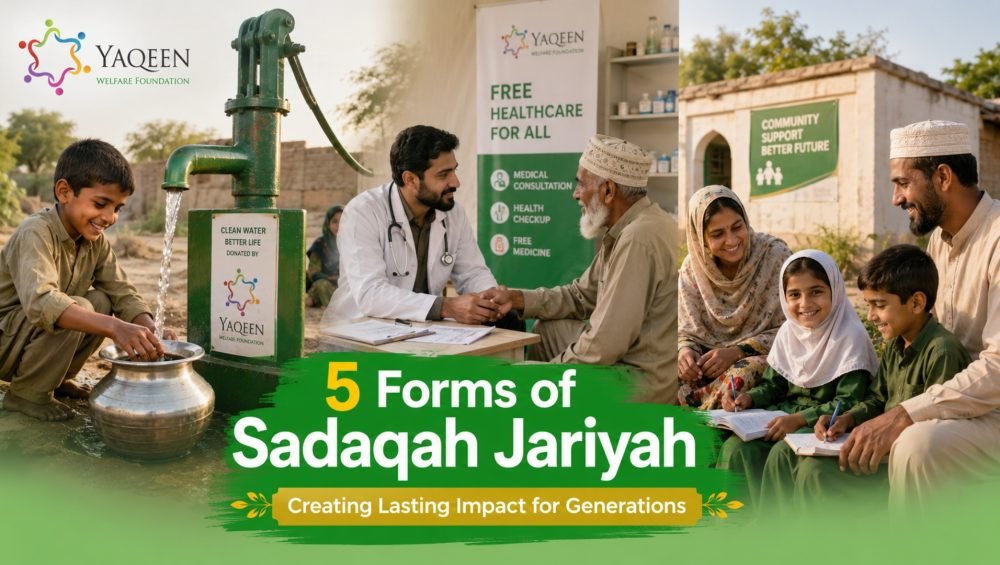
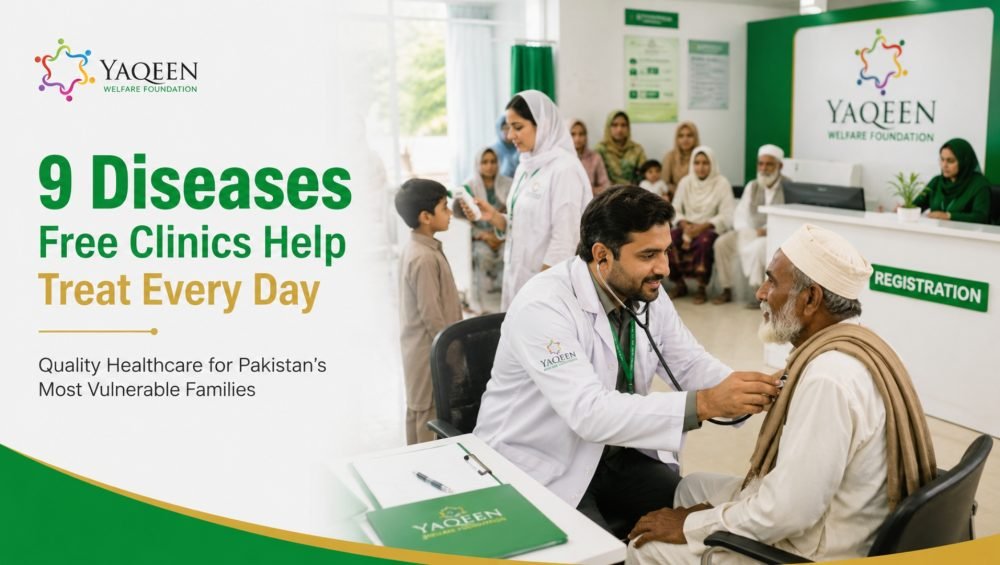
Every Eid season Muslims ask the same question: Should I give Eid Zakat first or focus on my Qurbani donation? Which one is more important? Can one replace the other? At Yaqeen Welfare Foundation we hear this every single year from people who genuinely want to give correctly. They just need clarity. At Yaqeen Welfare Foundation We provide clean water to villages that have never had it. We run Yaqeen Indus Health Clinic giving free medical care to people who cannot afford a single consultation. Your giving — whether Eid Zakat or Qurbani donation — goes directly into these two things that Pakistan’s most vulnerable families desperately need every single day of their lives. So let us properly clear this all up together. What Is Eid Zakat Eid Zakat is the obligatory charity that every financially capable Muslim must give during the Eid season. It is a duty — not a suggestion — and it exists to purify your wealth and make sure the poor are not left behind while everyone else celebrates. Allah says in the Quran: “Take from their wealth a charity by which you purify them and cause them increase.” (Surah At-Tawbah 9:103) Eid Zakat is calculated as 2.5% of the savings you have held above the Nisab threshold for one full lunar year. It is not connected to any single Eid — it falls on the anniversary of when your wealth first reached Nisab. Many people choose to give it during the Eid season simply because the spirit of giving is already alive in them. Whatever the timing — if it is due, it is owed. What Is Qurbani Donation Qurbani donation is the sacrifice made on 10th, 11th or 12th of Dhul Hijjah on the day of Eid al-Adha, to honor Ibrahim ﷺ who was ready to put aside his most cherished thing for the sake of Allah. For every adult Muslim who possesses wealth above Nisab on those days — Qurbani is Wajib. The Prophet ﷺ warned: “Whoever has the means to offer a sacrifice but does not do so — let him not come near our place of prayer.” (Ibn Majah) That is not gentle language. If you have the means — this is not optional. A Qurbani donation means giving the value of that sacrifice to a trusted organisation that channels it into real lasting help for people in need. At Yaqeen Welfare Foundation your Qurbani donation becomes clean water for a village or free treatment at Yaqeen Indus Health Clinic for a patient who had nowhere else to turn. Can One Replace the Other No. Not even close. Eid Zakat and Qurbani donations are two completely separate obligations. Different triggers. Different timings. Different purposes. One is about purifying your accumulated wealth. The other is about commemorating sacrifice and serving those in need during Eid al-Adha. Giving one does not cancel the other. Both are owed if you have the means. Which One Should You Give First Whichever one is due first — give that one first. Eid Zakat falls on the anniversary of your wealth reaching Nisab. Qurbani falls specifically during the days of Eid al-Adha. They have different due dates and neither waits for the other. The real answer is simple — do not delay either one. Give both. Give them on time. Give them where they actually reach people. What Your Giving Does at Yaqeen Welfare Foundation When your Eid Zakat or Qurbani donation reaches Yaqeen Welfare Foundation it goes into two things immediately: This is not charity that ends when Eid ends. This is Sadaqah Jariyah — your reward keeps coming every time that pump runs and every time that clinic opens its doors. Final Thought There is a child in rural Pakistan right now drinking water that is making her sick every single day — because clean water has simply never reached her village before. There is a man sitting outside Yaqeen Indus Health Clinic whose entire family scraped together whatever little they had just to bring him there for treatment. Your Eid Zakat and Qurbani donation — given to Yaqeen Welfare Foundation — reaches both of them directly. Clean water is pumped fresh every single morning. Free treatment every week without a bill. Not for one Eid. Not for one season. Your giving becomes a permanent part of their daily life. That is what Yaqeen Welfare Foundation does with every single rupee you give us. Donate Now “Zakat is not a minor act of charity. It is the third pillar of Islam — ranked directly after prayer in importance. Missing it when you have the means is not a small matter.” Source: Wikipedia FAQs Eid Zakat and Qurbani Donation Q1. Is Eid Zakat and Zakat al-Fitr the same? No. Zakat al-Fitr is a fixed amount given before Eid al-Fitr prayer. Eid Zakat here refers to the obligatory annual Zakat ,  2.5% of savings above Nisab held for one full year. They are separate obligations with different amounts and timings Q2. What if I cannot afford both Eid Zakat and Qurbani? If you genuinely do not have the financial means — neither obligation applies to you. Allah does not burden a soul beyond what it can bear. Give what you can as Sadaqah with a sincere intention and Allah sees that fully. Q3. Can I give both Eid Zakat and Qurbani donation to Yaqeen Welfare Foundation? Yes absolutely. Yaqeen Welfare Foundation can accept both and pours all of those rupees to clean water projects and free healthcare through our Yaqeen Indus health clinic, an effect that impacts communities all year round. Q4. Does Qurbani donation become Sadaqah Jariyah? When given to Yaqeen Welfare Foundation and channelled into a water pump or clinic running costs — yes. Every person who drinks that water or receives that treatment sends an ongoing reward back to you. That is your Qurbani still working years after Eid

what-is-qurbani-donation CategoriesBlog

What Is Qurbani Donation and Why Every Muslim Must Give One?

Every year on Eid al-Adha Muslims ask the same question — where should my Qurbani money actually go? Most people think Qurbani means slaughtering an animal and distributing meat. And yes — that is one way. But Qurbani donation is so much bigger than that. It is about taking what you are willing to sacrifice and turning it into something that changes a life.  At Yaqeen Welfare Foundation we believe your Qurbani donation should do more than feed someone for one morning. It should give a family clean water for years. It should give a sick child access to a doctor. It should build something that lasts long after Eid is over. That is what we do. That is where your sacrifice belongs. What Is Qurbani Donation Qurbani donation means giving the value of your Qurbani sacrifice — in money — to an organisation that uses it to serve people in genuine need. You are not just buying an animal and moving on. You are taking the spirit of what Ibrahim ﷺ did — giving from the most beloved thing you have — and turning it into real lasting change for someone who has nothing. A Qurbani donation to Yaqeen Welfare Foundation does not become meat that is eaten in one meal. It becomes a water pump that a whole village drinks from every single morning. It becomes free medicine for a patient who has been sick for months with no way to pay for treatment. One donation. Real change. Every single day after you give it. Why Qurbani Is Not Optional This is important to understand — not as a guilt trip but as a reminder of what is actually at stake. Qurbani is Wajib — obligatory — for every adult Muslim who possesses wealth above the Nisab threshold on the days of Eid al-Adha. The Prophet ﷺ said: “Whoever has the means to offer a sacrifice but does not do so — let him not come near our place of prayer.” (Ibn Majah) That is a serious warning. If you have the means — this is not a choice. And if the obligation is there — the question is not whether to give. The question is where to give it so it does the most good. The Story Behind Every Qurbani Before Qurbani was a ritual — it was a moment. Ibrahim ﷺ loved his son Ismail ﷺ more than anything in the world. And Allah asked him to give that up. He did not argue. He told his son. His son said — do what you are commanded. And Ibrahim ﷺ raised the blade. Allah stopped him. A ram came from heaven. And the lesson was locked into our faith forever — what Allah wants is your willingness to give. Not just the animal. When you give your Qurbani donation to Yaqeen Welfare Foundation — you are carrying that same willingness forward. You are saying — here is what I have. Use it for someone who needs it more than I do. That intention is what reaches Allah. Not the amount. Not the method. Just the heart behind it. Where Your Qurbani Donation Goes at Yaqeen Welfare Foundation At Yaqeen Welfare Foundation your Qurbani donation goes into two things that people in Pakistan need desperately every single day: This is your Qurbani donation at work. Not for one meal. For a lifetime. Final Thought Think about the family in rural Pakistan that has no clean water. The mother who walks to a contaminated source every morning because there is no other option. The child who keeps getting sick because of it. Your Qurbani donation to Yaqeen Welfare Foundation builds them a clean water pump that runs every single day. Think about the patient at Yaqeen Indus Health Clinic who walked in with a condition ignored for months — because treatment was never affordable. Your sacrifice paid for that visit. That medicine. That recovery. This is what Yaqeen Welfare Foundation does with your giving. Not one meal. Not one morning. A lifetime of clean water. A lifetime of healthcare. That is your Qurbani donation living on. DONATE NOW May Allah accept every Qurbani given with a sincere heart and multiply its reward beyond what we can measure. Ameen. “The Prophet ﷺ told us every part of the Qurbani animal will be brought forward on the Day of Resurrection. This is not just a ritual — it is an act that is witnessed and recorded. Give it with full sincerity.” Source: Dompet Dhuafa FAQs About Qurbani Donation Q1. Is giving Qurbani as a donation instead of slaughtering an animal valid? Yes. The obligation of Qurbani is fulfilled when the value is given through a trusted organisation that uses it correctly. The spirit of the sacrifice — giving from what you have for the sake of Allah — is completely honoured when your donation reaches people in genuine need. Q2. Can I give Qurbani donation on behalf of a deceased parent?  Absolutely. Giving Qurbani donation in the name of someone who has passed is a beautiful act. The reward reaches them and you receive a reward for giving on their behalf. Many people do this every Eid as an ongoing act of love. Q3. How much is a Qurbani donation? The amount varies depending on the type of animal — a goat or sheep for one person, a cow or camel shared between seven. Contact Yaqeen Welfare Foundation directly or visit our donation page. Q4. Why give Qurbani donations to the Yaqeen Welfare Foundation specifically? Because your money does not stop working after one day. At Yaqeen Welfare Foundation your Qurbani donation becomes clean water and free healthcare— an ongoing impact that serves families every single day of the year.

why-hajj-is-important CategoriesBlog

Why Hajj Is Important – The One Journey That Erases All Your Sins

Nobody comes back from Hajj the same. Ask anyone who has been. They will pause before they answer. Not because they do not know what to say — but because what happened there does not fit neatly into words. Something shifted. Something heavy left. And life after Makkah just feels different from life before it. That is not a coincidence. That is what Hajj is designed to do. At Yaqeen Welfare Foundation we want to talk about why Hajj is important and this journey matters so deeply — not just religiously but to the human being underneath all the labels. It Is Something You Actually Owe Most people treat Hajj like a dream they will get to eventually. Someday. When things settle. When the kids are older. When there is more money. But Allah did not frame it that way. “Hajj to the House is a duty mankind owes to Allah — for those who are able.” (Surah Aal-Imran 3:97) A duty. Not a bonus. Not a reward you unlock after enough good deeds. If you have the health and the money — it is already owed. And every year it goes unperformed that weight just sits there quietly on your shoulders. That is uncomfortable to hear. But it is true. And that’s why Hajj is important The Promise That Stops You Cold Here is the part people need to sit with. The Prophet ﷺ said — whoever performs Hajj without obscenity or wrongdoing returns like the day his mother gave birth to him. (Bukhari and Muslim) Everything. Gone. Not reduced. Not partially forgiven. Every mistake. Every year of falling short. Everything you replay at night that you wish you could take back. Wiped. There is no other act in Islam that carries this specific promise. Not extra prayers. Not years of fasting. Nothing else comes with a guarantee like this one. Just Hajj. Done sincerely. Done right. Arafat — One Afternoon That Can Change Your Entire Story Inside Hajj there is one day that stands completely on its own. 9th of Dhul Hijjah. The plain of Arafat. You stand there — hands up, chest open, everything you have been carrying finally said out loud — and Allah is closer in that moment than perhaps any other moment of your life. The Prophet ﷺ said — there is no day Allah frees more people from the Fire than the Day of Arafat. (Muslim) No day. Not even in Ramadan. Arafat is its own category entirely. And what breaks people at Arafat is not the heat or the crowd. It is the realisation that they are actually being heard. That all of it — the guilt, the grief, the years — actually matters to Allah. That he actually came for them on that plain. That realisation alone changes a person. It Started With a Call Nobody Should Have Been Able to Hear Ibrahim ﷺ built the Kaaba in an empty valley. No city. No people. Just desert and a command from Allah. And when it was done — Allah told him to call people to come. He asked — how can my voice reach anyone from here? Allah said — just call. We will carry it. And Ibrahim ﷺ called. And every Muslim who has ever packed a bag and said Labbayk — across every century and every continent — answered that same call. You are not just making a trip. You are stepping into a line that stretches back thousands of years to the very beginning of this faith. That weight — that connection — is part of what makes Hajj feel like nothing else on earth. Two Million People. One Cloth. Zero Difference. Kings in the same two white sheets as labourers. Professors walking next to farmers who never went to school. Arabs next to people who do not speak a word of Arabic. In Ihram — nobody can tell anyone apart. The Prophet ﷺ said it at his farewell Hajj — no Arab has any superiority over a non-Arab and no non-Arab over an Arab except through taqwa. He said it there because Hajj is where that truth becomes visible. Not just a value to aspire to. A reality you are standing inside of. Final Thought Now you know why hajj is important and people who delay Hajj usually have reasons that feel very real. Money. Timing. Kids. Work. Health. And some of those reasons are genuinely valid. But a lot of the time — if we are honest — it is just comfort. The familiar feels safer than the unknown. And Hajj asks you to leave the familiar completely behind. Here at Yaqeen Welfare Foundation — between our free medical care at Yaqeen Indus Health Clinic, our education work and our housing support — we spend our days with people whose struggles are very real and very urgent. And one thing we have noticed is that the people who give most generously are often people whose own hearts have been cracked open somehow. By loss. By hardship. By a journey that changed them. Hajj cracks you open in the best possible way. Go when you can. Stop waiting for perfect conditions. Perfect conditions are not coming. And while you prepare — look at the people around you who need something you have to give. The road to Allah runs through Makkah. And it also runs through the person sitting right next to you who needs help. May Allah make it easy for every Muslim still waiting. And accept it fully from every soul who has already went. Ameen. “Two million people. One cloth. Zero difference. In 2024, over 1.83 million Muslims from 171 nationalities stood together on the same plain — the largest annual gathering of human beings on earth.” Source: Al Arabiya FAQs About Why Hajj Is Important Q1. Is Hajj really obligatory for every Muslim?  Yes — for every adult Muslim who is physically able and financially capable. At least once in a lifetime.

giving-sadaqah-to-no-muslims CategoriesBlog

Can We Give Sadaqah to Non Muslims? What Islam Clearly Say

“Can We Give Sadaqah to Non Muslims?” We hear this question often, and it’s always good when people ask it — it shows they’re trying to do things the right way. Here at Yaqeen Welfare Foundation, we have spent years working on the ground in Pakistan — helping the sick get medicine, helping children get education, and helping families get a roof over their heads. We have sat with people from all walks of life. And one thing we have learned is this — kindness does not check anyone’s religion before it shows up. So today, let us talk about a question that many Muslims quietly wonder about — Can we give Sadaqah to non Muslims? Let us find out together. What Is Sadaqah in Islam? Sadaqah is way more than just giving money. It includes any act of giving — whether it’s money, food, time, a kind word, or even a smile. Islam makes Sadaqah simple so that people can give often and do it sincerely, in a way that becomes part of everyday life. There are two types of Sadaqah: In this blog, we are talking about voluntary Sadaqah. This is the kind most of us give in our daily lives and this is where the answer gets beautiful. Can We Give Sadaqah to Non-Muslims? The Simple Answer Yes. You absolutely can give Sadaqah to a non Muslims. We say this with full confidence — not just from our own experience working with communities across Pakistan, but from the Quran and the Sunnah of our beloved Prophet ﷺ. Allah says clearly in the Quran: “Allah does not forbid you from those who do not fight you because of religion… from being righteous toward them and acting justly toward them.” (Surah Al-Mumtahanah: 8) Read that again. Allah is telling us — if someone is not your enemy, be good to them. Be just. Be kind. Not even a single verse in the Quran… not one… tells you to stop charity at the gate of religion. What Did the Prophet ﷺ Teach Us? We always come back to the Prophet ﷺ because his life is our clearest guide. And his life was full of kindness to everyone — not only Muslims. Asma bint Abi Bakr (RA) once came to the Prophet ﷺ with a question very similar to yours. Her mother was not a Muslim and she wanted to know that can I still give her gifts? Can I still help her? The Prophet ﷺ did not even hesitate. He said yes. He told her to keep her ties with her mother and also to be good to her. This Hadith is recorded in Sahih Bukhari and Sahih Muslim both — two of the most trusted books of Hadith in Islam. That one answer from the Prophet ﷺ it really does tells us everything. Helping a non-Muslims is not against Islam. It is a part of Islam. When Is Giving Sadaqah to Non Muslims Especially Meaningful? In our work at Yaqeen Welfare Foundation, we see this play out every single day. Let us share some real situations where giving to a non-Muslims is not just allowed — it is truly the right thing to do. 1. Your Non-Muslim Neighbor Is Struggling. The Prophet ﷺ spoke so highly of the neighbor’s right that some companions thought neighbors would even inherit from each other. If your neighbor is hungry, cold, or sick — it does not matter what they believe. Feed them. Help them. That is the Sunnah. 2. Your Own Family Members Are Not Muslim. Many of us have brothers, sisters, or relatives, even parents as well who follow a different faith. Islam does not ask you to cut them off. It asks you to respect them, love them and also help them when they are in need. Family is family, and kindness is always right. 3. A Poor Person in the Street When we run our medical camps and food drives across Pakistan… honestly, we never stop to ask someone their religion before handing them medicine or a meal. A hungry child is a hungry child. A sick grandmother is a sick grandmother. Allah always sees who you helped — not what religion they were. 4. Building Bridges Through Kindness Every time a Muslims stretches out a hand to someone different, Honestly it is a living example of.what Islam really stands for. This is Dawah without words. This is how hearts open. What About Zakat? Is It the Same? This is a fair question and honestly, it deserves a straight answer. Zakat — well, it carries a different weight than voluntary Sadaqah. The majority of Islamic scholars hold that Zakat belongs to the eight categories the Quran specifically mentions — and non-Muslims generally do not fall within those categories. But here is the thing — voluntary Sadaqah has no such restriction. It is yours to give, and you can give it to anyone in need. A simple way to remember it: Zakat = Specific rules, mostly for Muslims. Voluntary Sadaqah = Open to all who need help One Thing We Always Remind Ourselves At Yaqeen Welfare Foundation, we talk about intention a lot. Niyyah — your intention — is everything in Islam. When you give Sadaqah to anyone, Muslims or non-Muslims, give it because you genuinely want to help. Give it because you want to please Allah. Not to show people how generous you are. Not to pressure anyone. Just pure, quiet, honest giving. Allah sees what no one else can see — your heart. And well… a small act done with sincerity? It carries more weight than any grand gesture done just for show. “The Quran teaches that charity is a form of worship and purification — spending on the needy, providing for family, helping relatives, and contributing to general welfare all fall under giving “in the way of Allah.” Source: Al Muslim Quran Final Thought We started Yaqeen Welfare Foundation because we believe one word — Yaqeen