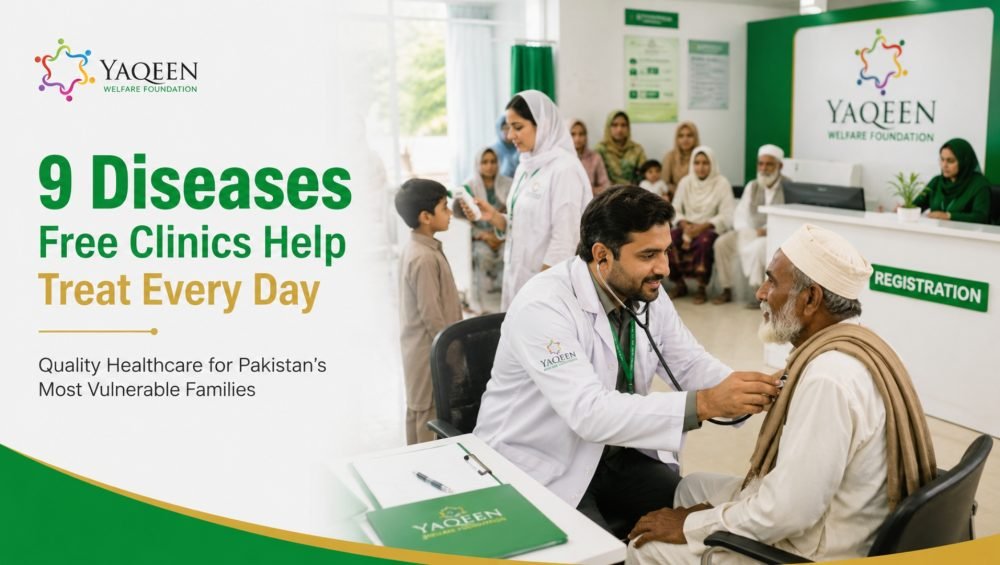
9 Diseases Free Clinics in Pakistan Help Treat Every Day
Free Clinics are often the only line of defense standing between a family in rural Pakistan and a disease that could otherwise go untreated for years. Across Punjab, Sindh, Khyber Pakhtunkhwa, and Balochistan, millions of people live without reliable access to a doctor, a diagnostic lab, or even basic medicine. For them, a free clinic is not a convenience — it is the difference between a manageable illness and a medical emergency. Every single day, Free Clinics across the country open their doors to patients who cannot afford a private consultation, let alone ongoing treatment. Some walk for hours. Some bring children who have never seen a doctor. Some are elderly and living with conditions that have quietly worsened for years because no one could examine them. This article looks at the nine diseases that Free Clinics in Pakistan treat most often, why these conditions are so widespread, and how organizations like Yaqeen Welfare Foundation are working to close the gap. The diseases on this list are not rare or unusual. They are common, largely preventable, and — with early diagnosis — highly treatable. What separates a patient who recovers quickly from one who suffers for years is almost always access: access to a doctor, access to a basic test, and access to medication that does not cost a month’s income. That access is exactly what Free Clinics are built to provide, and understanding these nine conditions helps explain why consistent, community-based healthcare remains one of the most effective forms of aid a family can receive. Why Free Clinics Are Essential in Pakistan Pakistan’s public health system is stretched thin. Rural districts often have one government hospital serving hundreds of thousands of people, and private care is simply out of reach for low-income households. This is where Free Clinics step in. They are usually staffed by volunteer or low-cost medical professionals, funded by donations, and built specifically to serve communities that the mainstream healthcare system overlooks. Free Clinics do more than hand out medicine. They screen patients early, refer serious cases to hospitals, track chronic conditions over time, and educate families on prevention. In many villages, a free clinic visit is the first time a person has ever had their blood pressure checked or their blood sugar tested. That first visit often uncovers a disease that has been silently progressing for years. The 9 Diseases Free Clinics in Pakistan Treat Every Day Below are the nine conditions that show up most consistently in the patient logs of Free Clinics operating in underserved parts of Pakistan. 1. Hepatitis B and C Pakistan carries one of the heaviest hepatitis burdens in the world. According to the World Health Organization’s regional office for the Eastern Mediterranean, the country has an estimated 3.8 million people living with hepatitis B, and only a small minority of those infected with hepatitis B or C are even aware of their condition, which keeps them from seeking treatment in time. Because hepatitis often causes no symptoms until liver damage is advanced, free screening at community clinics is one of the only ways many patients ever find out they are infected. 2. Tuberculosis (TB) TB remains endemic in Pakistan, spread through the air and concentrated in crowded, poorly ventilated housing. According to WHO’s regional tuberculosis program, Pakistan sees an estimated 510,000 new TB cases every year, ranks fifth among the world’s high-burden countries, and accounts for roughly 61% of the TB caseload in its surrounding region. Free clinics play a frontline role here, offering sputum testing, X-ray referrals, and the months-long medication courses that TB treatment requires — courses most families could never afford on their own. 3. Type 2 Diabetes Diabetes has become one of the fastest-growing chronic conditions in Pakistan, driven by diet, sedentary lifestyles, and genetics. Many patients only discover they have diabetes after developing complications like blurred vision, slow-healing wounds, or numbness in the feet. Free clinics routinely run blood glucose tests during general checkups, catching cases early enough to manage with diet changes and affordable medication rather than costly, advanced-stage treatment. 4. Hypertension (High Blood Pressure) High blood pressure is sometimes called a “silent” disease because it rarely produces obvious warning signs until it causes a stroke or heart problem. Free clinics treat hypertension constantly, largely because a blood pressure cuff and a few minutes of a nurse’s time are all it takes to detect it. Ongoing monitoring and low-cost medication, both offered through community clinic programs, keep patients stable and out of emergency rooms. 5. Respiratory Infections Pneumonia, bronchitis, and other respiratory infections are extremely common, especially among children and the elderly, and especially during Pakistan’s smog-heavy winters. Indoor cooking with solid fuel, overcrowded housing, and poor ventilation all contribute to the problem. Free clinics see a steady stream of coughs, chest infections, and breathing difficulties, and quick treatment with antibiotics or inhalers can prevent a routine infection from becoming a hospitalization. 6. Diarrheal Diseases Waterborne and diarrheal illnesses remain a leading cause of illness and death among young children in Pakistan, largely due to unsafe drinking water and limited sanitation. Free clinics treat dehydration, provide oral rehydration therapy, and — just as importantly — educate families about safe water practices. This is one of the clearest examples of why clean water access and free medical care are so closely linked in Pakistan’s public health picture. 7. Skin Infections and Scabies Skin conditions like scabies, fungal infections, and bacterial rashes spread quickly in crowded households and communities with limited access to clean water for washing. These conditions are rarely life-threatening on their own, but left untreated they cause chronic discomfort and can lead to secondary infections. Free clinics treat dozens of skin cases each week with simple, inexpensive topical medications that are otherwise hard for low-income families to source. 8. Malnutrition in Children Childhood malnutrition, ranging from stunted growth to acute wasting, is a persistent problem in Pakistan’s poorest districts. Free clinics screen children during routine visits, identify early signs of malnutrition,