Yaqeen Welfare Foundation

CategoriesBlog

Your Donation Free Healthcare in Pakistan

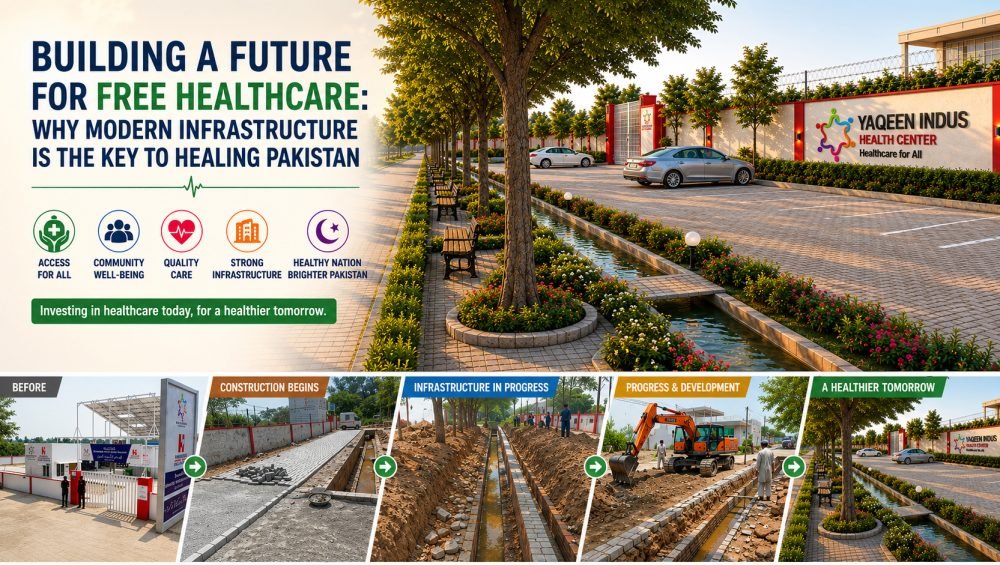
Your donation free healthcare in Pakistan is not a slogan — it is a working pipeline that converts generosity into finished clinic walls, working diagnostic machines, and thousands of patients receiving care they could not otherwise afford. If you have ever wondered whether your contribution actually reaches the people who need it most, this article answers that question in full. We walk through the medical access crisis driving the need, the step-by-step journey of a donation from your account to a patient’s treatment, the specific services your money funds, and the Islamic giving framework that makes this one of the most spiritually meaningful ways to fulfill your religious obligations. Why Donation-Funded Free Healthcare in Pakistan Is No Longer Optional Pakistan faces a healthcare access emergency that public budgets alone cannot resolve. According to the World Health Organization, the country maintains approximately 1.09 doctors per 1,000 people — a ratio well below international standards and concentrated almost entirely in urban centers like Karachi, Lahore, and Islamabad. Rural Sindh, southern Punjab, and the more remote districts of Khyber Pakhtunkhwa receive a fraction of the medical workforce available in those cities. Nearly half of Pakistan’s entire population lacks dependable access to basic primary healthcare. According to data from the World Bank’s health financing indicators (https://data.worldbank.org/indicator/SH.XPD.OOPC.CH.ZS), out-of-pocket spending dominates how Pakistani families pay for medical care — meaning that when someone gets sick, they either pay out of savings they often do not have, or they go without treatment entirely. Government clinics in underserved areas are frequently underfunded, understaffed, or simply absent. This is the gap that your donation free healthcare in Pakistan steps into. Donor-funded clinics do not replace the government’s responsibility — they respond to a medical emergency that cannot wait for policy reform. The families currently going without care cannot pause their illnesses while systemic change catches up. They need a clinic now. That is what donations build. The Journey of Your Donation Free Healthcare in Pakistan: From Gift to Patient Many donors assume their contribution disappears into a general fund once it leaves their account. In a well-run charitable model, the exact opposite is true. Every gift moves through a specific, traceable sequence from online transaction to finished medical outcome. Step One: You Give Online The process begins the moment you make a contribution through a secure digital platform. Donations can be one-time gifts, recurring monthly contributions, or structured giving tied to Islamic obligations like Zakat. The flexibility of the giving model is central to what makes donation-based free healthcare in Pakistan sustainable over the long term — it does not rely on a single annual fundraising drive, but on a continuous and diversified stream of contributions arriving at every scale. Step Two: Construction and Equipment Procurement Once received, funds are directed toward verified facility construction, medical equipment procurement, and supply chain logistics. This is the stage where your donation physically becomes a building — foundations poured, walls raised, electrical and plumbing systems installed, diagnostic equipment delivered and calibrated. Strategic partnerships with established clinical networks like the Indus Hospital & Health Network compress overhead at this stage significantly. Shared procurement channels and existing logistics infrastructure mean a larger share of every donated rupee reaches the construction site rather than administrative costs. Step Three: Patients Receive Free Care The final step is where your donation free healthcare in Pakistan becomes tangible for the families it was always intended to serve. A patient walks through the clinic’s door and receives a consultation, medication, immunization, or specialist referral — entirely free, with no co-pay, no registration fee, and no hidden charge. This is the moment the entire donation chain was built to produce, and it is repeated for thousands of patients every month once a facility is fully operational. If you want to understand the specific digital tracking mechanisms that keep each transaction auditable from donor to patient, read our detailed guide: Donation Center for Online Sadaqah and Free Healthcare — How the Platform Works. A Real Project Built on Donation Free Healthcare in Pakistan: Samundri, Faisalabad Abstract models become easier to trust when there is a physical project to examine. In Samundri, Faisalabad, that project is already underway. A small, under-resourced local clinic is being rebuilt from the ground up into a modern, multi-service healthcare facility — a direct and visible example of donation free healthcare in Pakistan moving from blueprint to building in real time. The expanded Samundri facility is designed to serve more than 50,000 patients annually once construction and staffing are complete. The scale of that ambition is only achievable because of the operational partnership with the Indus Hospital & Health Network, which brings established clinical governance, evidence-based protocols, and accountability structures that ensure donor funds are spent according to medical standards already tested and proven elsewhere in Pakistan. When finished, the Samundri clinic will offer: Maternal and newborn care for routine deliveries and high-risk pregnancies Mental health services addressing a need that remains almost entirely unmet across rural Pakistan Childhood immunizations protecting the next generation from diseases that are entirely preventable General family medicine for ongoing primary care across all age groups None of this would exist without sustained donor contributions arriving consistently throughout the construction timeline. This is the clearest possible example of how your donation free healthcare in Pakistan moves from digital transaction to concrete medical reality — not through a single large grant, but through thousands of individual gifts accumulating into something that will serve patients for decades. What Your Donation Free Healthcare in Pakistan Specifically Funds It is worth being concrete about where money actually goes rather than leaving it as an abstraction. A typical contribution to a free healthcare project in Pakistan funds some or all of the following: Facility construction — walls, roofing, electrical systems, plumbing, and the physical infrastructure required to operate a clinic safely and consistently Medical equipment — diagnostic tools, maternal care equipment, vaccine refrigeration units, and basic surgical supplies that make a range of services possible Staffing
CategoriesBlog

The Charity Only Allah Sees in Islam

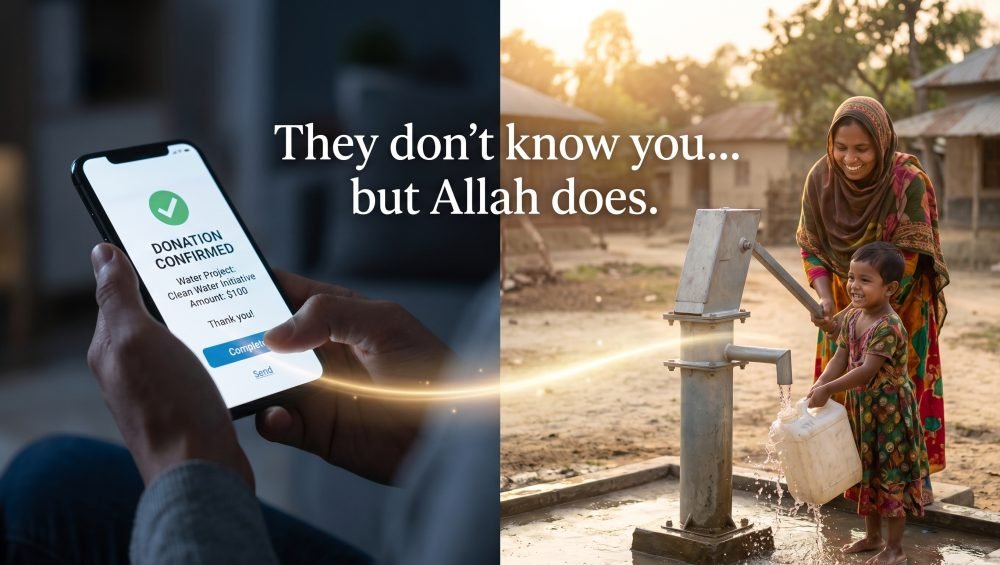
There is the charity only Allah sees — a kind of giving the world never praises. No camera captures it. No name is engraved on a plaque. No crowd gathers to witness the moment. It moves like water through soil — invisible on the surface, yet feeding everything beneath it. It happens in the predawn quiet, when a hand slips something into a tin without anyone watching. It happens in a browser window opened alone, a donation completed, and then closed — no screenshot taken, no story shared. It is giving stripped of performance, offered purely for One. At Yaqeen Welfare Foundation, we are humbled to be the vessel through which thousands of such acts flow. Donors reach us from every corner — some vocal, some invisible. And while every form of generosity is honored, we have come to understand something important: the charity only Allah sees carries a spiritual gravity unlike any other. It is not simply a transfer of wealth. It is a conversation between the servant and the Creator, held entirely in private. What Is “The Charity Only Allah Sees” in Islam? At its core, this form of giving — often called silent or secret charity — is the act of giving without seeking any return from the world: not praise, not gratitude, not even acknowledgment. The left hand truly does not know what the right hand has done. The deed is completed, and the giver walks away without leaving a trace. This is not merely an act of humility. In Islamic teaching, it is a spiritual discipline — a way of purifying the deed from the one contamination that can quietly destroy it: the desire for human approval. Allah (SWT) speaks about this directly in the Qur’an: “To give charity publicly is good, but to give to the poor secretly is better for you, and will absolve you of your sins. And Allah is All-Aware of what you do.” (Surah Al-Baqarah, 2:271) Notice the precision of this verse. It does not say public giving is wrong — it says private giving is better. The comparison is not between permissible and forbidden, but between good and greater, between the acceptable and the elevated. This distinction matters deeply, because it reveals that Islam is not just concerned with whether we give, but with the inner state we bring to the act of giving. Recognizing the charity only Allah sees asks us to answer a difficult question honestly: who am I really doing this for? If you’d like to explore the broader spiritual economy of giving, our earlier piece on the Islamic blessings of helping the poor lays out the foundational rewards tied to charity in general. Why Giving in Silence Feels Different Most of us have felt it — that quiet pull after doing something kind. The subtle urge to mention it, share it, let it be known. It is entirely human; we are social beings wired for affirmation. There is no shame in feeling it. But Islam asks us to notice that pull, and then release it. The Prophet ﷺ described one of the seven types of people who will be shaded under Allah’s throne on the Day of Judgment — a day when the sun will be brought so close that people will drown in their own sweat — as: “A person who gives charity so secretly that his left hand does not know what his right hand has given.” (Bukhari & Muslim) What strikes you about this description is not just the act, but the degree of hiddenness. It isn’t simply “don’t post about it.” It is a level of inner secrecy so complete that even the giver’s own awareness of the deed barely lingers. Give, and let it go. Donate, and forget. Give as though the act belongs entirely to Allah — because it does. When you give in silence, you are not suppressing your humanity. You are elevating it. You are choosing the eternal witness over the temporary audience. That choice — that single moment of spiritual courage — is what makes the charity only Allah sees feel so profoundly different: lighter, somehow, yet weightier at the same time. The Hidden Impact: Protection You Cannot See We tend to measure the value of charity by what it builds: a well dug, a family fed, a child educated. Those outcomes are real and deeply important. But Islamic wisdom teaches us that the ripple of sincere giving moves in directions we cannot observe, touching the life of the giver just as much as the life of the recipient. The Prophet ﷺ said: “Give in charity without delay, for it stands in the way of calamity.” (Tirmidhi) This is not metaphor. It is a spiritual principle: hidden acts of generosity become a barrier between you and hardship that has not yet arrived. They deflect what you never even saw coming. To learn more about this protective dimension of giving, see our related article on how Sadaqah shields against unseen hardship. Beyond protection, silent charity works on the inner landscape of the soul in ways no other act quite replicates. It Dismantles the Ego The ego thrives on recognition. It wants a record, a receipt, a reputation. When you give and tell no one, you deny the ego its currency. Over time, this practice makes the heart softer, more open, and less cluttered with self-importance. It Invites Barakah — Divine Increase Barakah is not just abundance in money; it is effectiveness in all things. The home where it resides feels calm. The time in it stretches. The relationships inside it hold. Many people live with unexplained ease and contentment — and their secret, perhaps, is a long history of quiet, anonymous generosity. It Strengthens Your Connection to Allah When no human can credit you for a good deed, only One remains who knows of it. That awareness — that Allah alone has seen this — builds a relationship of closeness with the Divine unlike anything else.

CategoriesBlog

Islamic Blessings Of Helping The Poor

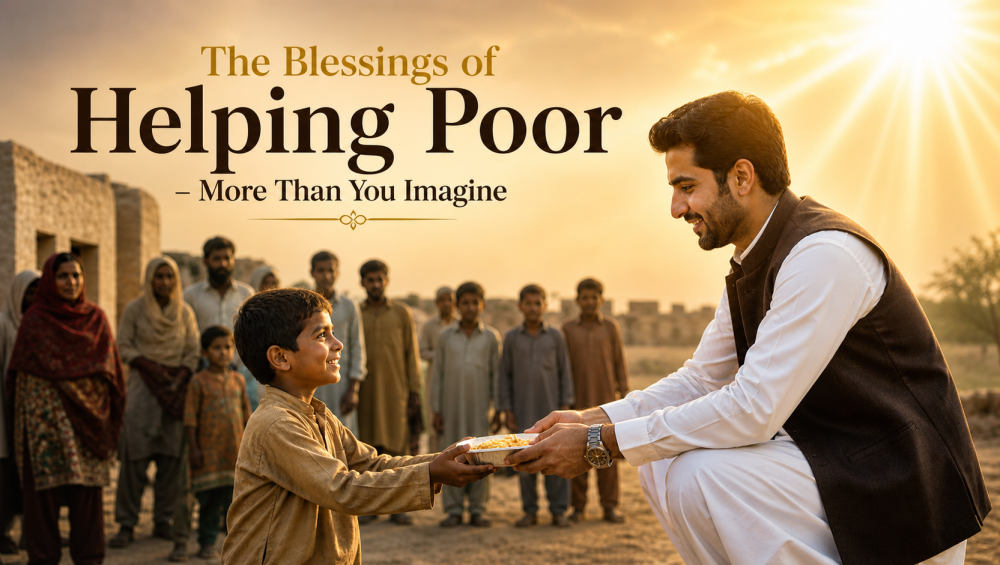
The Islamic blessings of helping the poor are far greater than most of us realize. We tend to think of charity as a one-way transaction: we give, someone else receives, and the story ends there. But in the Islamic worldview, that is only the visible half of the picture. Every rupee spent on a hungry family, every meal handed to a stranger, every school fee quietly paid for an orphan sets in motion a chain of reward, protection, and Barakah that often returns to the giver in ways they never expected — and may never even trace back to its source. At Yaqeen Welfare Foundation, we see both sides of this exchange every day: the immediate relief on the face of a mother who can finally feed her children, and the quiet, almost invisible transformation that takes place in the life of the person who made it possible. This article explores what the Quran and Sunnah teach us about the Islamic blessings of helping the poor, why these blessings matter more than ever in a country like Pakistan, and how you can begin tapping into them today. What Are the Islamic Blessings of Helping the Poor? When we talk about the Islamic blessings of helping the poor, we are not speaking in vague, sentimental terms. Islamic scripture is remarkably specific about the rewards attached to charity: Multiplication of reward — Allah describes charity as a seed that grows into seven hundred-fold reward (Surah Al-Baqarah, 2:261). Protection from calamity — The Prophet ﷺ taught that charity extinguishes sin “as water extinguishes fire” and shields the giver from harm. Barakah in wealth — Far from depleting resources, sincere giving is said to increase the giver’s provision in ways that cannot be measured on a balance sheet. Shade on the Day of Judgment — Charity given sincerely is described as a canopy that shelters the believer on a day when shelter will be scarce. Answered prayers from the recipient — The dua of someone you helped, especially when they had nowhere else to turn, carries a weight that ordinary supplications may not. These are not abstract promises reserved for scholars to debate. They are practical, lived realities that countless Muslims — including donors and field staff at Yaqeen Welfare Foundation — describe experiencing firsthand. The Quranic Foundation: A Loan to Allah One of the most striking metaphors in the Quran compares charity to a loan given directly to Allah: “Who is it that will loan Allah a goodly loan so He may multiply it for him many times over?” (Surah Al-Baqarah, 2:245) This verse reframes the entire act of giving. You are not simply parting with money; you are entering into a transaction with the Creator of wealth itself, who has guaranteed a return that exceeds anything available in this world. This single ayah is the theological backbone behind the Islamic blessings of helping the poor, and it explains why generations of Muslims have built their financial decisions around the principle of giving first and trusting Allah to provide. If you’d like to go deeper into the Quranic verses on charity and their context, our piece on understanding Sadaqah and Zakat in the Quran breaks this down verse by verse. Sadaqah Jariyah: Charity That Keeps Giving Long After You’re Gone Among the deepest Islamic blessings of helping the poor is the concept of Sadaqah Jariyah — ongoing charity whose reward continues to accumulate even after the giver has passed away. A water well dug for a thirsty village, a school built for children who will go on to educate their own children, knowledge shared that spreads across generations — each of these represents an investment whose dividends are paid not in currency, but in reward that compounds indefinitely. The Prophet ﷺ said: “When a person dies, his deeds end except for three: ongoing charity, beneficial knowledge, or a righteous child who prays for him.” (Muslim) This is why Yaqeen Welfare Foundation prioritizes projects like clean water systems and school infrastructure — they are designed specifically to keep generating reward for donors long after the initial donation is made. You can read more about how this works in our article on why Sadaqah Jariyah is the smartest long-term investment a Muslim can make. Historical Proof: How Early Muslims Understood These Blessings The earliest Muslims didn’t treat charity as an afterthought — they built entire civilizations around it. Mukhayriq and the First Waqf One of the earliest recorded acts of institutionalized giving in Islam was the endowment made by Mukhayriq, who donated seven orchards in Medina to the Prophet ﷺ with explicit instructions that their produce benefit the poor. This single act seeded what would become the Waqf system — a network of charitable endowments that would go on to fund hospitals, libraries, mosques, and travelers’ lodges across the entire Islamic world. Uthman ibn Affan and the Well of Rumah When the early Muslim community of Medina suffered from a severe shortage of clean drinking water, Uthman ibn Affan (RA) purchased a privately-owned well and dedicated it as a public trust, free for all to use. Centuries later, a modern agricultural endowment established in his name still operates in Saudi Arabia today — proof that one generous decision, made sincerely for Allah’s sake, can generate benefit for well over a thousand years. The Bimaristans of the Islamic Golden Age The Bimaristans — Islamic hospitals of the Abbasid and Umayyad periods — were funded almost entirely through Waqf endowments from merchants, scholars, and rulers who understood that their wealth was a trust, not a possession. These hospitals treated patients regardless of religion, social class, or ability to pay, and even discharged them with clothing and money to support their recovery. The entire system ran on the belief that helping the sick was an act of worship, and those who financed it were accumulating reward with every patient healed. The Prophet ﷺ told us plainly: “Charity does not decrease wealth.” (Muslim) This is not a metaphor