Yaqeen Welfare Foundation

CategoriesBlog

A Single Gift, A Lifetime of Reward – The Power of Sadaqah Jariyah

There are two sorts of charity. One nourishes a individual for a day; the other maintains a community for eras. One is satisfied the minute your hand opens; the other… proceeds long after your eyes near for the final time. In Islam, this unceasing shape of giving carries a title both basic and significant: Sadaqah Jariyah. At Yaqeen Welfare Foundation, we witness this kind of liberality reshape predeterminations each single day — quietly, relentlessly, long after the supplier has moved on with their life. Because a few blessings do not basically offer assistance individuals in the minute. They resound through time, touching lives that haven’t indeed started yet. What is Sadaqah Jariyah? The word jariyah comes from the Arabic root meaning “to stream” — like a stream that never runs dry. Sadaqah Jariyah, hence, is streaming charity: a commitment that doesn’t deplete itself upon giving but proceeds to pour its advantage forward, once more and again. Unlike conventional acts of giving — which are respectable and fundamental — Sadaqah Jariyah has a one of a kind quality: it outlasts the giver. The Prophet ﷺ said: “When a individual kicks the bucket, all their deeds come to an conclusion but three: progressing charity, advantageous information, or a noble child who implores for them.” (Muslim) Pause on those words. All deeds come to an conclusion — but these three. Everything else is fixed the minute the soul leaves. But progressing charity? It remains open. Dynamic. Accumulating. This isn’t a allegory or an desire. It is a divine guarantee: that what you contribute in the welfare of others does not vanish with you. It voyages ahead of you, planning your account some time recently you indeed arrive. Why One Blessing Can Final a Lifetime There is something unobtrusively supernatural approximately a blessing that increases without being went through. When you set up Sadaqah Jariyah, you aren’t giving once — you are making a source of advantage that rehashes itself normally, on its claim, indefinitely. Consider what that looks like in genuine life: A child wakes up and drinks clean water some time recently school — and your compensate is written. A mother fills her pot without strolling three miles through the warm — and your compensate is composed again. A persistent in a rustic clinic gets medicine they couldn’t manage — and your title is engraved in a record you cannot see. A family breaks a cycle of destitution since they had get to to steady back — and something shifts, not fair for them, but for their children, and their children’s children. Every time that advantage is gotten — each single time — a compensate is recorded. Not relative to the estimate of your blessing. Not restricted by the a long time that have passed. Not subordinate on whether you are still lively to witness it. That is the crucial distinction between charity that makes a difference and charity that never stops helping. The Charity That Takes after You Past This World We spend our lives collecting. We accumulate riches, construct careers, win notorieties, and take off behind physical follows of our time here. But most of what we assemble remains here. The property exchanges to beneficiaries. The career closes with retirement. The notoriety blurs inside a era or two. Sadaqah Jariyah is diverse. It is, in the most genuine sense, portable. It doesn’t remain behind in the world — it goes with you. It enters your Hisaab (your account with Allah) and talks on your sake at a time when words and deeds of others cannot intervened for you. The researchers have portrayed it perfectly: a individual in their grave, unconscious of the world over, however accepting a consistent stream of compensate — from a water source that streams, from information that spread, from a structure that still covers. The blessing you discharged has gotten to be an minister for your soul. Long after your title has blurred from human memory, your charity proceeds its calm work. Long after the world has moved on from your story, your story is still being composed — in the lives of individuals you may never have met. A Genuine Affect: The Story of One Well Let us make this tangible. There was a town — unremarkable by most measures — where clean water essentially did not exist inside reach. The closest source was distant. Children who ought to have been in school went through hours of their day in the exertion to recover water that wasn’t indeed secure to drink. Waterborne sickness was common. Moms apportioned each drop. Then somebody, some place, made a choice. A single gift financed the establishment of a water pump in that village. What happened following wasn’t emotional. There was no ceremony. No swarms. Fair water — clean, solid, close. Families no longer proportioned or gambled ailment with each sip. Girls who carried water containers started going to school instead. Rates of preventable infection steadily declined. Mothers had time — time that had already been expended by the every day emergency of survival. The individual who gave that gift may live on the other side of the world. They may have given on a calm evening, clicked a button, and returned to their day without giving it another thought. They may no longer be alive. But the water still streams. And with each draw from that pump — each filled container, each washed wound, each pot of nourishment cooked — a remunerate is enlisted for the one who made it possible. One choice. One gift. A persistent story. Where Your Sadaqah Jariyah Goes at Yaqeen Welfare Foundation Every venture we run at Yaqeen Welfare Foundation is planned with one guideline in intellect: affect that perseveres. We are not interested in mediations that require steady reestablishment. We construct things that final, serve communities that require long-term alter, and coordinate your liberality toward the most maintainable shapes of benefit. 💧 Clean Water Projects Access to secure water is not a

water-well-donation CategoriesBlog

Water Well Donation in Pakistan: Give Clean Water & Save Lives

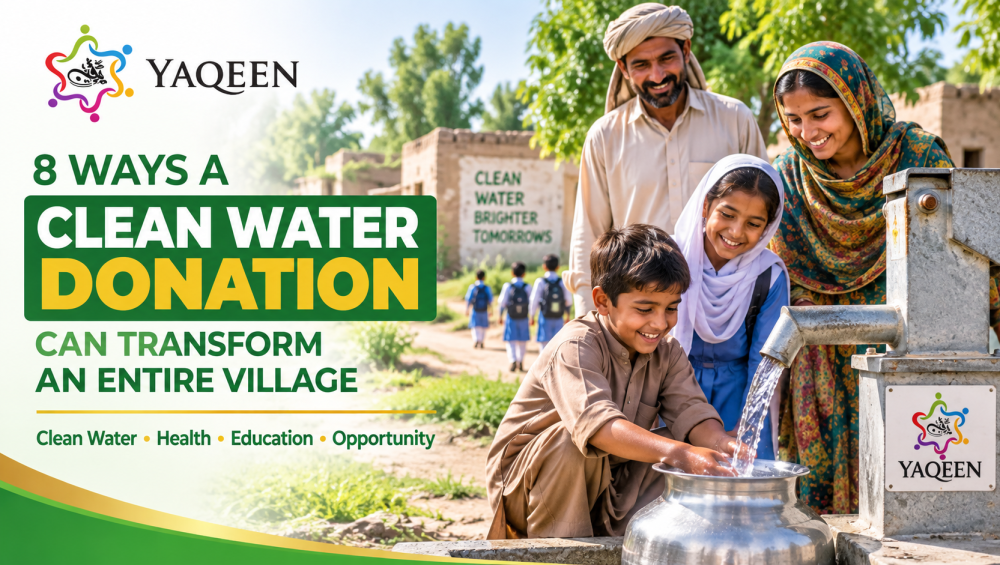
Imagine waking up before sunrise every single morning — not to pray, not to prepare breakfast — but to walk. Sometimes forty-five minutes. Sometimes over an hour. Just to reach water that is not even safe to drink. This is not a story from another century. This is the daily reality for millions of families across rural Pakistan right now. At Yaqeen Welfare Foundation we have seen it firsthand — children getting sick from contaminated sources, women spending hours of every day just collecting water, and entire villages where clean water has simply never existed. A water well donation changes all of that. One decision. One act of giving. And a family drinks safely for years. That is what we do. That is why we are asking you to help us do more of it. The Clean Water Crisis in Pakistan Pakistan is facing a water crisis that most city dwellers never see — because it is happening in the villages, the remote areas, the places nobody photographs unless something goes catastrophically wrong. The scale of it is hard to fully absorb. You will not have to look far for evidence of Pakistan’s water crisis, as the latest from UNICEF and the WHO put it in stark terms: millions here are yet to get their hands on safe, clean drinking water. In the countryside in particular, it is a daily reality for families to be dependent on sources that are anything but pure. And while waterborne illnesses pose a very real danger to children and those most at risk throughout the nation, experts are at pains to point out how dire the situation has become. For all the communities whose health and schooling are being compromised by this shortage, one could say there is not enough being made of the problem. What Unsafe Water Does to a Real Family Nobody tells you what that number looks like inside one house. So let us be honest about it. A mother collects water from a contaminated stream because there is no other option. She boils what she can. But she cannot boil everything, every time, with the fuel she has. Her youngest gets diarrhoea. Then again two weeks later. Then again. His growth slows. His immunity weakens. She watches it happen and has no way to stop it. Typhoid. Cholera. Hepatitis A. Dysentery. These are not historical diseases in Pakistan. They are active, current threats — and almost all of them are transmitted through contaminated water. The women and girls who collect water are also losing something invisible — time. Hours every day that could go toward education, income, rest or simply being present with their families. A clean water donation gives that time back. How Your Water Well Donation Helps Families When a water well arrives in a village — the change is not gradual. It is immediate. The morning walk disappears. The water is clean. The children stop getting sick as often. The mother who used to spend three hours collecting water now has those hours back. The father does not have to choose between buying medicine and buying food as frequently. The whole texture of daily life shifts. What Nobody Tells You About Clean Water A water well donation does not just provide water. It sets off a chain of changes that reaches further than most donors ever realise. When children are healthier — they attend school more consistently. When girls are not sent to collect water — they stay in class longer. When women have more time — they find ways to contribute to household income. When a community has clean water — hygiene improves, disease decreases and the local health burden drops significantly. One water well. One village. And life quietly becomes different — not all at once but in ways that keep growing. At Yaqeen Welfare Foundation this is what we see every time a pump goes in. Not just water. A different kind of life becoming possible. Water Well Donation as Sadaqah Jariyah This is the part that changes how a Muslim thinks about giving. Most acts of charity are completed in a moment. You give food — it is eaten. You give clothes — they are worn. The act ends. The reward is written. Beautiful. Real. But finished. A water well donation does not finish. The Prophet ﷺ said: “When a person dies, all their deeds come to an end except three — ongoing charity, knowledge that benefits others, or a righteous child who prays for them.” (Sahih Muslim) A water well is one of the most direct forms of that ongoing charity — Sadaqah Jariyah. Every morning a family wakes up and uses that water, the reward flows back to the donor. Every child who drinks from it and stays healthy. Every woman who no longer walks an hour in the heat. Every prayer made with water from that well. You could be asleep. Years have gone by in this world. And the reward is still moving. The Prophet ﷺ was also asked what the best charity is. Providing water was among his answers. This is not a coincidence. Water is life. And giving life — giving it in a form that continues — is among the greatest things a person can do with their wealth. A Sadaqah Jariyah for water well through Yaqeen Welfare Foundation is not just charity. It is an investment in your akhirah that pays forward every single day. How Yaqeen Welfare Foundation Builds Water Wells We want you to know exactly what happens when your water well donation reaches us. Transparency is not optional for us — it is the foundation of trust. Step 1 — Donation Received Your donation arrives and is allocated specifically to our clean water programme. Every rupee is tracked and accounted for. Step 2 — Village Identification It is the job of our ground teams to zero in on the villages that have the greatest need. We are looking for places with

sadaqah-jariyah-free-clinic-pakistan CategoriesBlog

Sadaqah Jariyah Free Clinic Saving Lives in Pakistan

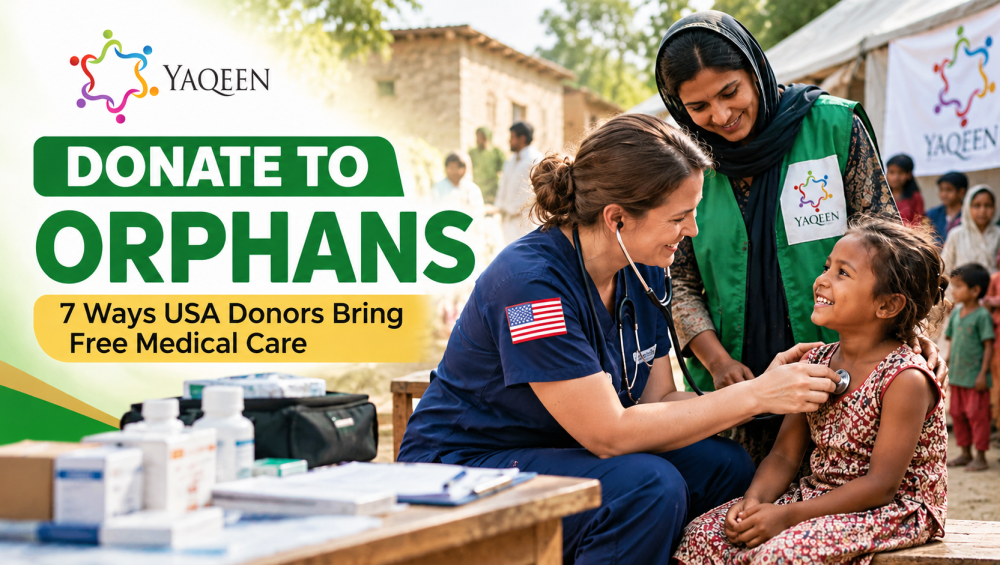
Picture this. A woman walks into a clinic somewhere in rural Pakistan. She has been ignoring a pain in her chest for three months. Not because she did not care. Because every time she thought about going to a doctor she thought about the cost and turned back home. Today she walks in. She is seen. She is tested. She gets medicine. She walks out with answers she has been afraid to look for. That moment — that one moment — is someone’s Sadaqah Jariyah. Not just a past deed. Not just a good intention. It is an active, living reward being written right now for the person who helped make that clinic possible. At Yaqeen Welfare Foundation, we see this impact every day. This is what we want to talk about today. Not only what Sadaqah Jariyah means, because most people already know the definition, but how a free clinic in Pakistan can become one of the most powerful forms of ongoing charity you will ever come across. Why Healthcare Is One of the Heaviest Needs in Pakistan Before we get into the reward side of things — let us just be honest about what is happening on the ground. Pakistan has over 220 million people. A huge portion of them — especially in rural areas — have no real access to healthcare. Not because hospitals do not exist somewhere. But because getting there will cost money. The consultation costs money. The tests cost money. The medicine costs money. And for a daily wage worker or a family living on the edge — that money simply does not exist. So people wait. They manage. They pray the pain goes away. And sometimes it does. And sometimes it does not — and by the time they get help it is too late. A free clinic does not just treat illness. It removes the one thing standing between a sick person and getting better — the cost. And when that barrier comes down everything changes. How a Free Clinic Becomes Sadaqah Jariyah Here is the thing about most acts of giving. They are beautiful but they end. You feed someone — they eat — the reward is written — the moment passes. That is not a small thing. But it is a completed thing. A free clinic works differently. When you contribute towards building or running a free clinic — you are not funding one moment. You are funding hundreds of moments every single week. Every patient who walks in. Every diagnosis. Every prescription filled. Every person who goes home healthier than they came. Every child who gets treated before something small becomes something serious. All of that — every single instance — is counted for you. Not once. Every time. And it does not stop when you stop thinking about it. The clinic opens its doors on Monday morning, whether you remember your donation or not. The reward keeps coming whether you are awake or asleep. Whether you are in Pakistan or on the other side of the world. Whether you are alive or gone. That is what makes it Sadaqah Jariyah. The giving happened once. The reward never stopped. The Reward Multiplies in Ways You Cannot Track Think about one patient. Just one. She comes in with a condition that gets treated properly. She recovers. She goes back to her children. She raises them. One of them grows up to be someone who does good in the world. Another learns from her how to be kind to others. Did your clinic donation cause all of that? In a way — yes. It kept her alive and well enough to be present for her family. The chain of goodness that started with her treatment goes further than any of us can see. This is why the Prophet ﷺ placed so much emphasis on acts that benefit others in lasting ways. Because the ripple effect of genuine good is something only Allah can fully measure, and He measures all of it. Give Towards a Free Clinic in Someone’s Name A lot of people think about this when they have lost someone. A parent. A spouse. A child. Someone who needed medical care — or someone who gave it, or someone who simply deserved better than they got. Giving towards a free clinic in their name is one of the most fitting tributes you can offer. Every patient treated carries a piece of that reward to them. Every person who walks out healthier than they walked in is a gift you are sending across. You cannot call them anymore. You cannot do anything new with them in this world. But you can do this. And this — as small as a donation might feel — reaches further than you know. Yaqeen Welfare Foundation and the Yaqeen Indus Health Clinic This is exactly why Yaqeen Welfare Foundation built the Yaqeen Indus Health Clinic — to give people in underserved communities access to free medical care they could never afford on their own. Alhamdulillah the clinic is operational, the doors are open, and patients are being treated every week. For anyone looking to turn their giving into real lasting Sadaqah Jariyah — this is one of the most direct ways to do it. What Kind of Giving Goes Into a Free Clinic People sometimes assume you have to fund an entire clinic to get the reward. You do not. Contributing towards medicine for one month. Funding the salary of a nurse for a week. Donating towards medical equipment. Giving towards the running costs that keep the lights on and the doors open. All of it counts. All of it becomes part of the ongoing reward because all of it keeps the clinic serving people. Small consistent giving into something that keeps running is worth more in Sadaqah Jariyah than a single large donation into something that ends. That is just the math of ongoing charity. Final Thought Somewhere in Pakistan right now there

sadaqah-jariyah-for-deceased CategoriesBlog

Sadaqah Jariyah for Deceased | Their Rewards Can Still Grow

When my colleague lost her father last year, the first thing she asked was — Is there anything I can still do for him? Not the funeral. Not the prayers. After all of that. Just — is there anything left? That question stays with us at Yaqeen Welfare Foundation because we hear it all the time from sons, daughters, widows and grieving mothers. And the answer — alhamdulillah — is yes. Sadaqah Jariyah for Deceased is something you can still do. And it is more powerful than most people realize. What Exactly Is Sadaqah Jariyah Jariyah means flowing like a river. It does not stop. Sadaqah Jariyah is a charity that keeps giving… long after you give it. A water pump that runs for years.A clinic that treats patients every single week. A child whose education you funded who goes on to do good in the world. Every time any of that happens, the reward goes back to whoever it was given to. The Prophet ﷺ said, when a person dies, three things stay open. One of them is Sadaqah Jariyah. Everything else closes. This one stays. That is the whole thing. That is why it matters so much. Your Loved One Cannot Give Anymore. But You Can This is the part that hits people hard when they really think about it. Your father cannot make a new dua anymore. Your mother cannot give a new sadaqah. Whatever they did in this world, that is what they have. The book is closed on their end. But not on yours. When you give Sadaqah Jariyah in their name, you are adding to their book from this side. You are reaching across and doing something for them that they physically cannot do for themselves anymore. And Allah accepts it. The reward goes to them. Scholars across every major school of thought agree on this. It is not a cultural tradition or a hope — it is confirmed. Think about what that means… for a second. Your person is gone. But their deeds are still growing because of you. What Actually Counts as Sadaqah Jariyah People overthink this. It does not have to be grand. It just has to keep benefiting someone over time. Clean water is probably the most recommended one. A water pump in a village where people walk miles for water. Every single person who drinks from it — that reward goes to your loved one. Yaqeen Welfare Foundation has clean water projects running in some of the most remote areas of Pakistan. Families who have nothing. And donors who gave years ago are still getting a reward because those pumps are still running. Healthcare is another one. Medicine for someone who cannot afford it. A free checkup for a patient in a rural area. We run free medical camps and our donors — many of whom gave in the name of someone they lost — their reward does not stop when the camp ends. It continues with every patient who got treatment and got better. Education too. One child whose school fees you cover can go on to teach others, raise good children and contribute to their community. The chain does not end with them. Even sharing something useful — a piece of Islamic knowledge, a skill, something your loved one taught you that you pass on — that counts. Knowledge that travels is Sadaqah Jariyah, too. You Do Not Need a Big Amount Honestly… size does not matter as much as people think. What matters is that it keeps going. A small monthly contribution to a project that serves hundreds of people is worth more in ongoing reward than one large donation to something that ends after a day. At Yaqeen Welfare Foundation, we have donors who give a few hundred rupees every month in the name of their parents. That is it. And because those rupees go into projects that keep running, the reward keeps coming. Consistently. Quietly. Long after the donation was made. Start small if you have to. Just start. When Should You Give Anytime. There is no waiting period. No specific date you have to hit. Give when you miss them. Give on their birthday. Give when something good happens, and you want to share the moment with them somehow. Give in Ramadan when everything is multiplied.Give on a random Tuesday because something reminded you of them.There is no wrong time to do something good for someone you love. Final Thought There is a water pump somewhere in rural Pakistan right now. It has been running for three years. Families come to it every single morning. Children drink from it before school. Women who used to walk an hour for water now have it close to home. The man it was built for has been gone for four years. His daughter gave it in his name after he passed. She had no idea it would still be running. She just wanted to do something for him. That is Sadaqah Jariyah. That is what it looks like when it is real. At Yaqeen Welfare Foundation, we exist to make that possible for as many people as we can — both the ones receiving help and the ones giving it in memory of someone they loved. If you have someone you want to give to — do not wait. The door is open. They are waiting… on the other side of it. May Allah accept it from you and reunite you with your loved ones in Jannah. Ameen. Donate Now The Prophet ﷺ confirmed that the deceased can benefit from charity given on their behalf — whether it is a waqf of a Mus-haf, digging a well, or planting a tree, whether done during their lifetime or by someone else after their death. Source: Orphans in Need FAQs About Sadaqah Jariyah for the Deceased Q1. Does the reward actually reach a deceased person?  Yes, it does. And honestly… this is not just a comforting belief.

sadaqah-jariyah-for-water-well CategoriesBlog

Sadaqah Jariyah for Water Well in Pakistan | Donate Now

There is a village about three hours from Lahore. No proper road to get there. No hospital nearby. And until two years ago — no clean water either. Women wake up early and walk far just to get some water  Every single day. Rain or shine. Summer heat that hits fifty degrees. They did it because there was no other choice. Then someone built a water well there. One donor. One decision. And everything changed. At Yaqeen Welfare Foundation, we’ve seen this again and again. Every time, it reminds us of one clear truth — building a water well isn’t just charity. It is a lasting act of Sadaqah Jariyah for Water Well that can truly change lives. And with our Water Well program, giving has become simple, easy, and meaningful. What Is Sadaqah Jariyah for a Water Well Sadaqah Jariyah… it just means ongoing charity. A reward that does not stop. But a water well is one of the most specific and most recommended examples of it — and for good reason.TheProphet ﷺ was once asked what the best form of charity is. One of the things he mentioned was giving water. Clean water is not a luxury. For millions of people in Pakistan, it is a daily crisis. When you fund a water well, you are solving that crisis — not for one day but for years. Every single person who drinks from it, every family that cooks with it, every child who does not fall sick because the water is clean — all of that comes back to you as a reward. And it does not stop when you stop thinking about it. It just keeps going. Why Pakistan Needs Water Wells So Badly This is something people living in cities do not always feel in their bones. Turn on a tap and water comes out. Simple. Normal. In the countryside of Sindh, in some parts of Balochistan, and in the more isolated spots of Khyber Pakhtunkhwa, water isn’t something you can just rely on. In fact, millions of people across Pakistan still can’t get water that’s safe to drink, and they are forced to use water that’s been dirtied by pollution. Because of this, kids become ill. And women have to devote hours and hours of each day to obtaining water, time that could be used for other things. Sadly, illnesses you get from the water are a major reason for children dying in these locations. This is not a small problem. It is a daily reality for a huge portion of this country. Yaqeen Welfare Foundation works directly in these communities. We’re not just sending money off somewhere and hoping for the best. Our teams are actually there — going into the areas that need it most, setting up wells and pumps, and checking back to make sure everything keeps working the way it should. The Reward Does Not Stop — Ever Here is the thing about a water well that makes it different from most forms of giving. When you give money to feed someone, they eat, they are grateful, and the moment passes. Beautiful act. Real reward. But it ends. A water well does not end. If it is maintained well, it can serve a community for ten, fifteen or twenty years. Every morning when a family wakes up and uses that water, you get a reward. Every time a child drinks clean water instead of dirty water and stays healthy, you get a reward. Every ablution someone makes before prayer using that water, some scholars say, you get a reward for those prayers too. You give once. The reward multiplies for the rest of your life and continues after your death. That is the definition of Sadaqah Jariyah, and a water well is one of its purest forms. Give a Water Well in the Name of Someone You Lost A lot of people who come to Yaqeen Welfare Foundation want to give a water well for a parent who has passed away. A mother. A father. A spouse. Someone they miss every day. And this is one of the most beautiful things we get to be part of. Because that person is in their grave, their book of deeds is still open because of you. Every drop of water from that well is a gift you are sending them. You cannot call them. You cannot hug them. But you can do this. You can give something in their name that serves hundreds of people and sends a reward to them for years. We have had donors tell us it gave them peace they could not find anywhere else. Not just grief. Not just loss. But a feeling that the connection is still alive somehow. That they are still doing something for the person they love. What Does It Cost to Build a Water Well in Pakistan The cost varies depending on the location, the depth of the well, and the type of pump needed. Some areas need hand pumps. Others need solar-powered systems because electricity does not reach them. At Yaqeen Welfare Foundation, we make sure every rupee goes where it is supposed to go. We share updates with donors. We send photos. We show you exactly where your well was built and who it is serving. Because you deserve to know that your Sadaqah Jariyah is real and it is working. If you cannot afford a full well on your own, you can contribute towards one. Group donations are completely valid. Your share of the reward is yours regardless of how many people contributed. Final Thought That village is three hours from Lahore — the one with no road, no hospital, no clean water. The woman who walked forty-five minutes every morning. They do not do that anymore. One donor changed that. One decision. One act of Sadaqah Jariyah. The donor does not know those women by name. He probably never will. But somewhere right now, a family is drinking

give-sadaqah-the-right-way CategoriesBlog

How to Give Sadaqah the Right Way and Maximize Your Rewards

Most people think giving Sadaqah is simple. You have some extra money, you hand it to someone, done. And yes — at its core it really is that simple. But if you want to actually maximize your rewards, if you want every rupee and every small act to count as much as possible, there is a right way to do it. At Yaqeen Welfare Foundation, we have seen thousands of people give. Some give sadaqah a little and get so much reward. Others give a lot but miss the mark completely. The difference is almost always in how they give — not how much. So let us talk about that. Start With Your Intention Before deciding who to give to, just fix your intention first. Most people usually don’t even think about it. Why are you giving? Is it because someone is watching? Is it to feel good about yourself? Or is it genuinely because you want to please Allah and help another human being? The Prophet ﷺ said intentions judge actions. That is not just a nice quote — it is the entire engine behind your reward. The same amount of money given by two people can earn completely different rewards based on what was in their hearts when they gave it. So before you give anything, stop for one second and make that intention clean. You Do Not Need a Lot of Money This is something we want people to really hear. Sadaqah is not for the rich. It never was. The Prophet ﷺ taught us that even giving half a charity date can protect a person from hellfire. Think about how small that is. If you have ten rupees, give two. If you have food, share a little. If you have knowledge — pass it on. Yaqeen Welfare Foundation started because a few people believed that small, consistent giving builds something bigger than one giant donation ever could. And that belief has been proven right every single year. Do not wait until you are wealthy to start giving. Start now with what you have. That habit is worth more than a big future check. Give Quietly When You Can The Quran talks about people who give so quietly that even their left hand doesn’t know what their right hand gave. That’s how private charity should be. Why? Because when nobody knows — not your friends, not your family, not your followers on Instagram — then the only reason you gave was for Allah. There is no ego in it. No clout. Just pure intention. Of course, giving openly is also allowed, especially when it encourages others to give. But if you can — give quietly. Just keep it between you and Allah. That’s what really counts. Who Should You Give Sadaqah To This is where a lot of people overthink it. The honest answer is — give to whoever needs it most and whoever is closest to you first. Start with your own family if they are in need. Then your neighbors. Then your wider community. The Prophet ﷺ taught us to start with those closest to us first. Beyond that… look for people whose need is real, and urgent. A sick person who cannot afford medicine. A child missing school because of fees. A family that just… lost everything in a flood. These are not hard to find in Pakistan. They are everywhere around us. At Yaqeen Welfare Foundation, we work in healthcare, education, and housing — three areas where honestly, the need never stops. When you give through a trusted organization, you know your Sadaqah is actually reaching people who genuinely qualify and genuinely need it. And that peace of mind, well, it matters more than people realize. Give Consistently — Even If It Is Small One of the most overlooked pieces of advice on how to give Sadaqah comes directly from the Prophet ﷺ. He said the most beloved deeds to Allah are those done consistently — even if they are small. Not the biggest donation. Not the most impressive one. The consistent one. So set something up. Even fifty rupees a week. A small monthly amount to a cause you trust. A habit of giving every Friday. Whatever works for your life — make it regular because that consistency is what builds real reward over time and what actually changes lives on the ground. Do Not Cancel Your Sadaqah With Ego This one is hard to hear, but it needs to be said. Allah tells us in the Quran not to follow our charity with reminders of it, or with harm. Meaning — do not give someone food and then make them feel small for needing it.. Do not donate and then bring it up every chance you get. That behavior can wipe out the reward of your giving completely. The person you helped deserved their dignity along with your help. Real Sadaqah lifts people — it does not make them feel like they owe you something. At Yaqeen Welfare Foundation, we train our teams on this. When we hand someone medicine or help a family with their rent, we do it with respect. Because the reward is not just in the giving, it is in how you give. Sadaqah Jariyah — Give Once, Earn Forever If you really want to maximize your rewards, look into Sadaqah Jariyah. This is an ongoing charity. You give something once, and as long as people benefit from it, the reward just keeps flowing back to you — even long after you are gone. Fund a water pump in a village. Sponsor a child’s education. Contribute to a medical clinic… somewhere out there, in a rural area where it is truly needed. Every patient treated, every child educated, every thirsty person who drinks — that reward goes back to you. Donate NOW Yaqeen Welfare Foundation has projects built exactly around this. Donors who contributed to our healthcare units years ago are still earning rewards today because

different-between-zakat-and-sadaqah CategoriesBlog

What Is the Difference Between Zakat and Sadaqah in Islam?

Every Muslim gives. But not every Muslim gives correctly — and that difference matters more than most people realise. At Yaqeen Welfare Foundation, Pakistan’s trusted name in free healthcare and clean water access, we see this confusion every single day. People mix up Zakat and Sadaqah. They use them interchangeably. Sometimes they give one thinking it counts as the other. It does not. Understanding the difference between Zakat and Sadaqah is not just a religious technicality — it is the foundation of giving that actually reaches the right people the right way. We built Yaqeen Indus Health Clinic and our clean water projects on exactly that principle. Your giving should count fully. So let us make sure it does together. The Core Difference Between Zakat and Sadaqah What Makes Them Fundamentally Different Zakat is an obligation. Sadaqah is a choice. That single line carries everything. Zakat is one of the Five Pillars of Islam — as foundational as Salah and Sawm. If you qualify, you must give it. There is no negotiating, no postponing without consequence, no replacing it with something else. Sadaqah sits in a completely different category. It is voluntary. Open. Flexible. You give it when your heart moves you, in whatever form you choose, to whoever needs it. Both are acts of worship. Both carry enormous rewards. But they are not the same act — and treating them as if they are leads to real gaps in both your obligation and your impact. Understanding Zakat — The Obligatory Pillar Who Must Give Zakat Zakat applies to every sane adult Muslim who has held wealth above the Nisab threshold for one complete lunar year. Nisab is currently calculated at the value of 87.48 grams of gold or 612.36 grams of silver — whichever is lower according to the scholarly position most beneficial to the poor. The amount is fixed — 2.5% of total qualifying wealth. This includes savings, gold, silver, business inventory and certain investments. It does not include your home, your car or personal items you use daily. What the Quran Says About Zakat Allah does not leave room for ambiguity here: “Take from their wealth a charity by which you purify them and cause them to increase.” (Surah At-Tawbah 9:103) Zakat is described as purification — not generosity. The poor have a right to your wealth that was always theirs. Zakat is simply the mechanism by which that right is fulfilled. Who Can Receive Zakat The Quran specifies eight categories in Surah At-Tawbah 9:60 — the poor, the needy, those in debt, travellers in need and others. This is not a loose list. Giving Zakat outside these categories does not fulfil the obligation. This specificity is why Yaqeen Welfare Foundation maintains strict Zakat distribution protocols — ensuring every rupee given as Zakat reaches a qualifying recipient through our healthcare and clean water programmes. Understanding Sadaqah — The Open Door Why Sadaqah Is Different From Zakat Sadaqah is derived from the Arabic root, Sidq , which means truthfulness and sincerity. By giving Sadaqah, we prove that our faith is genuine. That our faith in Allah’s generosity encourages us to give from what we have. The Prophet ﷺ said: “Every act of goodness is Sadaqah.” (Sahih Muslim) A smile. Removing something harmful from the road. Sharing knowledge. Giving a meal. All of it counts. Sadaqah has no minimum, no fixed amount, no single form. Sadaqah Jariyah — The Sadaqah That Never Stops Within Sadaqah there is a category that carries a special weight — Sadaqah Jariyah, or ongoing charity. The Prophet ﷺ said: “When a person dies, all their deeds come to an end except three — ongoing charity, knowledge that benefits others, or a righteous child who prays for them.” (Sahih Muslim) A water well. A free clinic. A funded classroom. These are not acts that end when you give them. They keep giving. And every time they give — the reward flows back to you. At Yaqeen Welfare Foundation, our clean water projects and Yaqeen Indus Health Clinic are built precisely as vehicles for Sadaqah Jariyah. Donors who gave towards our water pumps two years ago are still earning a reward today — because those pumps are still running and those families are still drinking clean water every single morning. Can Sadaqah Replace Zakat No. This is one of the most common and most costly misunderstandings in Islamic giving. No matter how much Sadaqah you give — ten times the Zakat amount, every Ramadan, every Friday — it does not cancel your Zakat obligation. They are separate doors. You cannot enter one through the other. If Zakat is due on you and unpaid, that obligation remains. Scholars consider unpaid Zakat a serious matter — a debt to Allah that does not disappear until it is fulfilled. What About Giving Both Yes — and this is where giving becomes truly powerful. Give your Zakat as an obligation fulfilled correctly. Then give Sadaqah from a place of love and choice. One is the floor. The other is everything you build above it. At Yaqeen Welfare Foundation we accept both — and we ensure each is used correctly and transparently according to its category. The Difference Between Zakat and Sadaqah in Everyday Giving Here is what this looks like practically. Your colleague at work is struggling. You give him money. If he qualifies as a Zakat recipient — that can count as Zakat. If not — it counts as Sadaqah. Both carry reward. But only one fulfils the pillar. You sponsor a child’s school fees. That is Sadaqah — educational support does not fall under Zakat categories. But if that child’s family qualifies under the poor or needy category and you give directly to them — that can be Zakat. The intention and the recipient both matter. Clarity is not bureaucracy. It is respect for the obligation. How Yaqeen Welfare Foundation Uses Your Giving When you give to Yaqeen Welfare Foundation — whether Zakat or Sadaqah — here

donate-zakat-or-sadaqah-now CategoriesBlog

Support Rural Health in Pakistan | Donate Zakat or Sadaqah Now

Supporting rural health in Pakistan remains a moral and faith-driven duty. Villages face severe medical shortages. Families struggle to afford treatment. Supporting rural health in Pakistan through Zakat or Sadaqah can restore dignity and hope. Global health data confirms that rural districts in Pakistan lack access to trained doctors and proper clinics. Health gaps continue to grow each year. It is important to reflect on the scale of need. National surveys show rising health issues in rural areas of Pakistan. Child malnutrition and maternal risk remain high. Support Rural Health in Pakistan today to address urgent needs. Why Health Issues In Rural Areas Of Pakistan Require Immediate Attention In Pakistan, rural health problems are the lack of maternal medical care and infectious diseases. Basic checkups require long-distance traveling for families. Delay in treatment is caused by transport costs. According to government reports, during floods and heat waves in Pakistan, rural health issues are on the rise. Natural disasters are followed by disease epidemics. Fund Rural Health in Pakistan via organized assistance prior to the crisis situation developing. Rural Health Problems In Pakistan And Poverty Link Poverty connects strongly to illness—families with low income delay medical visits. Delayed care increases risk. Health problems in rural areas of Pakistan often push families into debt. Medical bills consume savings. Support Rural Health in Pakistan to break that cycle. World Bank data confirms high out-of-pocket medical spending in Pakistan. Rural families carry the heaviest burden. Health Facilities in Rural Areas of Pakistan | The Ground Reality Health facilities in rural areas of Pakistan remain limited. Basic health units lack medicine and staff. Diagnostic labs rarely operate in remote districts. Urban hospitals differ greatly. Rural villages depend on small clinics. Health in rural areas of Pakistan suffers due to a shortage of specialists. UNICEF reports higher infant mortality in remote provinces. Rural health problems in Pakistan require preventive and emergency support. Health In Rural Areas Of Pakistan Compared To Cities Cities provide advanced equipment and trained doctors. Rural clinics offer limited services. Such an imbalance creates inequality. Support Rural Health in Pakistan through faith based charity to reduce such gaps. Islamic Duty To Support Rural Health In Pakistan Islam commands care for the sick and poor. The Qur’an calls believers to help vulnerable families. Scholars explain that Zakat supports essential needs such as medical treatment. Supporting Rural Health in Pakistan becomes an act of worship. Charity removes hardship. Charity protects communities. The Prophet, peace be upon him, encouraged compassion and relief of suffering. Faith and service go together. How Zakat And Sadaqah Improve Health In Rural Areas Of Pakistan Support Rural Health in Pakistan through structured medical aid. Zakat covers essential medicine. Sadaqah funds emergency treatment. Yaqeen Welfare Organization runs outreach programs through our services in rural medical camps. Doctors provide free checkups. Preventive care reduces severe illness. Pakistan health surveys show early treatment lowers hospital admission rates. Support Rural Health in Pakistan through steady funding of such programs. Strengthening Health Facilities In Rural Areas Of Pakistan Health facilities in rural areas of Pakistan require equipment upgrades—charity funds diagnostic tools and medicine supplies. Our services support maternal care and child vaccination. Preventive outreach builds long-term stability. Donate Zakat Now To Support Rural areas in Pakistan. Addressing Health Problems In Rural Areas Of Pakistan Through Community Action Community effort reduces suffering. Faith-inspired charity strengthens public welfare. Support Rural Health in Pakistan to protect mothers and children. Examples of needed support include: • Chronic illness medicine • Safe childbirth services • Clean water initiatives • Nutrition programs • Emergency medical response Health in rural areas of Pakistan improves when structured support continues. Reports from humanitarian agencies show that steady rural outreach lowers mortality rates. Support Rural Health in Pakistan with consistent care. Why Immediate Support Matters More Than Ever Inflation increases the cost of medicine. Economic pressure affects rural families first—health problems in rural areas of Pakistan rise during financial hardship. Climate events worsen disease spread. Flood aftermath increases infection risk. Rural health problems in Pakistan intensify after disasters. Support Rural Health in Pakistan before conditions deteriorate further. CTA: Give Sadaqah Today And Help Save Lives Final Thought Assist Rural Health in Pakistan by constant Zakat and Sadaqah. Action driven by faith is a way of restoring hope. The peasant families should be able to have access to care and dignity. The Yaqueen Welfare Organization has an ongoing outreach in the underserved areas. Open systems create credibility and quantifiable differences. COP Pakistan Supports Rural Health. Supporting rural health in Pakistan remains both a social duty and a spiritual opportunity. Action today protects lives tomorrow. Donate Now “The numbers make the crisis impossible to ignore. WHO confirms only 25% of Pakistan’s healthcare facilities serve rural areas — yet 64% of the population lives there. That gap is where lives are lost every single day.” Source: The Agricultural Economist Frequently Asked Questions Q: What Are The Main Health Issues In Rural Areas Of Pakistan? Maternal risk, child malnutrition, and infectious disease remain common. Q: Why Are Health Facilities In Rural Areas Of Pakistan Limited? Remote geography and low funding restrict clinic development. Q: How Does Poverty Affect Rural Health Problems In Pakistan? Low income leads to delayed treatment and rising medical debt. Q: Can Zakat Be Used For Medical Aid? Scholars permit Zakat for the essential treatment of eligible families. Q: How Does Charity Improve Health In Rural Areas Of Pakistan? Charity funds medicine, medical camps, and preventive care. Q: How Can Overseas Muslims Help? Structured donations through trusted organizations expand rural outreach.

eid-zakat-vs-qurbani-donation CategoriesBlog

Eid Zakat vs Qurbani Donation – What Should You Give?

Every Eid season Muslims ask the same question: Should I give Eid Zakat first or focus on my Qurbani donation? Which one is more important? Can one replace the other? At Yaqeen Welfare Foundation we hear this every single year from people who genuinely want to give correctly. They just need clarity. At Yaqeen Welfare Foundation We provide clean water to villages that have never had it. We run Yaqeen Indus Health Clinic giving free medical care to people who cannot afford a single consultation. Your giving — whether Eid Zakat or Qurbani donation — goes directly into these two things that Pakistan’s most vulnerable families desperately need every single day of their lives. So let us properly clear this all up together. What Is Eid Zakat Eid Zakat is the obligatory charity that every financially capable Muslim must give during the Eid season. It is a duty — not a suggestion — and it exists to purify your wealth and make sure the poor are not left behind while everyone else celebrates. Allah says in the Quran: “Take from their wealth a charity by which you purify them and cause them increase.” (Surah At-Tawbah 9:103) Eid Zakat is calculated as 2.5% of the savings you have held above the Nisab threshold for one full lunar year. It is not connected to any single Eid — it falls on the anniversary of when your wealth first reached Nisab. Many people choose to give it during the Eid season simply because the spirit of giving is already alive in them. Whatever the timing — if it is due, it is owed. What Is Qurbani Donation Qurbani donation is the sacrifice made on 10th, 11th or 12th of Dhul Hijjah on the day of Eid al-Adha, to honor Ibrahim ﷺ who was ready to put aside his most cherished thing for the sake of Allah. For every adult Muslim who possesses wealth above Nisab on those days — Qurbani is Wajib. The Prophet ﷺ warned: “Whoever has the means to offer a sacrifice but does not do so — let him not come near our place of prayer.” (Ibn Majah) That is not gentle language. If you have the means — this is not optional. A Qurbani donation means giving the value of that sacrifice to a trusted organisation that channels it into real lasting help for people in need. At Yaqeen Welfare Foundation your Qurbani donation becomes clean water for a village or free treatment at Yaqeen Indus Health Clinic for a patient who had nowhere else to turn. Can One Replace the Other No. Not even close. Eid Zakat and Qurbani donations are two completely separate obligations. Different triggers. Different timings. Different purposes. One is about purifying your accumulated wealth. The other is about commemorating sacrifice and serving those in need during Eid al-Adha. Giving one does not cancel the other. Both are owed if you have the means. Which One Should You Give First Whichever one is due first — give that one first. Eid Zakat falls on the anniversary of your wealth reaching Nisab. Qurbani falls specifically during the days of Eid al-Adha. They have different due dates and neither waits for the other. The real answer is simple — do not delay either one. Give both. Give them on time. Give them where they actually reach people. What Your Giving Does at Yaqeen Welfare Foundation When your Eid Zakat or Qurbani donation reaches Yaqeen Welfare Foundation it goes into two things immediately: This is not charity that ends when Eid ends. This is Sadaqah Jariyah — your reward keeps coming every time that pump runs and every time that clinic opens its doors. Final Thought There is a child in rural Pakistan right now drinking water that is making her sick every single day — because clean water has simply never reached her village before. There is a man sitting outside Yaqeen Indus Health Clinic whose entire family scraped together whatever little they had just to bring him there for treatment. Your Eid Zakat and Qurbani donation — given to Yaqeen Welfare Foundation — reaches both of them directly. Clean water is pumped fresh every single morning. Free treatment every week without a bill. Not for one Eid. Not for one season. Your giving becomes a permanent part of their daily life. That is what Yaqeen Welfare Foundation does with every single rupee you give us. Donate Now “Zakat is not a minor act of charity. It is the third pillar of Islam — ranked directly after prayer in importance. Missing it when you have the means is not a small matter.” Source: Wikipedia FAQs Eid Zakat and Qurbani Donation Q1. Is Eid Zakat and Zakat al-Fitr the same? No. Zakat al-Fitr is a fixed amount given before Eid al-Fitr prayer. Eid Zakat here refers to the obligatory annual Zakat ,  2.5% of savings above Nisab held for one full year. They are separate obligations with different amounts and timings Q2. What if I cannot afford both Eid Zakat and Qurbani? If you genuinely do not have the financial means — neither obligation applies to you. Allah does not burden a soul beyond what it can bear. Give what you can as Sadaqah with a sincere intention and Allah sees that fully. Q3. Can I give both Eid Zakat and Qurbani donation to Yaqeen Welfare Foundation? Yes absolutely. Yaqeen Welfare Foundation can accept both and pours all of those rupees to clean water projects and free healthcare through our Yaqeen Indus health clinic, an effect that impacts communities all year round. Q4. Does Qurbani donation become Sadaqah Jariyah? When given to Yaqeen Welfare Foundation and channelled into a water pump or clinic running costs — yes. Every person who drinks that water or receives that treatment sends an ongoing reward back to you. That is your Qurbani still working years after Eid

qurbani-online-with-yaqeen-welfare-foundation CategoriesBlog

Qurbani Online – Your Sacrifice Funds Food Health and Clean Water

Every year, millions search for Qurbani online. They want to give. Truly give. Not just tick a box or complete a ritual — but feel, deep in their chest, that their sacrifice actually reached someone who needed it. And that question — where does my giving actually go? — matters more than people realize. Because intent without impact is not generosity, it is just comfort. At Yaqeen Welfare Foundation, we want to walk through this with you — not throw facts at you, but actually help it land. The Spirit Behind Qurbani Qurbani is not just about meat. Never was. It is about submission. About releasing something precious — your wealth, your comfort, your attachment — so that someone else can survive. Ibrahim (AS) did not hesitate when the command came. He moved. And that willingness to move, to act without delay, is exactly what we carry forward every Eid al-Adha. But survival today takes a different form. From a family living in rural Punjab or Sindh, one meal is not enough. It is not salvation. There must be clean water to drink tomorrow, no rainwater should seep into the roof when the monsoon starts. There should be a mother who doesn’t have to sell her bangles to take her child to the doctor when he is ill. That is the deeper Qurbani. The one that does not end when Eid ends. What Yaqeen Welfare Foundation Actually Does The Yaqeen Welfare Foundation does not distribute meat. And that choice is not a gap — it is a philosophy. The foundation believes that true charity removes the root of suffering, not just its symptoms for a single afternoon. So while you search for Qurbani online this Eid, consider what your giving could actually build — not in hours, but in decades. Pillars of sustainable impact • Clean Water Projects — Water filtration units installed in villages where families walk miles for water that makes them sick. One water point serves hundreds of families, every single day, for twenty years. That is not a donation. That is a lifeline. • Health Support — Free medical camps reaching communities that have never seen a proper doctor. Free Medicines for people who choose between eating and treatment. Free basic healthcare for mothers and children who deserve it simply because they are human. One water filtration costs less than most people imagine. But it delivers clean water to a village for fifteen to twenty years. That is your Qurbani online, still running long after this Eid is over — quietly saving lives you will never meet. Why Qurbani Online Donors Are Choosing Lasting Impact Something is changing among people who give. More donors doing Qurbani online are pausing before they click. They are asking harder questions. Not just how much? But what happens after? They want to see a face, a village, a real before-and-after. They want to know their money was not swallowed by administration fees and glossy brochures. Yaqeen Welfare Foundation operates with that same standard. Every project is documented. Every rupee is traceable. Donors receive updates — real ones, with photos from the field, not stock images. There are no hidden layers between your giving and the person it reaches. You give. People receive. Nothing in between. Final Thought There is a village somewhere in Pakistan right now — where a woman wakes up before the azaan. Before her children stir. Before the sun has touched the fields. She walks forty minutes each way, every single morning, to fetch water. The water she knows is not clean. But it is all there is. She does not know your name. She does not know it is Eid. But when a Water filtration unit arrives in her village — installed through the donations of people who chose to give beyond the moment — she will stand there and turn that handle. And water will come. Clean, cold, safe water. She will cup it in both hands. And cry. That is what the Yaqeen Welfare Foundation is quietly building. Not press releases. Not awards. Donate Now and Just lives, changed. Pakistan ranked 124th out of 195 countries on the Healthcare Access and Quality Index, according to a Lancet study — sitting well below its regional neighbours despite decades of development commitments Source: Wikipedia This Eid — give something that stays. FAQs Q1: Does the Yaqeen Welfare Foundation do Qurbani meat distribution in Qurbani online? No. Yaqeen Welfare Foundation focuses on water, health, areas where impact outlasts a single meal by years. If you need meat distribution specifically, this may not be the right fit. But if you want your Eid giving to build something that stays, this is where it Qurbani online come. Q2: Is donating to Yaqeen Welfare Foundation a valid form of Sadaqah during Eid? Absolutely. Sadaqah carries no single shape. Giving someone clean water, a safe home, or access to a doctor is among the most honoured acts in Islam — and it counts every day of the year, including Eid, and its possible with Qurbani online. Q3: How does the Yaqeen Welfare Foundation ensure transparency? Yaqeen Welfare Foundation shares real project updates, on-ground photos, and progress reports directly with donors. Your giving is not a leap of faith into the dark — it is an investment in a project you can actually see. Q4: Can I donate Qurbani online to Yaqeen Welfare Foundation this Eid? Yes. Qurbani online giving is available and straightforward. You choose the cause of water or health and your contribution goes directly to that project. No detours.