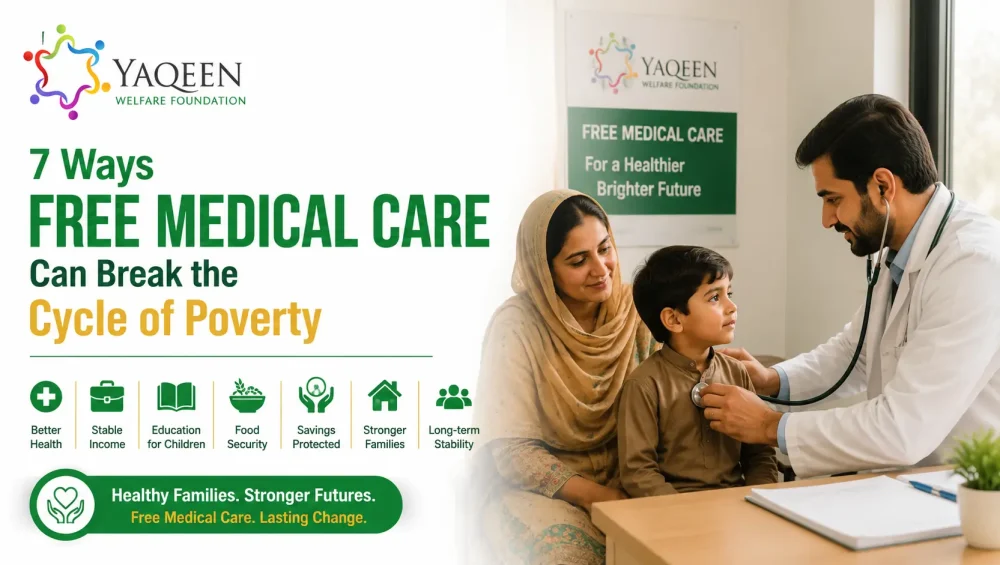
7 Ways Free Medical Care Can Break the Cycle of Poverty
Free medical care is one of the most direct ways to interrupt the relationship between illness and poverty. For a low-income family, sickness is rarely just a medical event. When a parent falls ill, they may be unable to work. When income falls, the household may struggle to cover food, rent, transportation, and children’s school fees. At the same time, doctor visits, diagnostic tests, and medicines create new expenses the family did not plan for. This can quietly trap a household in a difficult pattern: Illness → Medical Expenses → Lost Income → Financial Pressure → Delayed Care → Worsening Hardship For families already living with limited resources, even a manageable health problem can spiral into a lasting financial setback when affordable healthcare is out of reach. This is where free medical care can make a measurable difference — not only by treating illness, but by helping protect a family’s income, education, food security, and long-term stability. This article looks at seven ways accessible healthcare can help interrupt the cycle of poverty, and how organizations like Yaqeen Welfare Foundation are working to bring that care closer to underserved communities in Pakistan. Why Health and Poverty Are Closely Connected Health and financial stability tend to influence each other in both directions. Poverty can make healthcare harder to access because families have fewer resources for doctor consultations, medicines, diagnostic tests, transportation, and preventive or maternal healthcare. At the same time, illness can deepen financial hardship. A person who becomes sick may miss work, lose wages, spend savings on treatment, borrow money, or delay other essential expenses. According to the World Health Organization, billions of people worldwide faced financial hardship in recent years, with a large share pushed into poverty or deeper into it because of out-of-pocket health expenses. That is a global illustration of a very local reality: free medical care removes one of the biggest financial shocks a low-income household can face. What Happens When a Family Cannot Afford Healthcare? A family with limited income may have to choose between: Difficult Trade-Off What the Family May Sacrifice Medicine or Food Nutrition and daily meals Doctor Visit or School Fees A child’s education Diagnostic Test or Rent Housing stability Transportation to a Clinic Other household necessities Follow-Up Care or Savings A future financial safety net Some families delay seeking medical attention because they fear the cost. Others receive an initial consultation but struggle to afford tests, medicines, or follow-up visits. Delaying care does not automatically mean every condition becomes severe, but timely evaluation is often important for identifying a problem early and choosing the right treatment path. The Hidden Financial Cost of Illness Medical bills are only one part of the picture. A household facing illness may deal with direct costs — consultation fees, medicines, diagnostic tests, hospital expenses, transportation — alongside indirect costs such as lost wages, missed work, caregiving responsibilities, and missed school days. For low-income households, these indirect consequences can be just as damaging as the medical bill itself, because there is often little financial cushion to absorb them. 1. Free Medical Care Can Reduce the Financial Burden of Illness The most direct benefit of free medical care is straightforward: when medical services are available without unaffordable costs, families can preserve more of their limited income for other essential needs. Depending on the program, charitable healthcare may include: Medical consultations and basic examinations Diagnostic services and medicines Preventive, maternal, and child healthcare Chronic disease management Referrals for additional treatment Reducing these expenses allows families to redirect money toward food, housing, education, transportation, and utilities. Free healthcare Pakistan initiatives that reach underserved districts are, in effect, a form of financial protection for households that would otherwise have almost nothing left after a medical emergency. Financial Protection Matters The purpose of free healthcare is not simply to provide a service at no cost — it functions as a safeguard for vulnerable families: Affordable Care → Lower Medical Financial Pressure → More Resources for Essential Needs → Greater Household Stability 2. Free Medical Care Can Help Adults Stay Healthy Enough to Work For many low-income households, income depends heavily on one or two adults being able to work consistently. When illness prevents someone from working, the effects ripple through the entire family: lost daily wages, reduced hours, difficulty maintaining employment, and increased dependence on relatives. Accessible healthcare helps people get evaluated and treated sooner, which can support a quicker return to daily activities and employment. This is not a guarantee — health outcomes vary by condition — but timely care removes one major obstacle standing between a sick worker and a stable paycheck. The Employment Connection Healthcare Access → Appropriate Treatment → Better Ability to Function → Potential Return to Work → Improved Household Stability Helping one patient can therefore affect every family member who depends on that person’s income. 3. Free Medical Care Can Help Children Stay in School Illness disrupts a child’s education in more than one way. A child with an untreated health problem may miss school, struggle to concentrate, or fall behind academically. Family illness affects education indirectly too — if a parent becomes seriously ill, children may face financial instability, added household responsibilities, or pressure to help earn income. When children receive appropriate medical assistance Pakistan programs can offer, they have a better chance of maintaining regular school attendance. When parents receive the care they need, the resulting household stability also helps protect a child’s education. Healthy Child → Better School Participation → Continued Education → Greater Future Opportunity Healthier Parent → Greater Family Stability → Better Protection for Children’s Education 4. Free Medical Care Can Protect a Family’s Savings A low-income family may spend years building a small financial reserve, only to see it disappear after one unexpected illness. Medicines, consultations, tests, transportation, and hospital treatment can consume savings quickly. Once that cushion is gone, the family becomes more vulnerable to the next emergency — a job loss, a spike in food prices, or another